
How Hair Care Factories Develop Custom Formulas: From Concept to Production
Hair care factories develop custom formulas through a structured process that includes market research, ingredient selection, formula design, lab prototyping, stability testing, microbial testing, packaging compatibility testing, regulatory compliance review, and pilot production before full-scale manufacturing. This process ensures that shampoos, conditioners, serums, and treatments are safe, stable, effective, and ready for commercialization under OEM or private label models.
For beauty brands, Amazon sellers, salons, and startups, understanding this process helps reduce risk, improve product quality, and accelerate time to market.
Why Custom Hair Care Formulation Matters
Custom formulation is the foundation of brand differentiation in the hair care industry.
Why Brands Invest in Custom Formulas
| Benefit | Impact |
|---|---|
| Product uniqueness | Strong brand identity |
| Better performance | Higher customer satisfaction |
| Premium positioning | Higher pricing power |
| Market differentiation | Less competition |
| Long-term scalability | Brand growth |
👉 A strong formula is more valuable than packaging or marketing alone.
Step 1: Market Research and Product Strategy
Factories start by understanding what the market needs.
Key Research Areas
- Consumer hair concerns (dryness, damage, hair loss, frizz)
- Market trends (clean beauty, scalp care, hair growth)
- Competitor benchmarking
- Price positioning
- Sales channel (Amazon, retail, salon, DTC)
Output of This Stage
A clear product brief including:
- Product type (shampoo, serum, mask, etc.)
- Target audience
- Performance goals
- Ingredient direction
- Price positioning
👉 Learn more in How to Launch a Hair Care Brand on Amazon FBA
Step 2: Ingredient Selection and Formula Architecture
This is where science and branding begin to merge.
Ingredient Categories
| Category | Function |
|---|---|
| Active ingredients | Target hair/scalp benefits |
| Conditioning agents | Smoothness & softness |
| Natural oils | Nourishment |
| Botanical extracts | Marketing & performance |
| Functional additives | Texture & stability |
Key Considerations
- Safety profile
- Regulatory compliance (FDA / EU)
- Performance claims
- Stability compatibility
- Cost efficiency
👉 Ingredient selection defines both performance and compliance.
Step 3: Formula Design and Lab Development
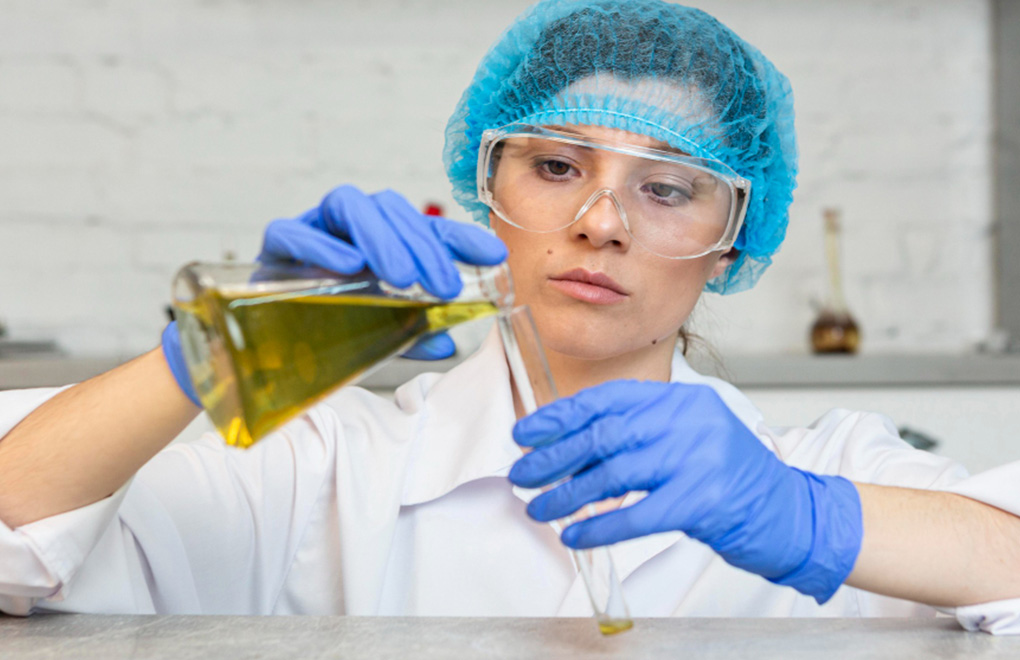
Chemists begin building the first prototype.
What Happens in the Lab
- Ingredient mixing
- Texture development
- pH balancing
- Emulsion stabilization
- Sensory testing (feel, scent, spreadability)
Early Prototype Output
Factories typically produce:
- Sample A (basic version)
- Sample B (improved performance)
- Sample C (premium version)
👉 Brands compare samples before final selection.
Step 4: Stability Testing (Critical Phase)
Once a prototype is created, stability testing begins.
What Stability Testing Evaluates
- Temperature resistance
- Phase separation
- Color change
- Odor stability
- Viscosity changes
- Shelf life estimation
Why It Matters
Without stability testing:
- Products may separate
- Fragrance may degrade
- Texture may break down
- Shelf life becomes unreliable
👉 Learn more in Hair Care Product Testing Requirements Explained: Safety, Stability, Microbial, and Compliance Testing
Step 5: Microbial Testing and Safety Validation
Factories must ensure the formula is microbiologically safe.
Microbial Testing Includes
- Total microbial count
- Yeast and mold testing
- Pathogen screening
Why It Is Important
Hair care products often contain:
- Water-based systems
- Botanical extracts
- Nutrient-rich ingredients
These can support microbial growth if not properly preserved.
Step 6: Preservative System Optimization
Preservatives protect the product throughout its lifecycle.
Functions of Preservatives
- Prevent bacterial growth
- Extend shelf life
- Protect product during use
Key Test
Preservative Effectiveness Test (PET):
- Simulates real-world contamination
- Ensures long-term protection
👉 This step is critical for shampoos, conditioners, and masks.
Step 7: Packaging Compatibility Testing
Factories test how the formula interacts with packaging.
Common Issues Identified
| Problem | Result |
|---|---|
| Pump clogging | Poor usability |
| Bottle leakage | Product loss |
| Chemical reaction | Formula instability |
| Label damage | Branding issues |
Packaging Types Tested
- Bottles
- Pumps
- Tubes
- Jars
- Airless containers
👉 Learn more in Custom Hair Care Packaging: How to Choose Bottles, Tubes, and Jars for Your Brand
Step 8: Regulatory Compliance Review
Factories ensure formulas meet regulatory requirements.
Key Compliance Areas
- FDA cosmetic regulations (US)
- EU Cosmetic Regulation
- Ingredient restrictions
- Label requirements
- Claim validation
Common Compliance Risks
- Drug-like claims (hair regrowth)
- Restricted ingredients
- Misleading marketing language
👉 Learn more in FDA Regulations for Hair Care Products: Compliance, Labeling, and Manufacturing Requirements Explained
Step 9: Pilot Production (Small Batch Manufacturing)
Before full production, factories run pilot batches.
Purpose of Pilot Runs
- Validate scalability
- Check production consistency
- Confirm texture stability
- Test filling process
Output
- Small commercial-ready batch
- Final formula confirmation
- Production parameters locked
Step 10: Full-Scale Manufacturing
Once validated, production moves to scale.
Manufacturing Process Includes
- Raw material preparation
- Mixing and emulsification
- Filling and sealing
- Labeling and packaging
- Quality control checks
Key Focus Areas
- Batch consistency
- Production efficiency
- Quality assurance
- Timeline management
OEM vs ODM Impact on Formula Development
Formula development differs based on manufacturing model.
OEM (Custom Formulation)
- Full ingredient control
- Unique product development
- Longer R&D cycle
ODM (Pre-made Formula)
- Faster development
- Limited customization
- Lower innovation
👉 Learn more in ODM vs OEM Hair Care: Key Differences, Advantages, and How to Choose the Right Model
Cost Factors in Custom Formulation
Key Cost Drivers
| Factor | Impact |
|---|---|
| Ingredient quality | High |
| Formula complexity | High |
| Testing requirements | Medium-High |
| Packaging compatibility | Medium |
| MOQ | High |
👉 More complex formulas increase development time and cost.
Common Mistakes in Formula Development
Mistake #1: Copying Competitor Formulas
Leads to weak differentiation.
Mistake #2: Ignoring Stability Testing
Results in product failure after launch.
Mistake #3: Overloading Actives
Can cause irritation or instability.
Mistake #4: Weak Packaging Planning
Good formula can still fail in wrong packaging.
How Factories Support Brand Development
Modern OEM factories do more than manufacturing.
They Provide:
- Formula R&D
- Market trend insights
- Ingredient sourcing
- Compliance guidance
- Packaging recommendations
- Scalability planning
👉 Factories are now strategic partners, not just suppliers.
Why Work with HODM
HODM specializes in custom hair care formula development and OEM manufacturing.
HODM Capabilities
- Custom formulation development
- Private label solutions
- OEM manufacturing
- Stability and safety testing support
- Packaging development
- Regulatory guidance
- Scalable production systems
We help brands move from idea → formula → production → market launch.
FAQ
How do hair care factories create custom formulas?
They start with market research, then select ingredients, develop lab prototypes, conduct testing (stability, microbial, safety), refine the formula, and move into pilot and full production.
How long does custom formula development take?
It typically takes several weeks to several months depending on complexity, testing requirements, and ingredient sourcing.
Can I fully customize my hair care formula?
Yes. With OEM manufacturing, brands can fully customize ingredients, performance, texture, scent, and packaging.
What tests are required before production?
Common tests include stability testing, microbial testing, preservative effectiveness testing, and packaging compatibility testing.
What is the difference between OEM and ODM formulas?
OEM formulas are fully custom-developed, while ODM formulas are pre-made and lightly customized.
Do factories help with regulatory compliance?
Experienced factories assist with labeling, ingredient review, and compliance documentation, but brands remain responsible for final regulatory compliance.
Conclusion
Custom hair care formulation is a structured, scientific process that transforms an idea into a market-ready product. From ingredient selection and lab development to stability testing, microbial safety, packaging validation, and full-scale production, every step ensures performance, safety, and scalability. Brands that understand this process are better positioned to build successful, compliant, and high-performing hair care lines.
Build Custom Hair Care Formulas with HODM
HODM helps brands develop high-quality hair care products through:
- OEM formula development
- Private label manufacturing
- Stability-focused R&D
- Testing support
- Packaging integration
- Scalable production solutions
Contact HODM to turn your product idea into a market-ready formula.