
Top 12 Private Label Hair Care Manufacturers to Know in 2027
What Are the Best Private Label Hair Care Manufacturers in 2027?
The best private label hair care manufacturers in 2027 include companies that offer ready-to-brand formulas, custom formulation, flexible MOQs, packaging support, testing, and scalable production. Strong options include HODM Cosmetics, Envii Labs, Private Label Labs, Australian Private Label, LissCréation, DLAB Custom Cosmetics, Valquer Laboratorios, Selfnamed, Moe’s Group, Dreamline Beauty, Libby Labs, and The Pure Source. The right partner depends on your product category, budget, target market, customization needs, and growth plans.
For startups, salon owners, ecommerce brands, distributors, and established beauty companies, choosing the right private label manufacturer can shorten development time and reduce the complexity of launching a product line.
But private label manufacturers are not all the same.
Some are best for very low-MOQ launches. Others focus on professional salon products, custom formulations, natural positioning, U.S. manufacturing, European compliance, or large-scale production.
This guide compares 12 private label hair care manufacturers worth evaluating in 2027.
Quick Comparison: Top 12 Private Label Hair Care Manufacturers
| Manufacturer | Location | Best For | Private Label | Custom Formula | Low/Flexible MOQ |
|---|---|---|---|---|---|
| HODM Cosmetics | China | Full-service hair care lines | Yes | Yes | Flexible |
| Envii Labs | USA | Salons & low-MOQ launches | Yes | Yes | Yes |
| Private Label Labs | USA | Startups & scalable U.S. manufacturing | Yes | Yes | Yes |
| Australian Private Label | Australia | Private label to custom development | Yes | Yes | Varies |
| LissCréation | France | Professional treatments & low-MOQ EU brands | Yes | Yes | Yes |
| DLAB Custom Cosmetics | Europe | Premium custom private label | Yes | Yes | Yes |
| Valquer Laboratorios | Spain | Professional salon hair care | Yes | Yes | Medium |
| Selfnamed | USA / Europe-focused platform | Digital-first clean beauty brands | Yes | Limited | Very Low / No MOQ options |
| Moe’s Group | USA | Scalp care & active hair care | Yes | Yes | Project-based |
| Dreamline Beauty | USA | Salons & professional private label | Yes | Yes | Yes |
| Libby Labs | USA | Custom hair, bath & body manufacturing | Yes | Yes | Project-based |
| The Pure Source | USA | High-volume natural & custom hair care | Yes | Yes | Higher |
Note: MOQ, formula availability, lead times, certifications, and customization programs can change. Always confirm current requirements directly with each manufacturer before placing an order.
How We Selected These Private Label Hair Care Manufacturers
This list is designed around private label suitability, not simply company size.
We considered several factors:
Hair Care Specialization
The manufacturer should offer relevant products such as:
- Shampoo
- Conditioner
- Hair masks
- Hair oils
- Hair serums
- Leave-in treatments
- Scalp care
- Styling products
Private Label Availability
A strong private label supplier should offer either:
- Ready-to-brand formulas
- Existing formula platforms
- Semi-custom options
- Custom development
MOQ Flexibility
MOQ can determine whether a manufacturer is appropriate for:
- Startups
- Salons
- Ecommerce brands
- Retail companies
Formula Customization
We considered whether brands can customize:
- Fragrance
- Texture
- Ingredients
- Function
- Complete formula
Packaging and Brand Support
Packaging sourcing, filling, labeling, decoration, and design support can significantly simplify a launch.
Scalability
A manufacturer should ideally be able to support both the first order and future growth.
1. HODM Cosmetics – Best for Full-Service Private Label Hair Care Development
Location: China
Best for: Brands seeking complete private label hair care ranges, custom formulas, packaging support, and OEM/ODM production.
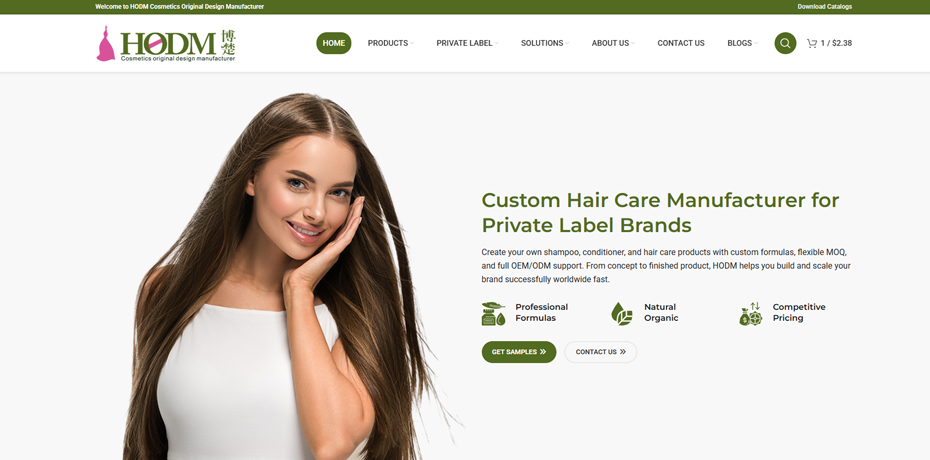
HODM Cosmetics specializes in private label and custom hair care manufacturing for startups, professional brands, distributors, ecommerce sellers, and established beauty companies.
Its current product capabilities include shampoos, conditioners, hair masks, oils, serums, treatments, styling products, and scalp care. HODM also offers OEM/ODM development, custom formulas, fragrance customization, packaging, branding, and commercial production.
Why Brands May Choose HODM
HODM is particularly suitable for brands that want to build a complete product system rather than source one product at a time.
For example:
Repair Line
Shampoo → Conditioner → Hair Mask → Leave-In → Hair Serum
or:
Scalp Care Line
Scalp Shampoo → Scrub → Serum → Treatment Oil
The ability to combine private label formulas with more extensive custom development also gives brands room to scale from faster launches toward more differentiated products. (HairODM)
Best suited for: DTC brands, Amazon sellers, salons, distributors, retailers, and brands building multi-SKU hair care ranges.
Things to consider: Brands requiring domestic manufacturing in the U.S., EU, or another specific country may prefer a local supplier.
 2. Envii Labs – Best for Low-MOQ Salon and Textured Hair Brands
Location: USA
Best for: Salon owners, barbershops, textured-hair brands, and small businesses seeking low entry quantities.
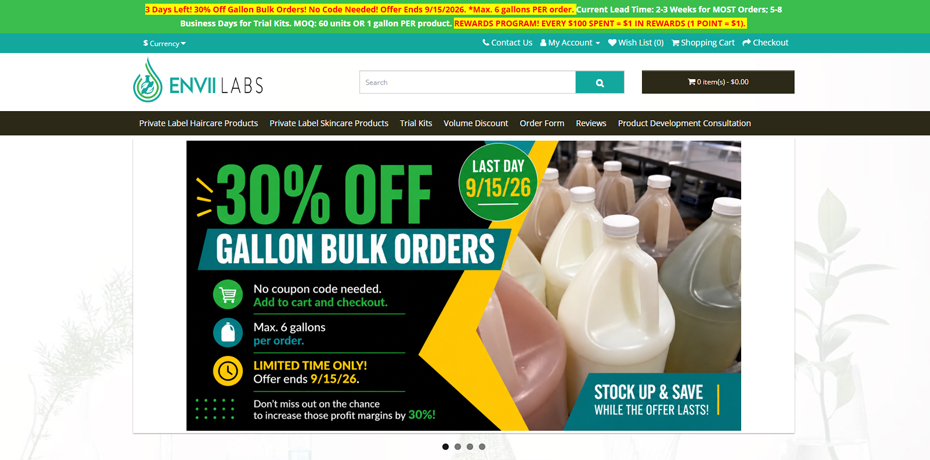
Envii Labs offers private label hair care, skincare, and grooming products for salons, spas, barbershops, and beauty entrepreneurs.
Its current published MOQ is 60 units or one gallon per product, with many orders listed at a two-to-three-week lead time. The company also supports custom formulation in addition to private label products.
Why Brands May Choose Envii Labs
Its relatively low entry quantity can be useful for businesses that already have customers but do not want to carry large initial inventories.
It is especially relevant for:
- Salons
- Barbershops
- Textured-hair brands
- Men’s grooming businesses
- Small ecommerce brands
Best suited for: Entrepreneurs validating a brand concept before scaling.
Things to consider: Compare the economics of smaller production runs with higher-volume manufacturing once sales begin growing.
 3. Private Label Labs – Best for U.S. Startups and Scalable Private Label Manufacturing
Location: Michigan, USA
Best for: Brands wanting U.S. manufacturing, flexible MOQs, formula customization, packaging, and fulfillment.
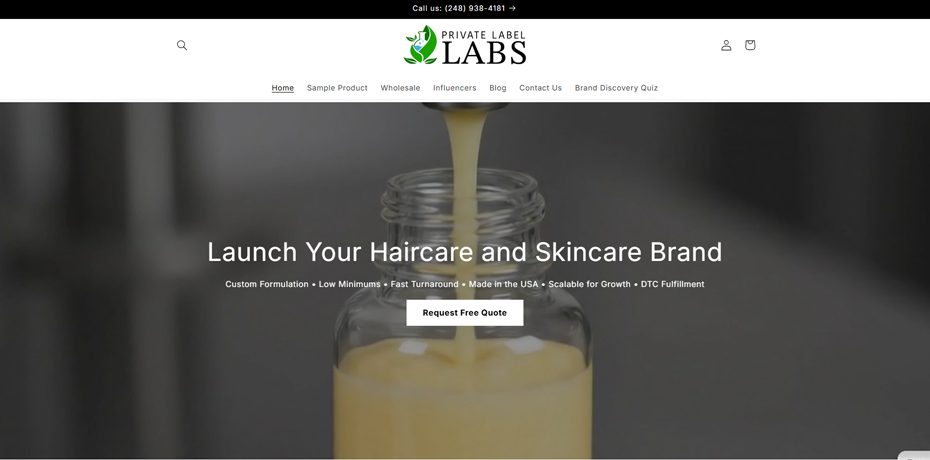
Private Label Labs manufactures a broad range of hair care products including shampoos, conditioners, oils, serums, leave-ins, scalp treatments, masks, styling products, and beard care.
The company highlights:
- In-house formulation
- Low MOQs
- U.S. manufacturing
- Custom packaging
- Samples
- Fulfillment support
Its development process can move from concept and formula selection through samples, production, packaging, and fulfillment.
Why Brands May Choose Private Label Labs
The combination of lower entry requirements and an expansion path into custom formulation makes it relevant for brands that want to start small without immediately changing suppliers as they grow.
Best suited for: U.S. startups, salon brands, ecommerce companies, and businesses requiring scalable domestic manufacturing.
Things to consider: Confirm exact MOQ and pricing for each formula and packaging configuration.
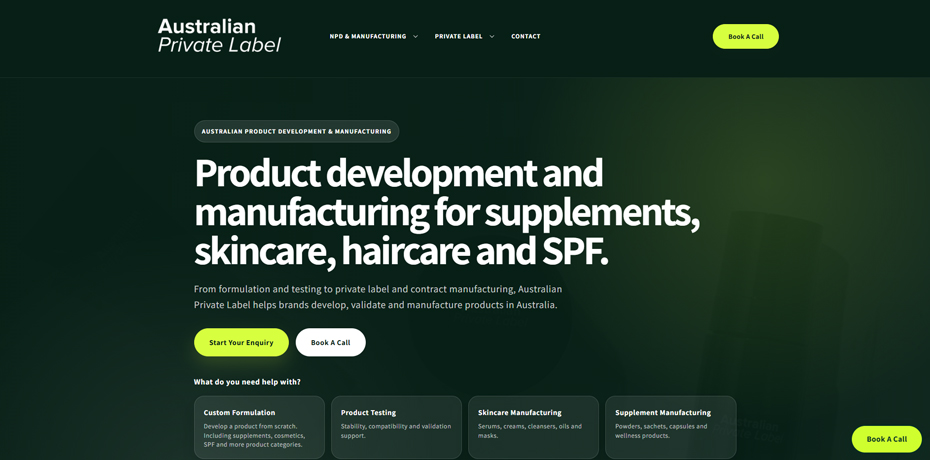
 4. Australian Private Label – Best for Private Label, Semi-Custom, and Custom Development
Location: Sydney, Australia
Best for: Australian brands wanting a clear progression from private label into custom formulation.
Australian Private Label supports shampoos, conditioners, masks, oils, and scalp-care products through three distinct development routes:
Private Label → Semi-Custom → Custom Development
The company also provides in-house R&D, testing guidance, packaging pathways, filling, and Australian manufacturing.
Why Brands May Choose Australian Private Label
The tiered development structure is useful because a brand does not need to commit immediately to fully custom R&D.
A company can first validate demand using an established concept, then introduce modifications or develop proprietary formulas later.
Best suited for: Australian startups, growing beauty companies, salons, and brands seeking domestic manufacturing.
Things to consider: MOQ and project economics will differ considerably between private label, semi-custom, and fully custom programs.
 5. LissCréation – Best for Professional Hair Treatments and Low-MOQ European Launches
Location: France
Best for: Professional salons, smoothing-treatment brands, textured-hair brands, and European entrepreneurs.
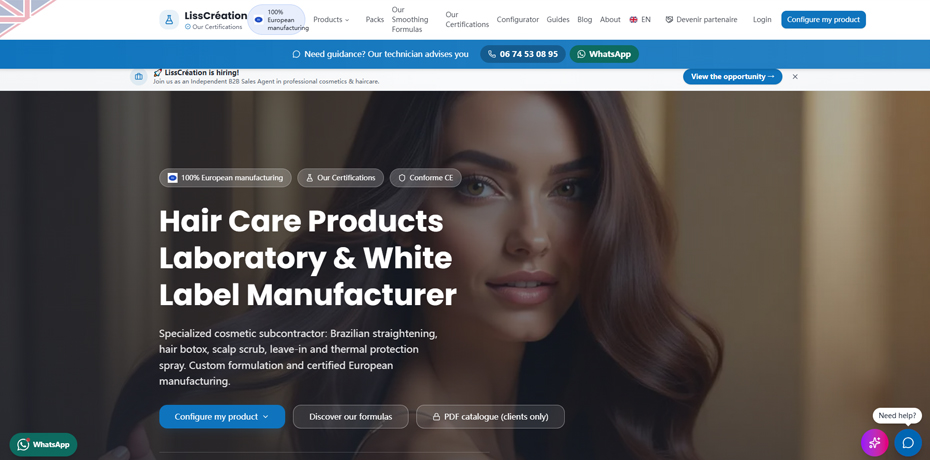
LissCréation specializes in professional white label and custom hair care, including smoothing products, hair botox treatments, shampoos, masks, leave-ins, scalp scrubs, serums, and thermal protection products.
Its site currently advertises low private label MOQs, European manufacturing, ISO 22716 certification, and support for European product documentation and CPNP processes.
Why Brands May Choose LissCréation
Its strongest differentiation is specialization.
Rather than being a general personal care factory, it focuses heavily on:
- Professional hair treatments
- Smoothing systems
- Textured hair
- Salon applications
Best suited for: Salons, professional hair brands, European startups, and treatment-focused businesses.
Things to consider: Different pages currently show different MOQ structures depending on the product or program, so confirm the actual minimum for your selected SKU before budgeting.
 6. DLAB Custom Cosmetics – Best for Premium European Private Label Development
Location: Europe
Best for: Digital-first beauty brands seeking premium customization with relatively accessible production.
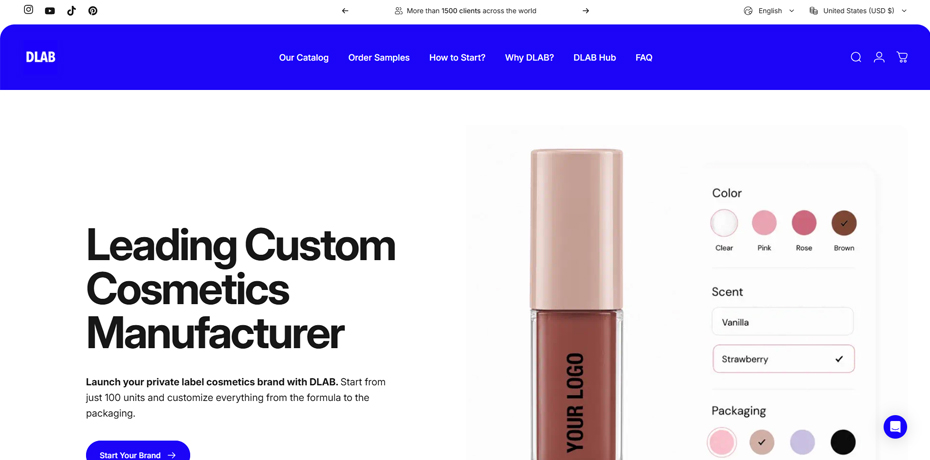
DLAB Custom Cosmetics offers custom and private label cosmetics with online customization and hair care options including shampoos, hair oils, masks, and related products.
Its current hair care offering emphasizes custom formulas, ingredient selection, packaging customization, and relatively fast development cycles.
Why Brands May Choose DLAB
DLAB is particularly interesting for founders who want more personalization than conventional stock private label but do not want to build an entire product-development system themselves.
Best suited for: Premium ecommerce brands, influencers, boutique beauty businesses, and European startups.
Things to consider: Carefully compare final unit economics after packaging, formula customization, and freight are included.
 7. Valquer Laboratorios – Best for Professional Salon and European Hair Care
Location: Spain
Best for: Professional hairdressing brands, salon products, European distributors, and companies requiring turnkey manufacturing.
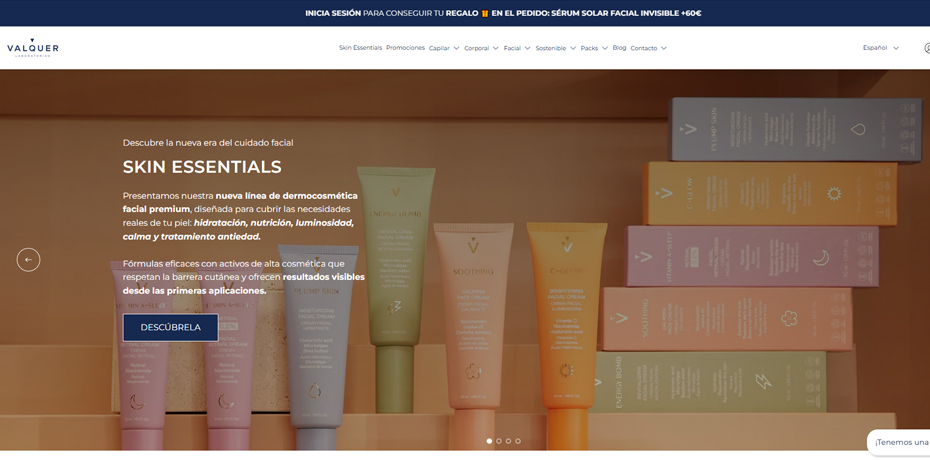
Valquer Laboratorios has worked in the professional hairdressing channel since 1975 and manufactures shampoos, conditioners, masks, serums, treatments, dyes, and other hair products.
It supports white label, private label, distributor brands, third-party manufacturing, product development, packaging, and turnkey projects. Its current site indicates production options ranging from around 1,000 units upward depending on project scale.
Why Brands May Choose Valquer
Its professional salon background makes it especially relevant for brands that value:
- Hairdressing expertise
- Broad product development
- European manufacturing
- Commercial-scale production
Best suited for: Professional brands, salons, distributors, and established European companies.
Things to consider: Around 1,000 units may be less suitable for very early-stage founders looking for ultra-small test quantities.
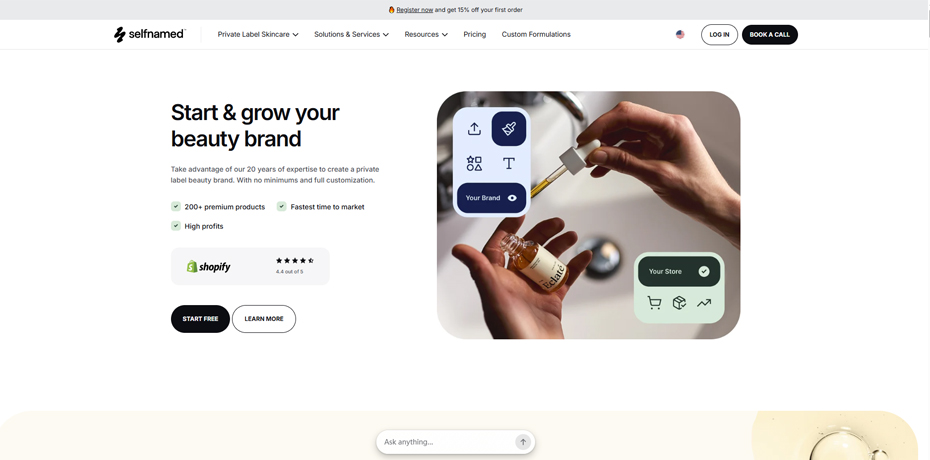
 8. Selfnamed – Best for Digital-First and No-MOQ Clean Beauty Brands
Location: U.S. presence with European production/compliance ecosystem
Best for: Ecommerce startups, creators, clean beauty brands, and founders wanting very low inventory risk.
Selfnamed provides private label shampoos and conditioners built around natural and organic-certified positioning.
Its platform emphasizes ready-to-brand products, ECOCERT-certified options, ISO 22716 production, EU/UK registration support, samples, and integration with ecommerce platforms. Current company content advertises no MOQ for its private label model.
Why Brands May Choose Selfnamed
The major attraction is speed and accessibility.
It is useful for brands that want to validate:
- Branding
- Customer acquisition
- Ecommerce demand
- Product positioning
without tying significant cash into inventory.
Best suited for: Creators, small Shopify stores, ecommerce founders, and natural/clean beauty startups.
Things to consider: A no-MOQ model offers convenience but generally provides less formula exclusivity than a dedicated custom-manufacturing program.
 9. Moe’s Group – Best for Scalp Care and Active Hair Care Development
Location: USA
Best for: Brands developing scalp treatments, active-driven formulas, serums, or technically differentiated hair care.
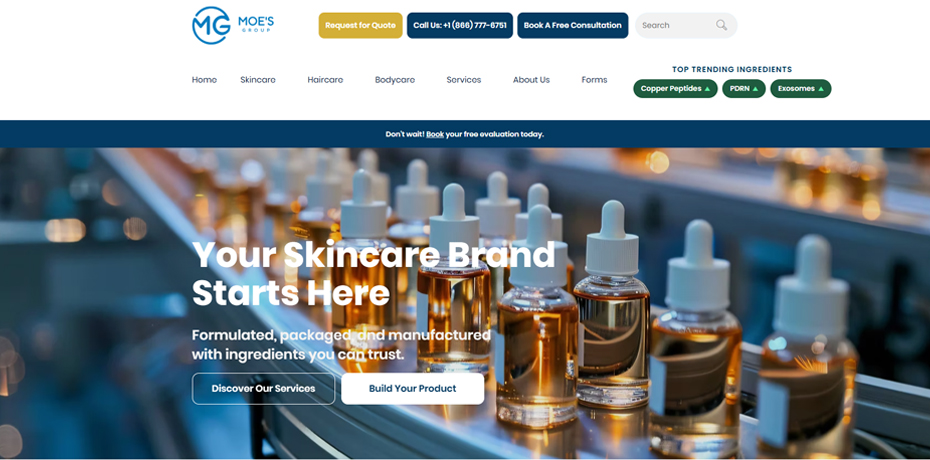
Moe’s Group manufactures shampoos, conditioners, masks, scalp treatments, serums, oils, and styling products.
Its services include formulation, testing, filling, packaging, compliance, private labeling, and custom product development.
The company is particularly interesting for brands focused on more technical products such as:
- Scalp serums
- Active hair care
- Density-focused cosmetic products
- Specialized treatment systems
Its full-service model combines formulation and production rather than requiring separate laboratories and manufacturers.
Best suited for: Scalp care brands, premium treatment companies, science-focused beauty brands, and established businesses developing custom products.
Things to consider: More complex active-driven development generally requires more technical planning and testing than basic ready-label products.
 10. Dreamline Beauty – Best for Salons and Professional Private Label Hair Care
Location: California, USA
Best for: Salons, hairstylists, boutique retailers, and professional beauty brands.
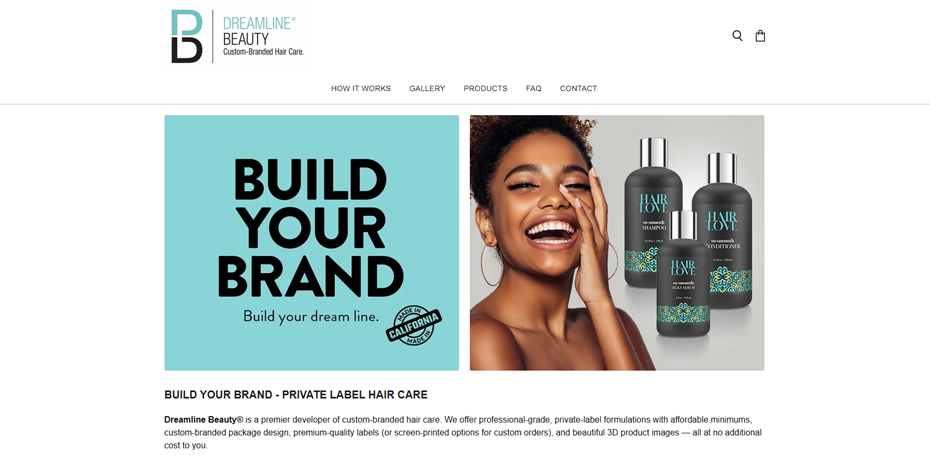
Dreamline Beauty specializes specifically in custom-branded professional hair care.
Its current catalog covers more than 85 pre-formulated products, including shampoos, conditioners, deep treatments, styling products, sprays, and serums. The company also provides branding, package design, and marketing assets.
Dreamline’s current site states that certain private label orders can begin with relatively low quantities, while semi-custom and fully custom manufacturing require significantly higher volumes.
Why Brands May Choose Dreamline Beauty
It is one of the more salon-friendly options because the program extends beyond manufacturing into:
- Logo design
- Label design
- 3D product images
- Marketing assets
This can simplify launch preparation for a salon owner who does not have a separate creative team.
Best suited for: Hair salons, stylists, boutique retailers, and professional hair businesses.
Things to consider: Full custom manufacturing has much higher minimums than its standard private label program.
 11. Libby Labs – Best for Custom Hair, Bath, and Body Manufacturing
Location: USA
Best for: Growing companies seeking custom hair care plus adjacent bath and body categories.
Libby Labs has manufactured hair, bath, and body products since 1959.
Its process includes formulation, bulk manufacturing, filling, packaging, and commercial pack-out under one manufacturing relationship. Brands can develop a formula with its chemists, choose an existing base, or provide their own formula.
Its hair care capabilities include shampoos, conditioners, leave-in products, and styling/treatment formulations.
Why Brands May Choose Libby Labs
Libby Labs can be attractive for growing brands that need more technical customization and intend to expand beyond hair care.
Best suited for: Established startups, lifestyle beauty companies, multi-category brands, and businesses seeking U.S. custom manufacturing.
Things to consider: It does not manufacture every possible category; for example, its published capabilities exclude certain drug products, aerosols, powders, and hair dyes.
12. The Pure Source – Best for High-Volume Natural and Custom Hair Care
Location: Florida, USA
Best for: Established brands needing custom formulation, U.S. production, regulatory support, and higher-volume manufacturing.
The Pure Source manufactures shampoos, conditioners, masks, oils, scalp serums, leave-ins, styling products, and other hair care products.
Its turnkey offering includes custom formulation, filling, packaging, regulatory support, testing, and branding. The company also emphasizes natural and plant-based formulation capabilities.
Unlike low-MOQ suppliers, Pure Source currently states a minimum of 5,000 units per product, positioning it toward more established brands.
Why Brands May Choose The Pure Source
For brands that have already validated market demand, higher-volume manufacturing can offer a more scalable production structure.
Its strengths include:
- Custom formulation
- Natural product development
- U.S. production
- Regulatory support
- Scalable manufacturing
Best suited for: Established DTC brands, retail brands, national distribution programs, and companies requiring larger production volumes.
Things to consider: Its 5,000-unit minimum makes it less suitable for early-stage brands that are still validating product-market fit.
 Which Private Label Hair Care Manufacturer Is Best for Your Brand?
Different stages require different manufacturers.
| Brand Situation | What to Prioritize |
|---|---|
| First product launch | Low MOQ + existing formulas |
| Salon private label | Professional formulas + branding support |
| Shopify startup | Low inventory risk + quick launch |
| Amazon brand | Scalable inventory + reliable supply |
| Premium DTC brand | Custom formulation + packaging |
| Professional salon brand | Performance + styling/treatment expertise |
| EU brand | EU manufacturing + compliance support |
| Established retail brand | Capacity + QC + scalability |
For example:
A salon owner may prefer Envii Labs, Dreamline Beauty, or LissCréation.
A digital-first startup may favor Selfnamed or Private Label Labs.
A company building highly customized treatment systems may be better aligned with HODM, Moe’s Group, Valquer, or The Pure Source.
The key question is not:
“Which manufacturer is the biggest?”
It is:
“Which manufacturing model matches my current business stage?”
Private Label vs Semi-Custom vs Custom Formula Hair Care
Manufacturers often use similar terminology differently, so brands should understand the basic models.
| Model | Formula | Customization | Development Time | Best For |
|---|---|---|---|---|
| White Label | Existing | Minimal | Fastest | Testing |
| Private Label | Existing | Branding / some options | Fast | Startups |
| Semi-Custom | Existing base | Ingredients / scent / texture | Medium | Growing brands |
| Custom Formula | Developed for brand | Extensive | Longest | Differentiated brands |
A startup does not always need to begin with a completely original formula.
A practical growth strategy can be:
Private Label → Validate Sales → Improve Product → Custom Formula
Internal Link Placement:
Anchor “custom formula vs private label hair care” → Custom Formula vs Private Label Hair Care: Which Should You Choose?
What Hair Care Products Can You Private Label?
Private label hair care extends far beyond basic shampoo.
Cleansing Products
- Hydrating shampoo
- Repair shampoo
- Clarifying shampoo
- Curl shampoo
- Scalp shampoo
- Color-safe shampoo
Conditioning Products
- Conditioner
- Deep conditioner
- Leave-in conditioner
- Curl conditioner
Treatments
- Hair masks
- Hair serums
- Hair oils
- Scalp treatments
- Repair treatments
Styling
- Curl creams
- Styling gels
- Heat protectants
- Styling creams
- Smoothing products
A new brand should generally avoid launching too many products at once.
A focused initial system such as:
Shampoo + Conditioner + Hero Treatment
or:
Scalp Shampoo + Serum + Treatment Oil
is often easier to market and manage.
Internal Link Placement:
Anchor “best hair care products to launch” → Best Hair Care Products to Launch for New Brands: High-Potential Categories for 2027
How to Compare Private Label Hair Care Manufacturers
Before asking for a quote, compare every supplier using the same criteria.
1. MOQ
Ask whether MOQ applies to:
- Formula
- Finished units
- Packaging
- Printed labels
- Custom bottles
A manufacturer may advertise a low finished-product MOQ while custom packaging has a much higher minimum.
2. Formula Customization
Ask exactly what “customizable” means.
Can you change only:
- Fragrance?
Or can you change:
- Ingredients
- Texture
- Performance
- Claims direction
- Entire formula?
3. Product Range
Choose a manufacturer that can support future expansion.
If your first product is shampoo but your long-term plan includes masks, scalp serums, oils, and styling products, verify those capabilities before committing.
4. Samples
Always evaluate physical samples.
Review:
- Texture
- Fragrance
- Appearance
- Hair feel
- Packaging
- Performance
5. Testing
Ask what testing applies to the actual product being developed.
6. Packaging
Clarify who is responsible for:
- Bottles
- Pumps
- Labels
- Printing
- Cartons
- Compatibility
7. Market Compliance
Tell the supplier whether you plan to sell in:
- United States
- European Union
- UK
- Canada
- Australia
- Middle East
before the formula and packaging are finalized.
8. Scalability
Ask:
If our first order sells well, can you support 5× or 10× the current volume?
Internal Link Placement:
Anchor “evaluate a hair care manufacturer” → How to Evaluate a Hair Care Manufacturer Before Signing a Contract
How Much Does Private Label Hair Care Cost?
There is no universal price.
The real investment is determined by:
Formula + MOQ + Packaging + Decoration + Testing + Freight + Number of SKUs
For example, a standard shampoo formula in a stock bottle is usually a much simpler project than:
- Custom scalp serum
- Specialized ingredients
- Custom bottle
- Printed carton
- Low initial MOQ
Brands should compare total landed cost, not just the quoted factory price.
Internal Link Placement:
Anchor “private label hair care MOQ” → Private Label Hair Care MOQ Explained: Minimum Order Quantities, Costs, and How to Start Small
Anchor “hair care product cost” → Custom Hair Care Product Cost Breakdown: Formula, Packaging, and Manufacturing Explained
Questions to Ask Before Choosing a Private Label Manufacturer
Before placing an order, ask:
- What private label formulas do you currently offer?
- What is the MOQ for each SKU?
- Can I order samples?
- Can fragrance or ingredients be changed?
- Do you offer fully custom formulations?
- Who owns a custom-developed formula?
- What packaging options are available?
- What testing is included?
- What certifications and quality systems apply?
- What is the typical lead time?
- What compliance support do you provide?
- Can you increase production as my brand grows?
Internal Link Placement:
Anchor “questions to ask a hair care manufacturer” → Questions to Ask Before Choosing a Hair Care Manufacturer
Red Flags to Watch for When Comparing Manufacturers
Avoid choosing a supplier only because it offers the lowest price.
Important warning signs include:
- Unclear company or factory information
- No sample process
- Vague pricing
- No explanation of testing
- Unrealistic production promises
- Unclear formula ownership
- Poor communication
- No defined QC process
- Lack of export experience when you need international support
A private label partnership affects your customer’s experience with the product, so supplier reliability matters just as much as price.
Internal Link Placement:
Anchor “hair care supplier red flags” → Red Flags When Working with a Hair Care Supplier: What Brands Should Watch For
Private Label vs OEM Hair Care Manufacturing
These two models are related but not identical.
Private Label
The manufacturer already has a formula or product platform. Your brand adds its identity and selected customization.
Best for:
- Faster launches
- Market validation
- Lower development complexity
OEM / Custom Manufacturing
The product is produced according to more specific brand requirements and may involve more extensive formulation development.
Best for:
- Differentiated products
- Premium brands
- Proprietary product strategy
Neither option is automatically superior.
The right choice depends on:
Speed + Budget + Differentiation + MOQ + Long-Term Strategy
Internal Link Placement:
Anchor “OEM vs private label hair care” → OEM vs Private Label Hair Care: Which Is Better for Your Brand?
FAQ
What is a private label hair care manufacturer?
A private label hair care manufacturer produces shampoos, conditioners, masks, oils, serums, styling products, or other formulas that another company sells under its own brand. Depending on the supplier, the formula may be ready-made, semi-custom, or fully customized.
What are the best private label hair care manufacturers in 2027?
Manufacturers worth evaluating include HODM Cosmetics, Envii Labs, Private Label Labs, Australian Private Label, LissCréation, DLAB Custom Cosmetics, Valquer Laboratorios, Selfnamed, Moe’s Group, Dreamline Beauty, Libby Labs, and The Pure Source. The best fit depends on MOQ, location, customization, product category, and production scale.
Which private label hair care manufacturers have low MOQs?
Current examples include Envii Labs, which advertises a 60-unit or one-gallon minimum, and LissCréation, which offers low-MOQ programs depending on the selected product. Selfnamed also promotes a no-MOQ private label model.
Can I start a hair care brand without developing a formula?
Yes. This is one of the primary advantages of private label manufacturing. You can choose an existing formula, customize branding and packaging, and launch more quickly than developing an entirely new product from scratch.
Can private label hair care formulas be customized?
Often yes, but the degree of customization varies. Some manufacturers allow only packaging or fragrance changes, while others support ingredient adjustments, semi-custom development, or completely new formulas.
Is private label hair care suitable for salons?
Yes. Salons already have existing customers and professional credibility, making private label products a natural extension of their service business. Manufacturers such as Envii Labs and Dreamline Beauty specifically target salon and professional customers.
Is private label cheaper than custom formulation?
Usually, private label requires less upfront formulation development because the formula already exists. However, final cost depends on packaging, MOQ, labels, testing, shipping, and other project requirements.
How long does private label hair care manufacturing take?
Lead times vary widely. Ready-made formulas using standard packaging can usually move faster than semi-custom or custom projects. Packaging sourcing, testing, artwork approval, formula changes, and production schedules all influence the final timeline.
Conclusion: Choosing the Right Private Label Hair Care Partner
There is no single private label manufacturer that is best for every business.
A salon launching 60 units has different needs from a retail brand planning 50,000 units.
The right partner should align with your:
Brand Stage → Product Strategy → Formula → MOQ → Packaging → Target Market → Production Scale
For early-stage founders, low MOQ and stock formulas may be most important.
For growing brands, semi-custom development can create more differentiation.
For established companies, custom formulation, testing, documentation, quality systems, and production capacity often become more important than low minimums.
Compare several suppliers, request samples, confirm current MOQs and documentation, and evaluate the full project cost before making a manufacturing decision.
Build Your Private Label Hair Care Line with HODM
HODM helps brands develop private label and custom hair care products across:
- Shampoo
- Conditioner
- Hair masks
- Hair oils
- Hair serums
- Leave-in products
- Scalp care
- Treatments
- Styling products
Brands can begin with market-ready formulas or develop more customized OEM/ODM products as their business grows. HODM also supports formulation, samples, packaging customization, branding, and commercial manufacturing.
Contact HODM to discuss your private label hair care project and request samples.