
Best Hair Care Products for Curly Hair: Product Opportunities for Brands
Curly hair has specific care and styling requirements that create opportunities for specialized hair care brands. Unlike many straight-hair routines, curly hair care often places greater emphasis on moisture, detangling, curl definition, frizz management, and maintaining the natural appearance of different curl patterns.
From moisturizing shampoos and conditioners to leave-in treatments, curl creams, styling gels, and intensive hair masks, brands can develop a range of products designed for different curly hair needs.
Businesses planning to enter this category can explore HODM's Create Your Own Curl Care Line solutions and work with a specialized Curl Cream Manufacturer to develop formulas, packaging, and coordinated product collections.
This guide explores the best hair care products for curly hair, including product categories, formulation considerations, key ingredients, packaging, and private label manufacturing opportunities for brands.
1. Understanding Curly Hair and Its Care Requirements
Curly hair comes in different patterns, densities, textures, and porosity levels. These characteristics influence how hair responds to cleansing, conditioning, styling, and moisture-related products.
Brands developing curly hair products should understand these differences before choosing formulas and product formats.
Different Curl Patterns
- Type 2 – Wavy Hair: Features loose bends and waves that may benefit from lightweight conditioning and styling products.
- Type 3 – Curly Hair: Includes defined curls and ringlets that often require suitable moisture, detangling, and curl-definition products.
- Type 4 – Coily Hair: Features tighter coils and patterns that may benefit from richer conditioning systems and carefully selected styling products.
Common Curly Hair Concerns
- Dryness: Curly hair may be more prone to feeling dry and requiring regular conditioning.
- Frizz: Humidity, friction, and hair condition can affect curl definition and surface smoothness.
- Detangling: Knots and tangles can make brushing and styling more difficult.
- Loss of Curl Definition: Unsuitable product weight or styling routines may affect the appearance of natural curl patterns.
- Breakage: Mechanical stress during detangling and styling can contribute to breakage.
- Product Buildup: Some styling products can accumulate on the hair and scalp, creating a need for appropriate cleansing.
Why Product Selection Matters
A lightweight curl cream designed for loose waves may not provide the same styling experience as a richer cream developed for tighter curl patterns. Similarly, a moisturizing conditioner and a clarifying shampoo serve different purposes within a curly hair routine.
Brands should therefore develop products around specific hair characteristics and customer expectations instead of assuming one formula works equally well for every curl type.
2. Best Hair Care Products for Curly Hair
A complete curly hair collection can include several complementary product categories. Each product should serve a clear purpose within the customer's cleansing, conditioning, and styling routine.
Curl Shampoo
Curl shampoos are developed to cleanse curly hair while considering its conditioning requirements. Brands may explore moisturizing or sulfate-free cleansing systems depending on the intended customer and product positioning.
Curly Hair Conditioner
Conditioners are essential components of many curly hair routines. They can help improve softness, detangling, combability, and overall manageability.
Leave-In Conditioner
Leave-in conditioners provide conditioning without a rinse-off step. They can support detangling, softness, and easier styling while complementing regular wash-day routines.
Curl Cream
Curl creams are among the most recognizable styling products in curly hair collections. Depending on the formula, they can help define curl patterns, improve manageability, and provide conditioning support.
Styling Gel
Styling gels are used to provide different levels of hold and support curl definition. Brands can develop flexible-hold or stronger-hold concepts according to their target customers.
Hair Masks
Hair masks offer a more intensive conditioning format for customers looking to complement their regular cleansing and styling routines.
| Product Category | Main Product Purpose | Common Format |
|---|---|---|
| Curl Shampoo | Cleansing and conditioning support | Pump and flip-cap bottles |
| Conditioner | Softness and detangling | Bottles and tubes |
| Leave-In Conditioner | Daily conditioning and manageability | Sprays and pumps |
| Curl Cream | Curl definition and styling | Tubes and jars |
| Styling Gel | Hold and styling control | Jars and tubes |
| Hair Mask | Intensive conditioning | Jars and tubes |
3. Curly Hair Product Samples for Private Label Brands
HODM offers several product concepts that can serve as starting points for brands developing curly hair care collections. Customers can request samples to evaluate formula texture, fragrance, conditioning feel, curl styling characteristics, and other product features before selecting suitable products for their brands.
Moroccan Argan Oil Curl Cream

Moroccan Argan Oil Curl Cream
An argan oil-inspired styling cream concept for curly hair routines focused on definition, softness, and manageability.
Key Ingredient Direction: Argan Oil and Conditioning Ingredients.
Explore Product →
Moroccan Argan Oil Conditioner
A conditioning product concept for brands developing moisturizing and manageable hair care routines.
Key Ingredient Direction: Argan Oil and Conditioning Agents.
Explore Product →
Moroccan Argan Oil Leave-In Conditioner
A leave-in conditioning concept for softness, detangling, smoothness, and everyday styling routines.
Key Ingredient Direction: Argan Oil and Conditioning Ingredients.
Explore Product →These products can be evaluated individually or combined into a coordinated curly hair care collection. Their suitability for different curl patterns should be assessed through sample testing and the intended product specifications.
Interested in these products? Contact HODM to request samples and discuss suitable formulas for your brand.
4. Curl Cream: An Important Product for Curly Hair Brands
Curl cream is a key product category for brands developing specialized curly hair collections. It is generally designed to support curl definition, conditioning, and styling manageability.
Different Curl Cream Product Directions
- Lightweight Curl Cream: Designed for loose curls and waves that need a lighter styling feel.
- Moisturizing Curl Cream: Focused on conditioning and softness.
- Defining Curl Cream: Developed around curl shape and styling definition.
- Anti-Frizz Curl Cream: Positioned for smoother-looking curls and improved manageability.
- Rich Curl Styling Cream: Designed for customers who prefer a richer conditioning texture.
Formulation Considerations
Curl cream development involves balancing conditioning, texture, spreadability, styling support, and residue. The formula should distribute evenly through the hair without creating an unnecessarily heavy or sticky finish.
Match the Formula to the Target Curl Pattern
A lightweight product may suit some wavy and loose-curly routines, while customers with tighter curls may prefer richer conditioning characteristics. Testing across representative hair types can help brands evaluate whether a formula meets the intended product brief.
Explore Curl Cream for Curly Hair and Private Label Curl Cream for additional product development options.
5. Conditioners and Leave-In Products for Curly Hair
Conditioning products are particularly important in many curly hair routines because detangling, softness, and manageability are major customer considerations.
Rinse-Off Conditioners
Rinse-off conditioners are designed to improve hair feel after cleansing. Their formulations may include cationic conditioning agents, fatty alcohols, emollients, selected oils, and other functional ingredients.
Leave-In Conditioners
Leave-in conditioners remain on the hair after application and can support easier detangling, softness, and styling preparation.
Choose the Right Texture
Different customers may prefer lightweight lotions, sprays, or richer cream textures. Product development should consider curl pattern, hair density, application quantity, and the desired finish.
Explore Conditioner for Curly Hair for additional product ideas.
6. Styling Gels and Products for Curl Definition
Styling gels provide another opportunity for brands developing curly hair collections. They can complement curl creams and leave-in conditioners by offering different levels of hold and styling control.
Flexible-Hold Styling Gel
Flexible-hold gels are developed for customers who prefer styling support while maintaining movement and a softer finish.
Strong-Hold Styling Gel
Stronger-hold formulations can be positioned for customers seeking more structured styling and longer-lasting shape.
Define the Desired Finish
Important formulation considerations include hold level, drying characteristics, residue, flaking, spreadability, and compatibility with other styling products.
A curl cream and styling gel may also be developed as complementary products, with each providing a different role within the styling routine.
Explore Best Styling Gel for Curly Hair for more product positioning ideas.
7. Key Ingredients for Curly Hair Product Formulation
Ingredient selection plays an important role in developing curly hair products. Formulators need to consider the intended product type, texture, conditioning requirements, stability, and sensory performance.
Conditioning Ingredients
- Behentrimonium Chloride: A cationic conditioning agent used in selected rinse-off and leave-in formulations.
- Behentrimonium Methosulfate: A conditioning ingredient commonly used in conditioner systems.
- Polyquaternium Ingredients: Conditioning polymers used to support combability and manageability.
- Guar Hydroxypropyltrimonium Chloride: A conditioning polymer used in selected hair care formulas.
Moisturizing Ingredients
- Glycerin: A humectant used in water-based products.
- Panthenol: A conditioning ingredient used in hair care formulations.
- Aloe Vera: Used in selected formulas for ingredient positioning and product characteristics.
- Hydrolyzed Proteins: Used in selected products for conditioning and film-forming functions.
Botanical Oils and Emollients
- Argan Oil: Used for conditioning and botanical product positioning.
- Jojoba Oil: An emollient used in selected conditioning formulations.
- Coconut-Derived Ingredients: Used in different hair care formulations according to their functional role.
- Shea Butter: Considered in selected richer conditioning and styling products.
Ingredient Selection by Product Type
| Ingredient Direction | Potential Product | Formulation Consideration |
|---|---|---|
| Conditioning Polymers | Shampoo and Conditioner | Combability and compatibility |
| Fatty Alcohols | Conditioner and Hair Mask | Texture and conditioning |
| Glycerin | Leave-In and Styling Products | Moisture-related properties |
| Argan Oil | Curl Cream and Leave-In | Emolliency and sensory feel |
| Shea Butter | Rich Curl Cream | Texture and formula stability |
| Panthenol | Shampoo and Conditioner | Conditioning support |
Ingredients should be selected according to formula compatibility, concentration, safety, and intended performance. A popular ingredient does not automatically make a product more effective.
8. How to Build a Complete Curly Hair Care Product Line
Brands can organize curly hair products into coordinated collections based on customer needs and styling preferences. This makes it easier to create consistent product positioning and complementary routines.
Example 1: Moisture-Focused Curl Collection
- Moisturizing curl shampoo.
- Rich conditioner.
- Leave-in conditioner.
- Moisturizing curl cream.
Example 2: Curl Definition Collection
- Gentle cleansing shampoo.
- Conditioner.
- Curl defining cream.
- Flexible-hold styling gel.
Example 3: Premium Botanical Curl Collection
- Botanical shampoo.
- Argan oil conditioner.
- Argan oil curl cream.
- Leave-in conditioning product.
Example 4: Professional Salon Curl Collection
- Professional cleansing shampoo.
- Conditioning treatment.
- Curl styling cream.
- Professional styling gel.
These are illustrative product systems. Brands should choose products according to their target curl patterns, budget, intended sales channels, and manufacturing capabilities.
For a complete brand development strategy, explore Create Your Own Curl Care Line.
9. Custom Formulation for Curly Hair Products
Custom formulation allows brands to develop curly hair products according to specific curl patterns, conditioning preferences, styling requirements, textures, and ingredient choices.
Prepare a Product Development Brief
- Product category and intended application.
- Target curl pattern and customer profile.
- Preferred ingredients and restrictions.
- Desired texture and viscosity.
- Conditioning and styling expectations.
- Fragrance direction.
- Packaging and dispensing requirements.
- Target manufacturing cost and MOQ.
Develop and Evaluate Samples
Sample evaluation should consider texture, spreadability, application, fragrance, detangling, curl definition, residue, and overall hair feel.
Whenever possible, evaluate samples on representative hair types that match your target audience. This helps brands understand how a formula performs across different curl patterns.
Refine the Formula
Adjustments may be needed to improve viscosity, conditioning, styling hold, fragrance, or other characteristics. All modifications should be assessed for formula compatibility and stability.
Explore HODM Custom Formula Development for more information.
10. Testing and Quality Control for Curly Hair Products
Curly hair products should be evaluated for both formula quality and the intended application experience.
Stability Testing
Stability assessments help evaluate changes in appearance, color, odor, viscosity, pH, and other relevant characteristics under appropriate storage conditions.
Microbiological Testing
Water-based shampoos, conditioners, curl creams, and leave-in products require suitable microbiological quality controls and appropriate preservation systems.
Packaging Compatibility
Evaluate the formula with its intended bottle, pump, tube, or jar. Check dispensing performance, leakage, compatibility, and product protection.
Performance Evaluation
Depending on the product, evaluation may include:
- Detangling and combability.
- Softness and conditioning feel.
- Curl definition and styling control.
- Frizz appearance and smoothness.
- Residue and product buildup.
- Rinsability and application experience.
11. Packaging Options for Curly Hair Care Products
Packaging should support the formula, application method, brand identity, and intended retail price.
| Product | Common Packaging | Key Consideration |
|---|---|---|
| Curl Shampoo | Pump and flip-cap bottles | Dispensing and cleansing use |
| Conditioner | Bottles and tubes | Viscosity and dispensing |
| Leave-In Conditioner | Spray and pump bottles | Application and texture |
| Curl Cream | Tubes and jars | Easy product dispensing |
| Styling Gel | Jars and tubes | Formula consistency |
| Hair Mask | Jars and tubes | Convenient application |
Create a Consistent Product Identity
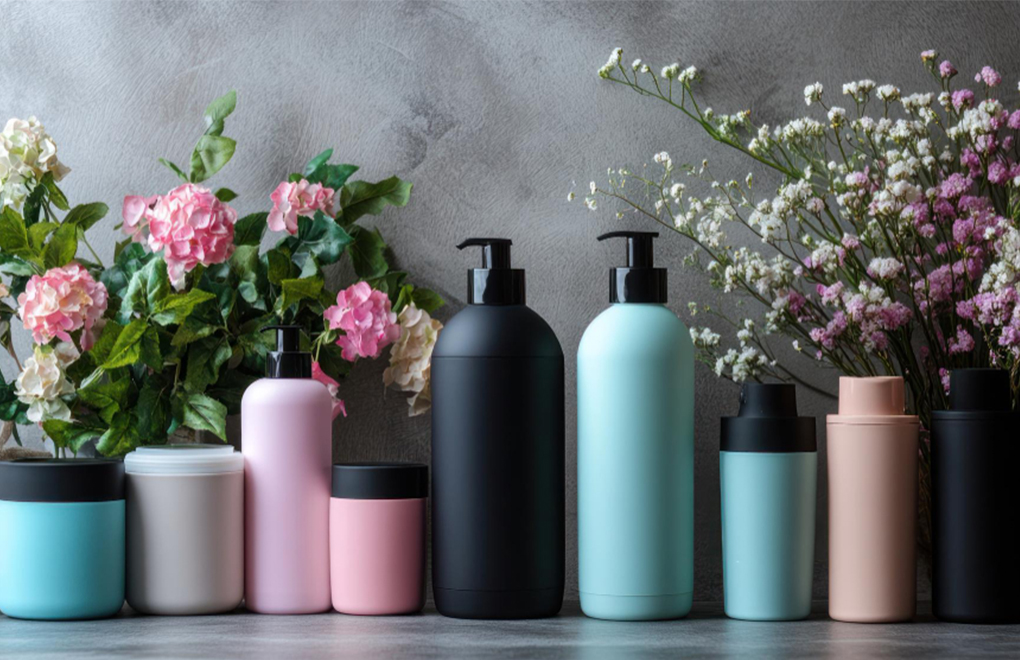
A coordinated curl care collection can use matching packaging colors, labels, typography, and finishes while maintaining clear visual differences between cleansing, conditioning, and styling products.
Explore HODM Custom Packaging Options for additional customization possibilities.
12. Choose the Right Curly Hair Product Manufacturer
Choosing the right manufacturing partner is important for developing consistent formulas, coordinating packaging, and supporting future product expansion.
Evaluate Curl Care Formulation Experience
Look for experience with curl creams, conditioners, leave-in products, styling gels, and other products designed for curly and textured hair routines.
Review R&D Capabilities
A suitable manufacturer should be able to discuss conditioning systems, texture development, ingredient compatibility, styling performance, fragrance, and sample evaluation.
Check Manufacturing and Quality Systems
Review production equipment, quality controls, batch documentation, testing procedures, relevant certifications, and packaging capabilities.
Understand MOQ and Production Costs
Confirm whether minimum quantities apply per formula, SKU, fragrance, or packaging component. Request an itemized quotation covering development, manufacturing, packaging, and relevant testing expenses.
Evaluate Communication and Long-Term Support
A reliable manufacturer should explain the development process, communicate realistic timelines, provide samples, and support future production planning.
Explore Curl Cream Manufacturer and Private Label Curl Cream Manufacturing.
13. Common Mistakes When Developing Curly Hair Products
Using One Formula for Every Curl Pattern
Different curl patterns and hair characteristics may require different conditioning and styling properties. Product development should begin with a clearly defined target customer.
Making Curl Cream Too Heavy
Excessively rich formulas may not suit every curl type. Texture, application quantity, and finish should be evaluated with representative hair types.
Ignoring Detangling Requirements
Conditioning and combability are important considerations for many curly hair routines. Formulas should be evaluated for application and detangling experience.
Focusing Only on Ingredients
A popular oil or botanical extract does not automatically create a suitable curl care product. Formula compatibility and actual performance matter more than ingredient marketing alone.
Launching Too Many Products at Once
A large initial assortment can increase development, packaging, inventory, and marketing costs. Start with a focused collection and expand based on customer demand.
Ignoring Product Compatibility
Shampoo, conditioner, curl cream, and styling gel should be evaluated individually and as part of the intended product routine.
Frequently Asked Questions
What are the best hair care products for curly hair?
Common product categories include moisturizing shampoos, conditioners, leave-in treatments, curl creams, styling gels, and intensive hair masks. The best combination depends on curl pattern, hair condition, and customer preferences.
What products should a new curly hair brand launch first?
A focused starting collection may include shampoo, conditioner, leave-in conditioner, and curl cream. Brands can add styling gels and hair masks as their product range develops.
What is the difference between curl cream and styling gel?
Curl creams generally focus on conditioning, softness, and curl definition, while styling gels are usually developed to provide different levels of hold and styling control. Some customers use both products together.
Which ingredients are commonly used in curly hair products?
Formulators may consider conditioning polymers, fatty alcohols, glycerin, panthenol, argan oil, shea butter, and other suitable emollients. Ingredient selection depends on the product format and intended performance.
Can I develop private label curl cream?
Yes. Depending on available manufacturing capabilities, brands can select existing curl cream formulas or explore custom development involving texture, fragrance, conditioning characteristics, packaging, and styling requirements.
Can a manufacturer provide curl care product samples?
Sample availability depends on the product and project requirements. HODM can discuss sample arrangements so brands can evaluate formula texture, application, fragrance, and styling characteristics before making manufacturing decisions.
What is the MOQ for private label curl cream?
MOQ varies according to formula, packaging, customization, and manufacturer requirements. Confirm whether separate minimum quantities apply to the formula, finished product, and packaging components.
How do I find a curl cream manufacturer?
Evaluate formulation experience, curl care product capabilities, sample development, packaging, quality control, MOQ, production capacity, and communication.
Explore our Curl Cream Manufacturer page.
Conclusion: Develop a Complete Curly Hair Care Collection
Curly hair care offers several product development opportunities for brands looking to serve specialized customer needs. Shampoos, conditioners, leave-in treatments, curl creams, styling gels, and hair masks can each play a different role within a coordinated collection.
The most important step is to understand your target curl patterns, select appropriate ingredients, evaluate formula performance, and create products that work well within the intended hair care routine.
Rather than launching too many products immediately, start with a focused collection that reflects your brand positioning and manufacturing capabilities.
With a clear formulation strategy and an experienced manufacturing partner, brands can develop distinctive curly hair products for both professional and consumer markets.
Develop Your Own Curly Hair Care Line with HODM
HODM Cosmetics supports brands developing specialized curly hair products through OEM/ODM and private label manufacturing.
From curl creams and conditioners to leave-in treatments, styling gels, and customized curl care collections, our team can discuss formula options, ingredient requirements, packaging, samples, and production planning.
Whether you are launching a new curl care brand or expanding an existing hair care collection, we can help you explore suitable manufacturing options.
Discuss Your Curl Care Project