
Hair Care Products for Curly Hair: How Brands Build a Complete Curl Care Line
What Products Should Be Included in a Curly Hair Care Line?
A complete curly hair care line typically includes a gentle shampoo, moisturizing conditioner, deep conditioning mask, leave-in conditioner, curl cream or defining gel, and lightweight hair oil or serum. Brands should build the line around hydration, curl definition, frizz control, detangling, and styling performance while adapting formulas to different curl patterns, hair textures, and consumer needs.
For hair care brands, curly hair is especially attractive because customers rarely rely on a single product. Cleansing, conditioning, moisturizing, defining, styling, and refreshing can all become separate steps within the same routine.
That gives brands an opportunity to build not simply a curly hair product, but an entire curl care system with multiple complementary SKUs and strong repeat-purchase potential.
Curly hair requires a different product strategy from conventional hair care.
Consumers with curly, coily, or textured hair often look for products that help manage several needs simultaneously:
- Moisture retention
- Curl definition
- Frizz control
- Detangling
- Softness
- Styling hold
- Refreshing between wash days
This creates an important opportunity for hair care brands.
Instead of launching one standalone product, brands can develop an interconnected curl care routine—from cleansing and conditioning to leave-in moisture, curl definition, styling, and finishing.
The result is a category with strong potential for multi-product systems, bundles, repeat purchases, and specialized brand positioning.
This guide explains how brands can develop a complete curly hair care line, including product selection, formulation strategy, ingredients, testing, packaging, manufacturing, and market positioning.
Why Curly Hair Care Is an Attractive Product Category for Brands
Curly hair is particularly suitable for product-line development because consumers frequently use several complementary products.
A typical routine might involve:
Cleanse → Condition → Deep Treatment → Leave-In → Define → Style → Finish
This creates significantly more product-development possibilities than a category centered around one primary SKU.
| Consumer Need | Product Opportunity |
|---|---|
| Gentle cleansing | Curl shampoo |
| Moisture | Conditioner |
| Deep hydration | Hair mask |
| Detangling | Leave-in conditioner |
| Definition | Curl cream |
| Hold | Curl gel |
| Frizz control | Serum |
| Shine & finishing | Hair oil |
| Between-wash care | Curl refresher |
For manufacturers and brands, the important question is therefore not simply “Which curly hair product should we launch?”
A better question is:
“Which combination of products creates the strongest curl care routine for our target customer?”
Understand Your Target Curl Consumer Before Developing Products
One of the biggest mistakes brands make is treating all curly hair as one market.
Different consumers can have significantly different requirements depending on:
- Curl pattern
- Hair density
- Strand thickness
- Porosity
- Climate
- Styling habits
- Chemical processing
- Desired finished look
For example, a consumer seeking lightweight definition for loose curls may want a very different formula from someone with tightly coiled, moisture-demanding hair.
Build the Product Brief Around Needs, Not Just Curl Type
Rather than developing:
“Shampoo for curly hair.”
A stronger brief might be:
“Gentle moisturizing shampoo for dry, frizz-prone curls that cleanses without leaving the hair feeling stripped.”
Likewise, instead of:
“Curl cream.”
Consider:
“Lightweight curl-defining cream designed to enhance definition and softness without a heavy or greasy finish.”
This level of specificity gives the formulation team a much clearer development target.
What Products Should Be Included in a Complete Curl Care Line?
A new brand does not necessarily need to launch every possible curly hair product.
A strong initial line could contain four to six complementary products.
A more mature range can expand into specialized treatments and styling products.
Here is how the core categories fit together.
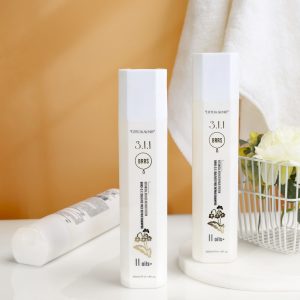
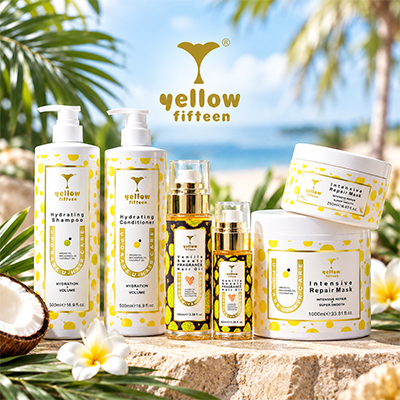
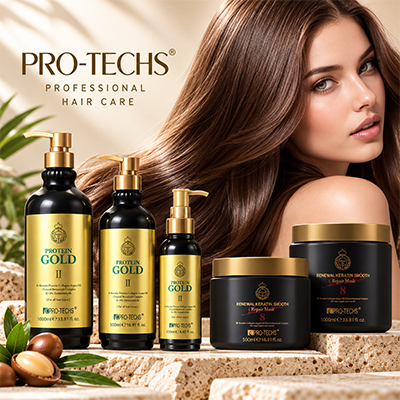
Sulfate Free Repair Shampoo
This silicone free repair conditioner revitalizes damaged hair, offering silky perfection and radiant shine with its nutrient-rich formula that repairs, smooths, and softens while promoting strength and elasticity without harsh ingredients.
- Size: 8.45 fl oz / 250 ml | 16.91 fl oz / 500 ml | 33.81 fl oz / 1000 ml
- Key Ingredients: Sweet Almond Oil, Shea Butter, Rice Protein, Argan Oil, Jojoba Oil
- Key Benefits: Deep Repair, Hair Softening, Elasticity Boost, Shine Enhancement, Strength Support
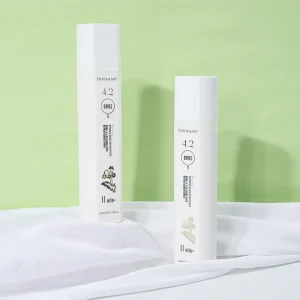
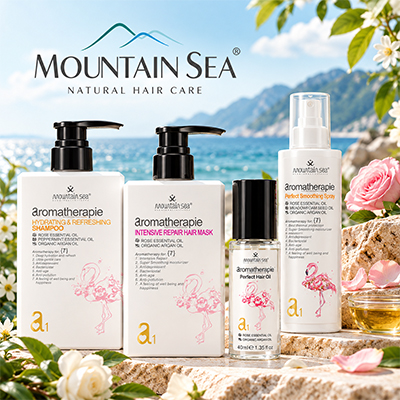
Silicone Free Repair Conditioner
This biotin conditioner combines rosemary, peppermint, tea tree, and ginger oils with vitamins E and H to stimulate growth, nourish roots, and thicken hair, while its lightweight formula conditions, fortifies, and revitalizes for a healthier appearance.
- Size: 8.45 fl oz / 250 ml | 16.91 fl oz / 500 ml | 33.81 fl oz / 1000 ml
- Key Ingredients: Biotin, Rosemary Oil, Pumpkin Seed Oil, Tea Tree Oil, Zinc Lactate
- Key Benefits: Hair Thickening, Scalp Refresh, Growth Support, Root Nourishment, Strength Support
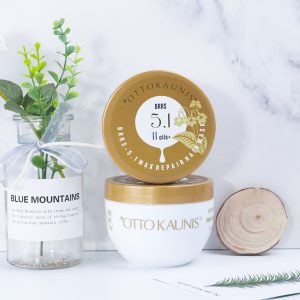
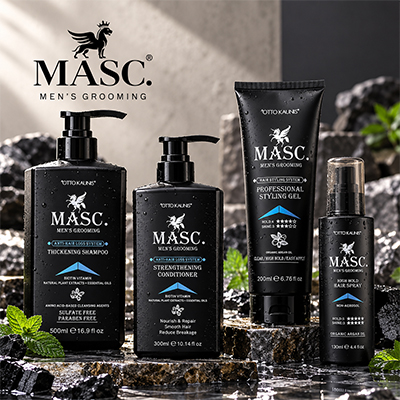
Max Repair Hair Mask
This max repair hair mask is a luxurious treatment that repairs and softens lifeless hair while promoting shine; its nutrient-rich, creamy formula offers intensive repair and a cashmere touch for all hair types.
- Size: 8.45 fl oz / 250 ml | 16.91 fl oz / 500 ml
- Key Ingredients: Argan Oil, Macadamia Oil, Jojoba Oil, Hydrolyzed Keratin, Ceramide NG
- Key Benefits: Intensive Repair, Hair Softening, Shine Enhancement, Strength Support, Smooth Finish
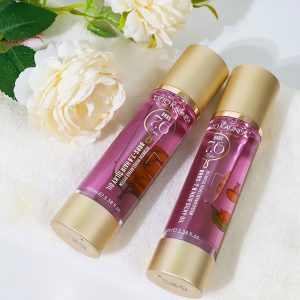
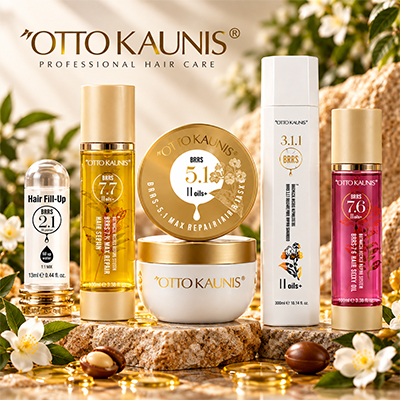
Hair Silky Oil
This platinum blonde hair serum is a luxurious elixir that reduces unwanted tones, enhances color, and restores damaged hair with coconut, argan oil, and honey, adding shine in a lightweight, residue-free, silky formula.
- Size: 1.69 fl oz / 50 ml
- Key Ingredients: Argan Oil, Coconut Oil, Macadamia Oil, Honey Extract, Conditioning Ingredients
- Key Benefits: Tone Correction, Color Enhancement, Hair Repair, Shine Enhancement, Lightweight Care
How to Structure a Curly Hair Product Line
There is no requirement for a startup to launch eight or ten products immediately.
A staged approach can reduce inventory complexity.
Starter Curl Care Line
| Product | Role |
|---|---|
| Curl Shampoo | Cleansing |
| Curl Conditioner | Moisture + detangling |
| Leave-In Conditioner | Daily moisture |
| Curl Cream | Definition |
This gives a new brand a logical 4-SKU routine.
Expanded Curl Care Line
Once demand is validated, add:
- Hair mask
- Curl gel
- Hair oil
- Curl refresher
The range then becomes:
Cleanse → Condition → Treat → Moisturize → Define → Hold → Finish → Refresh
This is a much stronger commercial structure than launching unrelated curly hair products.
Key Formulation Considerations for Curly Hair Products
Developing curl care products is not simply about adding oils or botanical extracts.
The entire formula needs to support the intended user experience.
Brands and formulators should consider several areas.
Moisture and Conditioning
Curly hair products commonly emphasize:
- Moisture
- Softness
- Slip
- Detangling
But formulas should avoid becoming unnecessarily heavy for the intended hair type.
Curl Definition
Styling formulas need to balance:
Definition + Hold + Flexibility + Natural Movement
Too little styling performance may provide poor definition.
Too much can create stiffness or an undesirable feel.
Frizz Control
Frizz-control performance can be particularly important in humid climates.
Brands targeting markets such as the United States, Middle East, Southeast Asia, or other high-humidity regions may need to consider local consumer expectations during development.
Sensory Performance
Consumers judge curl products not only by ingredients but also by:
- Texture
- Spreadability
- Absorption
- Residue
- Stickiness
- Fragrance
- Hair feel after drying
This makes sensory testing an important part of product development.
Ingredients Brands Can Consider for Curl Care Formulas
There is no single ingredient combination that defines a good curly hair product.
Ingredients should be selected according to the product’s intended function.
Humectants
Can support moisture-focused formulation strategies.
Examples may include:
- Glycerin
- Panthenol
Conditioning Agents
Used to support:
- Detangling
- Smoothness
- Manageability
- Hair feel
Oils and Emollients
Can contribute to:
- Softness
- Shine
- Lubrication
- Premium sensory positioning
Proteins and Strengthening Ingredients
May be incorporated into products positioned around damaged or weakened curls.
Styling Polymers
Particularly relevant to:
- Curl gels
- Styling creams
- Defining products
They can influence hold, definition, flexibility, and style retention.
The key principle is:
Ingredient selection should follow the product objective—not the other way around.
How Manufacturers Develop Custom Curly Hair Formulas
Once the product strategy is defined, formula development can begin.
A typical process looks like:
Product Brief → Formula Direction → Laboratory Sample → Brand Evaluation → Adjustments → Testing → Approval → Production
Step 1: Create the Product Brief
The brand should provide information about:
- Target consumer
- Product category
- Desired benefits
- Texture
- Fragrance
- Ingredient preferences
- Claims
- Target price
- Packaging
- Sales market
Step 2: Develop Initial Samples
The manufacturer translates the brief into laboratory samples.
Step 3: Evaluate Performance
Brands may evaluate:
- Moisture
- Slip
- Definition
- Hold
- Frizz
- Residue
- Hair feel
Step 4: Refine the Formula
Feedback is used to adjust the formula until the desired performance and sensory profile are achieved.
Anchor:
“custom hair care formulation process”
→ How Hair Care Factories Develop Custom Formulas: From Concept to Production
Private Label vs Custom Formula for Curly Hair Brands
Both models can work.
The right choice depends on budget, launch speed, and differentiation goals.
| Factor | Private Label | Custom Formula |
|---|---|---|
| Development speed | Faster | Longer |
| Initial complexity | Lower | Higher |
| Formula uniqueness | Limited | Higher |
| Development flexibility | Moderate | High |
| Best for | Market testing | Differentiated brands |
Choose Private Label When:
- Launch speed matters
- You want to test demand
- Development budget is limited
- Existing formulas meet your positioning
Choose Custom Formula When:
- Product performance is a major differentiator
- You have specific texture requirements
- You want unique hero products
- You are building a long-term specialized curl brand
Anchor:
“custom formula vs private label hair care”
→ Custom Formula vs Private Label Hair Care: Which Should You Choose?
Testing Curly Hair Care Products Before Production
Testing becomes especially important when a product’s value depends heavily on sensory and styling performance.
Depending on the formula and target market, development may involve appropriate:
- Stability testing
- Microbial testing
- Packaging compatibility evaluation
- Safety assessment
- Performance evaluation
Brands should also consider testing products across the hair profiles relevant to their intended customers.
A curl cream developed only around one texture may perform differently for consumers with finer curls or tighter coils.
Anchor:
“hair care product testing requirements”
→ Hair Care Product Testing Requirements Explained: Safety, Stability, Microbial, and Compliance Testing
Packaging Options for Curly Hair Products
Packaging should match formula viscosity, usage method, and brand positioning.
| Product | Common Packaging Direction |
|---|---|
| Shampoo | Bottle / pump |
| Conditioner | Bottle / pump |
| Hair mask | Jar / tube |
| Leave-in | Pump / tube / spray |
| Curl cream | Tube / pump / jar |
| Curl gel | Tube / bottle |
| Hair oil | Pump / dropper |
Do not select packaging based only on appearance.
Brands should consider:
- Formula compatibility
- Dispensing performance
- Leakage risk
- Shipping
- Label space
- Consumer convenience
Anchor:
“hair care packaging”
→ Custom Hair Care Packaging: How to Choose Bottles, Tubes, and Jars for Your Brand
How Much Does It Cost to Develop a Curly Hair Product Line?
There is no universal cost because the investment depends on the development model.
Important variables include:
- Number of SKUs
- Private label vs custom formula
- Ingredients
- Formula complexity
- MOQ
- Packaging
- Testing
- Labeling
- Freight
A four-product stock-formula line with standard packaging will generally have a very different cost structure from an eight-product custom range with bespoke packaging.
For new brands, this is another reason to consider launching a focused core system first and expanding after validating demand.
Anchor:
“budget for your first hair care product line”
→ How to Budget for Your First Hair Care Product Line: Manufacturing, Packaging, and Launch Costs Explained
How to Position a Curly Hair Brand in a Competitive Market
Simply writing “For Curly Hair” on the packaging is not enough differentiation.
Brands should establish a more specific value proposition.
Hydration-Focused Curl Brand
Focus on:
- Dry curls
- Moisture
- Softness
- Frizz management
Definition-Focused Curl Brand
Focus on:
- Curl shape
- Definition
- Styling
- Hold
Professional Curl Brand
Focus on:
- Salon performance
- Professional routines
- Premium formulas
Natural-Inspired Curl Brand
Focus on:
- Botanical ingredients
- Oils
- Ingredient storytelling
Textured Hair Brand
Develop products specifically around the needs of curly, coily, and textured hair consumers.
The narrower the initial positioning, the easier it can be to create coherent products and marketing.
How to Choose a Manufacturer for Curly Hair Products
A manufacturer should be evaluated on more than price.
Brands should consider whether the supplier can support:
- Shampoo and conditioner manufacturing
- Treatment formulas
- Styling formulas
- Custom formulation
- Product sampling
- Stability and quality processes
- Packaging sourcing
- Scalable production
- Regulatory documentation for target markets
For a complete curl line, manufacturing breadth matters because the formulas for a shampoo, mask, leave-in cream, and styling gel require different technical capabilities.
Anchor:
“choosing a hair care manufacturer”
→ Questions to Ask Before Choosing a Hair Care Manufacturer
Anchor:
“evaluate a hair care manufacturer”
→ How to Evaluate a Hair Care Manufacturer Before Signing a Contract
Common Mistakes Brands Make When Developing Curly Hair Products
1. Treating Every Curl Consumer the Same
Curl patterns, porosity, density, and styling preferences vary considerably.
Define the target customer before formulation.
2. Launching Too Many SKUs
A new brand does not need ten products.
Four strong complementary products can create a complete initial routine.
3. Making Products Too Heavy
More oil or conditioning ingredients do not automatically mean better curl performance.
Balance matters.
4. Focusing on Ingredients but Ignoring Performance
Consumers ultimately judge:
- Definition
- Moisture
- Frizz
- Feel
- Hold
- Results
Ingredient storytelling should support—not replace—product performance.
5. Developing Each Product Independently
A curl line should work as a system.
The shampoo, conditioner, leave-in, and styling products should complement one another.
FAQ
What products should a curly hair brand launch first?
A new curly hair brand can start with four core products: a gentle curl shampoo, moisturizing conditioner, leave-in conditioner, and curl-defining cream. This creates a complete cleanse, condition, moisturize, and style routine while keeping the initial SKU count manageable.
Are curly hair products a good category for private label brands?
Yes. Curly hair is well suited to private label development because consumers typically use multiple complementary products. Brands can start with proven formulas and later develop custom products as demand and differentiation requirements increase.
What is the best hero product for a curly hair brand?
Curl creams, defining products, and leave-in conditioners can make strong hero products because their performance is easy for consumers to experience and demonstrate. The best choice ultimately depends on the brand’s target consumer and positioning.
Should curly hair products be sulfate-free?
Not every curly hair product must be sulfate-free. The cleansing system should be selected according to the intended performance, target consumer, product claims, and market positioning rather than relying on a single ingredient rule.
What ingredients are commonly used in curly hair products?
Curl care formulas may use humectants, conditioning agents, emollients, botanical oils, proteins, and styling polymers depending on whether the product is designed for moisture, detangling, definition, hold, repair, or finishing.
Can a manufacturer develop a complete curly hair care line?
Yes. A capable hair care manufacturer can develop complementary shampoos, conditioners, masks, leave-ins, curl creams, gels, oils, and other treatments through private label, OEM, ODM, or custom formulation models.
How many products should a new curl care brand launch?
For many startups, three to five complementary SKUs are more manageable than launching a large collection immediately. A four-product shampoo, conditioner, leave-in, and curl cream system can provide a strong starting point.
How long does it take to develop custom curly hair products?
Development time varies according to formula complexity, number of sample revisions, testing requirements, packaging selection, and production scheduling. Stock or private label formulas generally allow faster launches than fully custom formulas.
Conclusion: Build a Curl Care System, Not Just a Curly Hair Product
The strongest opportunity in curly hair care comes from building products around a complete consumer routine.
For many brands, that means starting with:
Curl Shampoo → Conditioner → Leave-In → Curl Cream
and later expanding into:
Hair Mask → Curl Gel → Hair Oil → Curl Refresher
A successful line combines three elements:
Clear Consumer Positioning + Complementary Product System + Reliable Product Development
When these elements work together, brands can create curl care ranges that are easier to understand, market, bundle, and scale.
Develop a Custom Curly Hair Care Line with HODM
HODM supports brands developing private label and custom curly hair products, from initial product concepts and formula development to sampling, packaging, testing, and commercial manufacturing.
Whether you are launching a focused four-product curl system or expanding an established brand into a complete curly hair range, the development strategy should match your target consumer, positioning, budget, and sales market.
Contact HODM to discuss your curly hair product concept and develop a curl care line for your brand.