

What Should Be Included in a Hair Care Product Specification Sheet?
A hair care product specification sheet is an important document in private label and OEM/ODM manufacturing. It records the agreed product requirements and provides a common reference for brands, manufacturers, purchasing teams, and quality control personnel.
Whether you are developing a shampoo, conditioner, hair mask, hair oil, serum, or styling product, a clear specification sheet helps organize formula information, product characteristics, packaging requirements, quality standards, and manufacturing details.
During product development, HODM supports brands through custom hair care formula development and OEM/ODM hair care manufacturing, helping coordinate product requirements from formula development and sample approval to commercial production.
This guide explains what should be included in a hair care product specification sheet, how to organize the information, which technical details should be confirmed, and how brands can use the document to support consistent manufacturing and quality control.
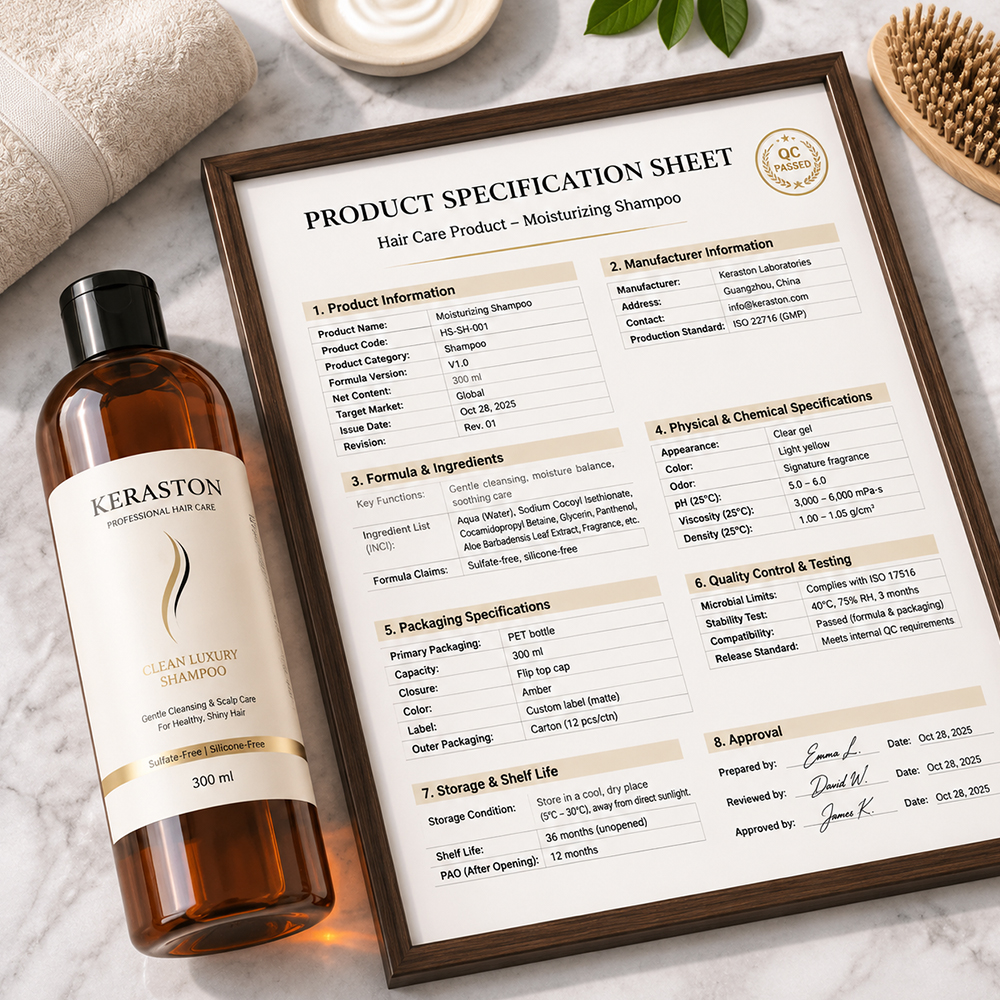
Hair care product specification sheet
1. What Is a Hair Care Product Specification Sheet?
A hair care product specification sheet is a controlled document that describes the agreed characteristics and requirements of a finished product.
It typically identifies the product, defines its formula and physical characteristics, records packaging requirements, and establishes relevant quality control criteria.
The document acts as a reference throughout product development, sample approval, manufacturing, inspection, and future production orders.
Why Brands Need Product Specifications
- Clear Product Requirements: Defines what the manufacturer is expected to produce.
- Consistent Communication: Gives the brand and manufacturer a shared technical reference.
- Sample Approval: Helps compare development samples against agreed requirements.
- Quality Control: Establishes relevant product characteristics and acceptance criteria.
- Production Consistency: Helps maintain documented requirements across production batches.
- Change Management: Provides a reference when formulas, packaging, or product requirements change.
Specification Sheet vs. Formula Record
These documents are related but serve different purposes. A product specification sheet describes the agreed characteristics and acceptance requirements of a product. A formula record contains formulation information and manufacturing details, which may be confidential.
A specification sheet does not necessarily need to disclose every proprietary formula detail to every commercial stakeholder. The information shared should reflect the responsibilities of the recipient and the agreed confidentiality arrangements.
2. Product Identification and Basic Information
Every product specification sheet should begin with clear identification information. This prevents confusion between similar products, different sizes, formula versions, and packaging configurations.
Essential Product Information
- Product name and product category.
- Brand name or private label project name.
- Internal product code or SKU.
- Formula identification or version number.
- Product size and net content.
- Target market and intended customer.
- Product application and intended use.
- Specification document number.
- Document revision date.
- Approval status and responsible parties.
Why Product Identification Matters
A brand may have several shampoos with similar names but different formulas, fragrances, or packaging sizes. Without unique identification, purchasing and production teams may use the wrong reference.
Each SKU or materially different product configuration should be identifiable, with the appropriate specification and approval records.
3. Formula Specifications and Product Composition
Formula specifications describe the agreed formulation requirements and important characteristics of the finished product.
Formula Identification
Record the approved formula version or reference number. This makes it easier to distinguish the final approved formula from earlier development samples.
Ingredient Information
Depending on the product and documentation requirements, the specification may include the ingredient list, INCI names, ingredient restrictions, and relevant raw material information.
Brands should confirm that the ingredient information used for product labeling matches the final approved formula and applicable market requirements.
Ingredient Requirements and Restrictions
Some projects have specific formulation requirements, such as sulfate-free, silicone-free, fragrance-free, or selected botanical ingredients.
These requirements should be documented clearly rather than relying on informal conversations or assumptions.
Formula Characteristics
- Formula type and product format.
- Approved fragrance direction.
- Color and appearance requirements.
- Texture and viscosity target.
- pH requirements where applicable.
- Relevant ingredient restrictions.
- Approved formula version.
Exact formula percentages and proprietary processing details may be maintained in a separate controlled formula record rather than a general product specification sheet.
4. Physical and Chemical Product Specifications
Physical and chemical specifications describe measurable or observable characteristics of the finished product. These details help manufacturers and quality teams evaluate whether a product meets its approved requirements.
Appearance and Color
Describe the expected appearance, color, clarity, and uniformity. Where appropriate, include an approved sample or visual reference.
Odor and Fragrance
Record the approved fragrance reference and relevant sensory requirements. The specification should explain the expected fragrance profile without relying only on subjective descriptions.
pH Value
For applicable products, record the agreed pH range and measurement method. The acceptable range should be established according to the formula and product requirements rather than using one universal value for all hair care products.
Viscosity
Viscosity is especially important for shampoos, conditioners, hair masks, and styling creams. Record the target range together with the relevant measurement conditions, such as temperature, instrument, spindle, and speed where applicable.
Density and Other Measurements
Depending on the product and filling requirements, density, net content, and other relevant physical measurements may also be included.
| Specification | What to Record | Purpose |
|---|---|---|
| Appearance | Color, clarity, and uniformity | Visual quality |
| Odor | Approved fragrance reference | Sensory consistency |
| pH | Approved range and method | Formula control |
| Viscosity | Target range and test conditions | Texture and dispensing |
| Density | Target value where required | Filling and product control |
| Net Content | Declared product quantity | Filling and labeling control |
Every measurable specification should have an agreed acceptance range and a defined test method where appropriate.
5. Product-Specific Specifications for Different Hair Care Categories
Different hair care products require different specification details. A shampoo, conditioner, hair mask, and hair oil should not use an identical specification template without category-specific adjustments.
Shampoo Specifications
- Cleansing system and formula identification.
- Appearance, color, and fragrance.
- pH and viscosity where applicable.
- Foam and rinsability evaluation criteria.
- Packaging and dispensing requirements.
Conditioner Specifications
- Conditioning system and formula version.
- Texture, viscosity, and appearance.
- pH requirements where applicable.
- Application and rinsability characteristics.
- Packaging compatibility.
Hair Mask Specifications
- Formula type and conditioning profile.
- Texture, viscosity, and appearance.
- Fragrance and color reference.
- Application instructions and recommended use.
- Jar or tube packaging requirements.
Hair Oil and Serum Specifications
- Oil or serum formula identification.
- Appearance, color, and odor.
- Viscosity or flow characteristics where relevant.
- Application and sensory requirements.
- Compatibility with bottles, pumps, and droppers.
Spray and Leave-In Product Specifications
- Formula appearance and consistency.
- Spray distribution and output requirements.
- Application and drying characteristics.
- Residue and finished hair feel.
- Spray mechanism compatibility.
6. Ingredient List, INCI Names, and Raw Material Documentation
Ingredient documentation is important for product identification, labeling, regulatory review, and quality management.
Use Correct INCI Names
INCI names are standardized ingredient names used in cosmetic product labeling. The final ingredient list should be prepared according to the applicable requirements of the target market and the actual approved formula.
Keep Ingredient Information Consistent
The product specification, approved formula record, artwork, and regulatory documentation should be aligned. Any changes to ingredients should be reviewed before updating labels or commercial product records.
Maintain Relevant Raw Material Records
Depending on the manufacturer's quality system and project requirements, supporting documentation may include:
- Raw material specifications.
- Supplier technical information.
- Certificates of Analysis (COA), where applicable.
- Safety Data Sheets (SDS), where applicable.
- Relevant ingredient declarations.
- Allergen or restricted substance information where required.
Protect Confidential Formula Information
Brands should agree with their manufacturer which formula details are included in customer-facing specifications and which are maintained as confidential technical records.
7. Packaging Specifications: Bottles, Pumps, Jars, and Labels
Packaging information is an essential part of a hair care product specification sheet. It identifies the approved container and dispensing system and helps ensure that purchasing, filling, and quality teams use the correct components.
Container Specifications
- Container type and material.
- Nominal capacity and dimensions.
- Bottle, jar, or tube design reference.
- Color and surface finish.
- Neck finish and closure compatibility.
Dispensing Components
- Pump, spray, dropper, or closure type.
- Dispensing output where applicable.
- Dip tube specifications.
- Cap, liner, gasket, and seal details.
- Component material information.
Label and Decoration Specifications
- Approved label artwork.
- Label dimensions and placement.
- Printing method and color reference.
- Product name and declared net content.
- Required product information for the target market.
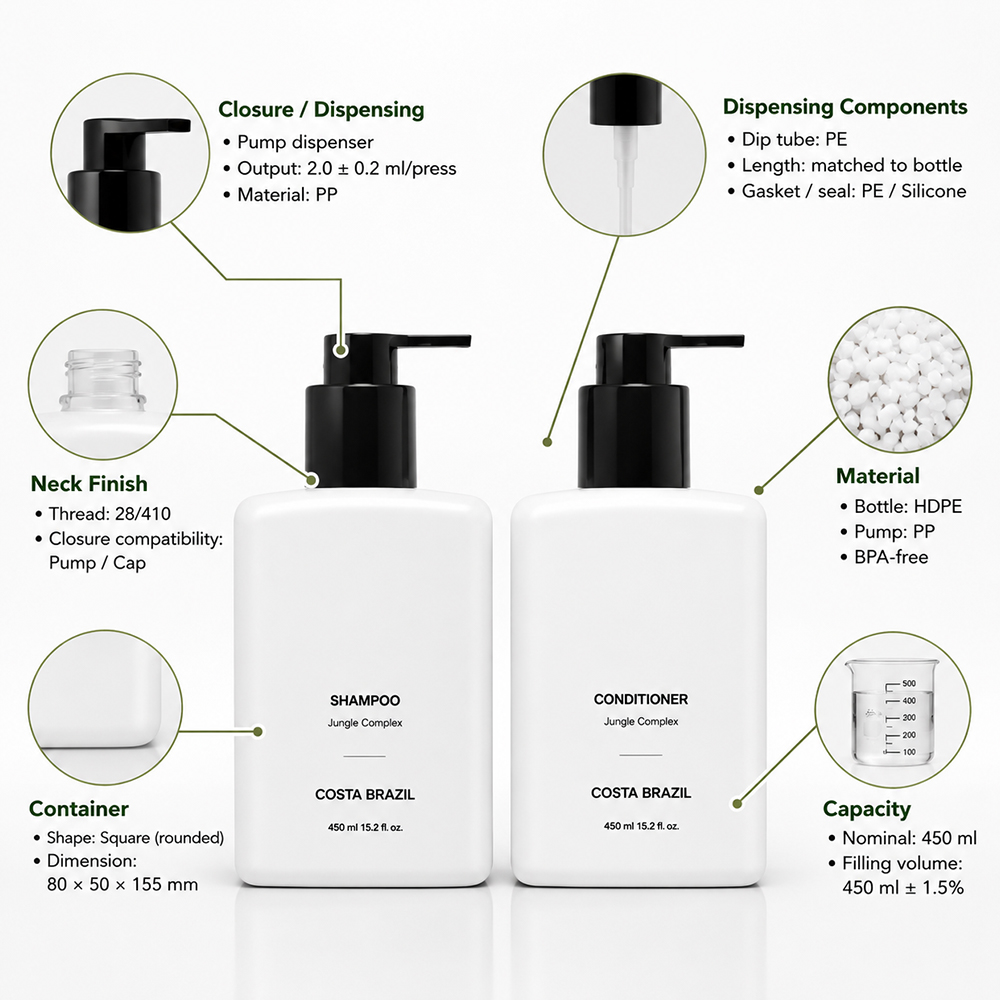
Packaging specifications should identify the approved container, closure, material, capacity, and dispensing components.
Match Packaging with the Formula
Packaging specifications should be confirmed together with the actual formula. Container material, pump design, closure, seals, and dispensing performance all need to be considered.
For more details, read Hair Care Packaging Compatibility: Matching Formulas with Bottles, Pumps, and Jars.
You can also explore HODM Custom Packaging Options for packaging customization.
8. Quality Control Specifications and Acceptance Criteria
A product specification sheet should define the quality characteristics that need to be checked and the acceptance criteria used to determine whether a finished product meets the agreed requirements.
Finished Product Inspection
Depending on the product category, inspection may include appearance, odor, color, pH, viscosity, net content, packaging condition, and dispensing performance.
Define Acceptance Limits
Whenever a characteristic can be measured, specify the agreed target or acceptable range rather than relying on descriptions such as normal, suitable, or good.
Establish Inspection Methods
Define the relevant measurement method, equipment, sampling approach, and inspection conditions where applicable.
Document Nonconforming Results
If a batch or component does not meet the agreed specifications, record the deviation and follow the manufacturer's quality procedures for investigation and disposition.
| Quality Area | Example Inspection | Specification Reference |
|---|---|---|
| Appearance | Visual inspection | Approved appearance reference |
| pH | pH measurement | Approved pH range |
| Viscosity | Viscosity measurement | Target range and method |
| Net Content | Filling quantity check | Declared quantity requirements |
| Packaging | Visual and functional inspection | Approved packaging specification |
| Microbiological Quality | Applicable microbiological testing | Product-specific requirements |
The exact acceptance limits and test frequency should be established by the manufacturer according to the product, applicable standards, and agreed quality requirements.
9. Testing, Stability, and Regulatory Documentation
Product specifications should identify relevant testing and documentation requirements. These requirements depend on the formula, product type, manufacturing process, and target market.
Stability Testing
Stability assessments help evaluate changes in appearance, odor, viscosity, pH, and other relevant product characteristics under defined storage conditions.
Microbiological Testing
Water-based hair care products require suitable microbiological quality controls. Testing may include microbial limits and preservative efficacy assessments where applicable.
Packaging Compatibility Testing
Evaluate whether the formula works with the selected bottle, pump, jar, closure, and other components throughout the intended storage and use conditions.
Safety and Market Compliance
Brands should identify applicable cosmetic safety, labeling, ingredient, and documentation requirements for each intended sales market.
Supporting Documents
- Product specification sheet.
- Approved ingredient list.
- Relevant test reports.
- Stability assessment records.
- Packaging compatibility records.
- Relevant safety and regulatory documentation.
- Finished product batch documentation.
A specification sheet should reference relevant testing requirements and records. It does not replace the underlying test reports, safety assessments, or regulatory documents.
For more information, read Hair Care Product Sample Evaluation: What Brands Should Check Before Approval.
10. Manufacturing, Batch, and Traceability Information
Product documentation should support manufacturing consistency and traceability. The specification sheet can reference the production requirements and related records maintained by the manufacturer.
Manufacturing Identification
- Manufacturing site or facility reference.
- Product code and formula version.
- Approved manufacturing instructions reference.
- Filling and packaging requirements.
Batch Information
- Batch or lot number.
- Manufacturing date.
- Relevant raw material batch references.
- Finished product quantity.
- Quality inspection and release status.
Traceability
Traceability records help identify the materials, production activities, and quality checks associated with a particular finished product batch.
Storage and Transportation
Include the approved storage conditions, handling instructions, and relevant transportation considerations. These should reflect the actual formula and packaging requirements.
11. Product Labeling, Usage Instructions, and Claims
Product labeling information should be consistent with the approved formula, product specifications, and regulatory requirements of the target market.
Product Name and Net Content
Confirm the product name, category, declared net content, and relevant product identification details.
Ingredient Declaration
The ingredient declaration should be prepared using the correct ingredient information and applicable market labeling rules.
Directions for Use
Document how the product should be applied, including application quantity, frequency, rinsing instructions, and any relevant precautions.
Product Claims
Claims such as moisturizing, smoothing, strengthening, color protection, or volumizing should accurately reflect the product's intended cosmetic function and available supporting evidence.
Avoid including unsubstantiated therapeutic or medical claims in the product specification or marketing artwork.
Market-Specific Labeling
Labeling requirements vary between markets. Brands should confirm applicable requirements before approving artwork for commercial production.
12. Hair Care Product Specification Sheet: Example Template
The following example shows how a brand can organize the main information in a hair care product specification sheet. The values are illustrative placeholders, not approved HODM product specifications.
Product Identification
| Field | Example Information |
|---|---|
| Product Name | Private Label Repair Shampoo |
| Product Category | Shampoo |
| Product Code | BR-SH-001 |
| Formula Version | Formula V1.0 |
| Net Content | 300 ml |
| Target Market | To be confirmed |
| Document Revision | Rev. 01 |
Formula and Finished Product Specifications
| Specification | Target / Requirement |
|---|---|
| Appearance | Approved visual reference |
| Color | Approved color reference |
| Fragrance | Approved fragrance reference |
| pH | To be established by formula |
| Viscosity | To be established by formula |
| Ingredient List | Final approved INCI list |
Packaging Specifications
| Specification | Example Requirement |
|---|---|
| Container | 300 ml bottle |
| Material | Approved packaging material |
| Closure | Approved pump or cap |
| Color | Approved packaging sample |
| Label | Approved artwork version |
| Compatibility | Required assessments completed |
Quality and Approval Information
| Field | Record |
|---|---|
| Sample Approval | Pending / Approved / Rejected |
| Stability Assessment | Reference report |
| Microbiological Assessment | Reference report where applicable |
| Packaging Approval | Pending / Approved |
| Brand Approval | Name and date |
| Manufacturer Approval | Name and date |
Each project should adapt this template to its product category, formula, packaging, target market, and quality requirements. Not every field is necessary for every product.
13. Product Specification Approval and Change Control
A product specification sheet should be maintained as a controlled document. Once the brand and manufacturer approve the requirements, changes should be reviewed and documented.
Document Approval
Record the document version, issue date, prepared-by information, review status, and relevant approval details.
Formula Changes
Changes to ingredients, formula percentages, raw materials, fragrance, or processing requirements may affect product characteristics and should be reviewed before implementation.
Packaging Changes
Changes to the bottle material, pump, closure, liner, dimensions, or packaging supplier may require additional compatibility or functional evaluation.
Specification Revision History
Maintain a revision history showing what changed, why the change was made, who approved it, and when it became effective.
| Revision | Date | Change Description | Approval |
|---|---|---|---|
| Rev. 00 | Initial Issue | Original specification | Pending |
| Rev. 01 | To be recorded | Approved revision details | To be recorded |
Maintaining revision control helps prevent outdated formulas, packaging specifications, or artwork from being used in commercial production.
14. Common Mistakes When Preparing Hair Care Product Specifications
Using Vague Product Descriptions
Descriptions such as premium texture, suitable viscosity, or pleasant fragrance may not provide enough information for consistent evaluation. Use measurable criteria or approved references wherever possible.
Leaving Out Formula Versions
Without clear formula identification, different sample versions may be confused during development and production.
Ignoring Packaging Components
A specification sheet that identifies only the bottle but not the pump, closure, liner, or other relevant components may be incomplete.
Using the Same Template for Every Product
Shampoos, hair oils, conditioners, sprays, and hair masks have different technical and quality requirements. Adapt the specification to the product category.
Failing to Update Specifications
Formula, packaging, and labeling changes should be reflected in the approved document. Outdated specifications can create unnecessary production and quality problems.
Confusing Sample Approval with Final Product Release
An approved development sample does not replace the necessary production controls, testing, regulatory review, and finished-product release procedures.
Frequently Asked Questions
What is a hair care product specification sheet?
It is a controlled document describing the agreed product requirements, including identification, formula information, physical characteristics, packaging, quality criteria, and relevant manufacturing details.
What information should be included in a product specification sheet?
Common sections include product identification, formula version, ingredient information, appearance, color, fragrance, pH, viscosity, packaging specifications, quality control criteria, testing references, and approval records.
Is a product specification sheet the same as a formula sheet?
No. A specification sheet defines the agreed characteristics and acceptance requirements of the finished product. A formula sheet contains formulation details and may include confidential ingredient percentages and manufacturing instructions.
Should a hair care specification sheet include INCI names?
Ingredient information and the approved INCI list are important references for product labeling and documentation. The final list should match the approved formula and applicable market requirements.
Should packaging details be included in product specifications?
Yes. Relevant information may include container material, capacity, dimensions, pump or closure type, label artwork, dispensing requirements, and compatibility references.
Does every hair care product need the same specification sheet?
No. A common document structure can be used, but the technical details and acceptance criteria should be adapted to the product category. Shampoos, conditioners, hair oils, and sprays have different requirements.
Who should approve a hair care product specification sheet?
Approval responsibilities depend on the project. They may involve the brand's product development or quality team and the manufacturer's authorized technical or quality representatives.
How often should a product specification sheet be updated?
It should be reviewed whenever an approved change affects product requirements, such as formula composition, raw materials, packaging components, labeling, or quality acceptance criteria.
Can an OEM/ODM manufacturer help prepare product specifications?
Yes. An OEM/ODM manufacturer can help organize product requirements, formula information, packaging specifications, testing references, and quality criteria according to the project scope and agreed responsibilities.
Conclusion: Build a Clear Product Specification Before Manufacturing
A complete hair care product specification sheet provides a common reference for brands, manufacturers, purchasing teams, and quality control personnel.
It should clearly identify the product, record the approved formula and physical characteristics, define packaging requirements, and establish relevant quality and testing criteria.
More importantly, the document should remain controlled and updated whenever approved product requirements change.
By establishing clear product specifications before commercial production, brands can improve communication, reduce misunderstandings, and support more consistent manufacturing.
Develop Your Hair Care Products with Clear Specifications and HODM
HODM Cosmetics supports private label brands with custom formula development, product sample evaluation, packaging customization, and OEM/ODM hair care manufacturing.
From initial product requirements and formula specifications to packaging coordination, quality control, and commercial production, our team can discuss the development requirements for your project.
Share your product categories, target market, formula preferences, and packaging requirements to explore suitable manufacturing options.
Discuss Your Hair Care Product Project