
Hair Care Product Launch Checklist: From Sample Approval to First Shipment
Launching a private label hair care product involves more than developing a formula and placing a manufacturing order. Before products are ready for commercial sale, brands need to complete several important stages, including sample evaluation, formula approval, product specifications, packaging confirmation, regulatory review, production, quality inspection, and shipment preparation.
Missing an approval or overlooking a production requirement can lead to unnecessary delays, packaging changes, quality issues, or shipment problems. A structured hair care product launch checklist helps brands coordinate these activities and keep their manufacturing projects on track.
Whether you are launching shampoo, conditioner, hair masks, hair oils, or styling products, HODM supports private label projects through hair care product sample development and OEM/ODM hair care manufacturing.
This guide covers the complete hair care product launch process, from initial sample approval to final shipment, helping brands understand what needs to be confirmed at each stage before their products reach the market.
1. Understanding the Hair Care Product Launch Process
A hair care product launch is a coordinated process involving product development, purchasing, packaging, manufacturing, quality control, and logistics.
Although individual projects may have different requirements, most private label hair care launches follow a similar sequence.
The Main Stages of a Hair Care Product Launch
| Stage | Main Activity | Expected Result |
|---|---|---|
| 01 | Sample Evaluation | Selected sample approved |
| 02 | Formula Approval | Final formula confirmed |
| 03 | Product Specifications | Technical requirements documented |
| 04 | Packaging Approval | Container and components confirmed |
| 05 | Artwork Approval | Labels and packaging artwork finalized |
| 06 | Compliance Review | Market requirements reviewed |
| 07 | Purchase Order | Commercial order confirmed |
| 08 | Material Preparation | Materials ready for production |
| 09 | Commercial Production | Finished products manufactured |
| 10 | Quality Control | Product inspection completed |
| 11 | Shipment Preparation | Goods and documents prepared |
| 12 | Shipping and Delivery | Goods dispatched to destination |
Each stage should have clear responsibilities, approval records, and completion requirements. Some activities may overlap, depending on the project and manufacturing arrangements.
2. Step 1: Evaluate and Approve Hair Care Product Samples
Sample evaluation is one of the most important stages before commercial production. It allows brands to assess the actual product and determine whether the formula meets their expectations.
Evaluate Product Appearance
- Product color and visual appearance.
- Texture and consistency.
- Fragrance and sensory characteristics.
- Formula uniformity.
- Overall product presentation.
Evaluate Product Performance
Different product categories require different evaluation criteria.
- Shampoo: Cleansing, foam, rinsability, and finished hair feel.
- Conditioner: Detangling, softness, spreadability, and rinsability.
- Hair Mask: Texture, conditioning performance, application, and rinsability.
- Hair Oil: Spreadability, absorption feel, smoothness, and finish.
- Styling Products: Hold, texture, application, and styling performance.
Record Sample Feedback
Brands should document feedback rather than relying on informal conversations. Record the sample version, product characteristics, requested adjustments, and final approval status.
Approve the Final Sample
Once the formula meets the agreed requirements, the brand should confirm which sample version will serve as the reference for final product development and production.
For a detailed evaluation process, read Hair Care Product Sample Evaluation: What Brands Should Check Before Approval.
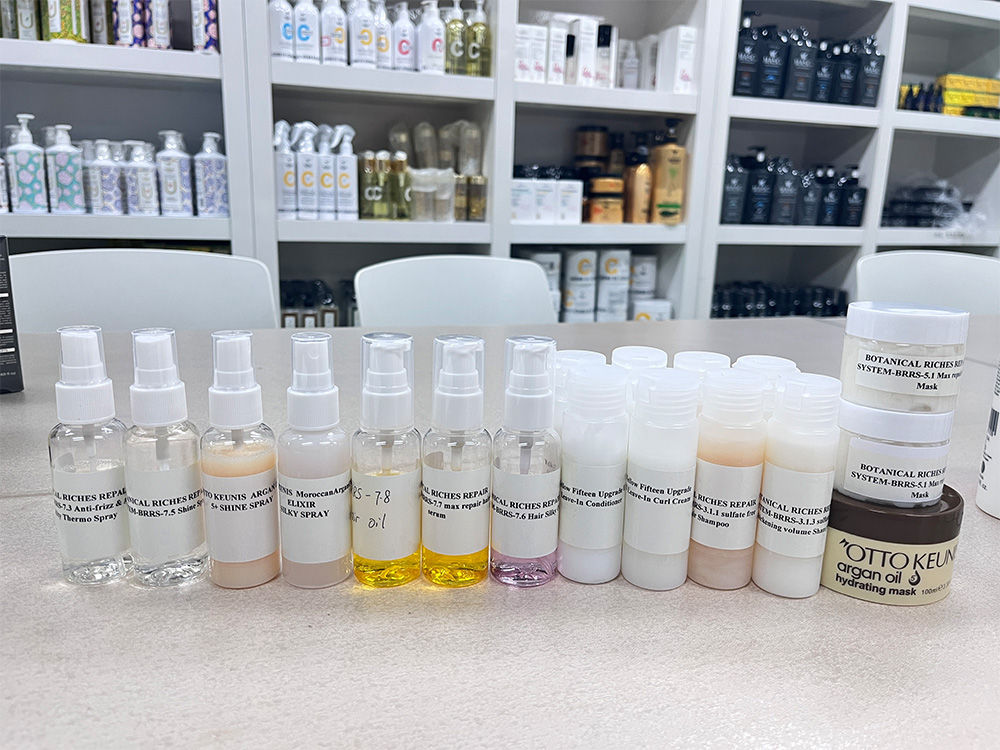
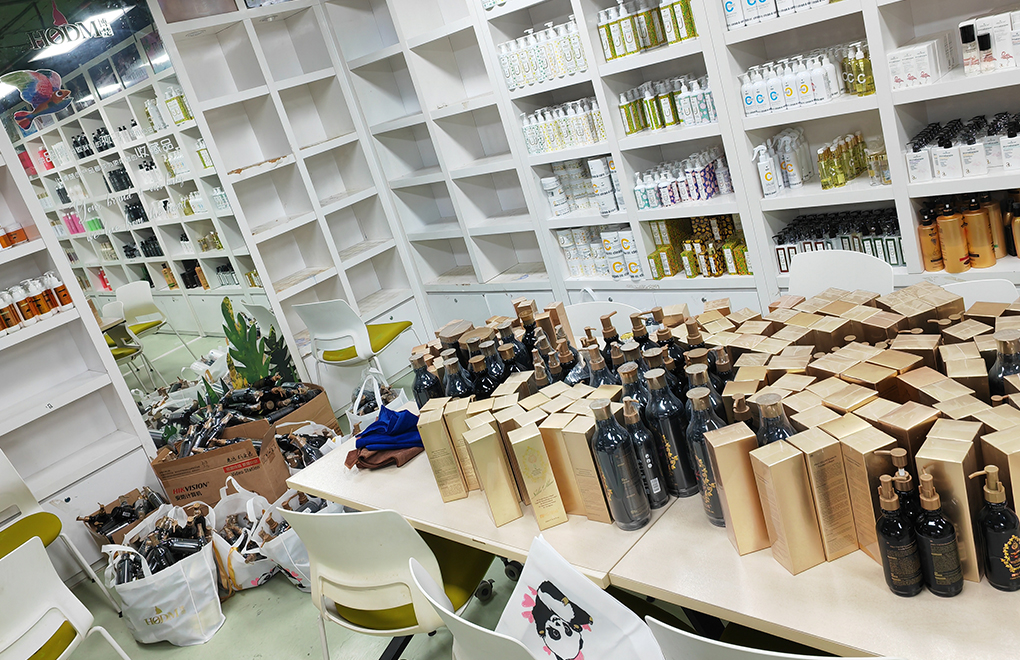
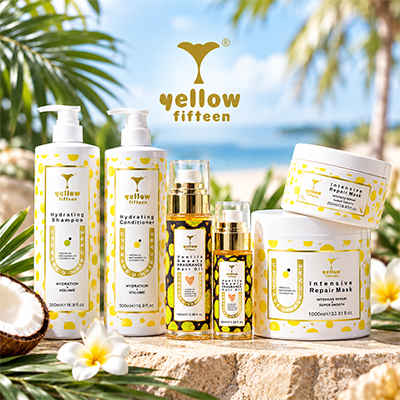
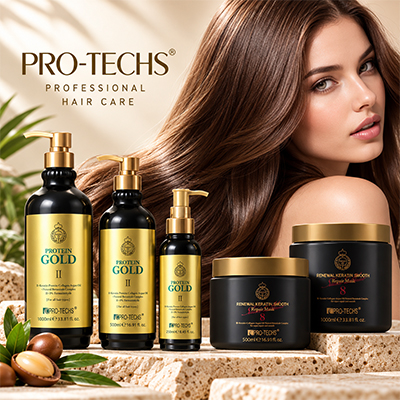
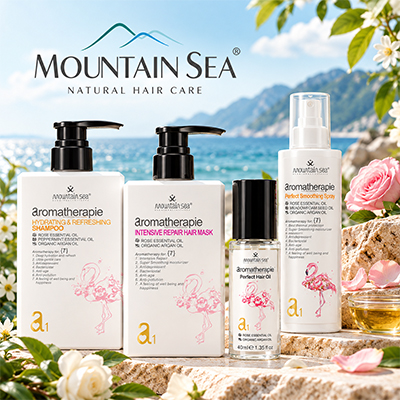
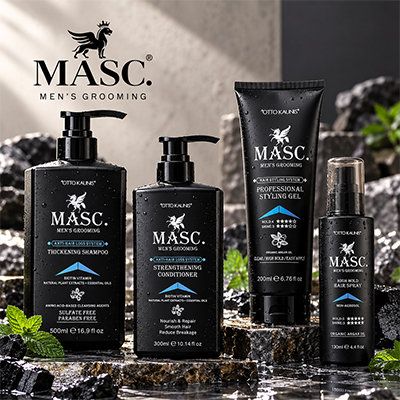
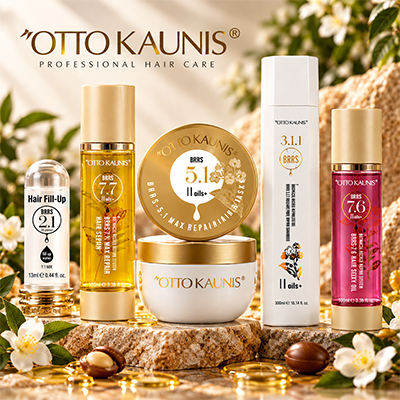
Hair care product samples available for evaluation and private label product development.
3. Step 2: Finalize and Approve the Product Formula
After sample evaluation, the next step is to confirm the final formula requirements. This helps ensure that the approved development sample and commercial production specifications remain aligned.
Confirm the Formula Version
Record the final formula identification or revision number. Previous development samples should be clearly distinguished from the approved version.
Confirm Ingredient Requirements
- Approved ingredient list.
- Required INCI names.
- Ingredient restrictions or exclusions.
- Fragrance selection.
- Relevant raw material requirements.
Confirm Physical and Sensory Characteristics
Record the agreed appearance, color, odor, texture, viscosity, pH where applicable, and other relevant product characteristics.
Review Formula Changes
If the manufacturer needs to change a raw material, ingredient, fragrance, or formulation detail, the change should be reviewed according to the agreed approval process.
Do not assume that a revised formula is automatically covered by an earlier sample approval.
Confirm the Final Formula in Writing
Maintain a documented approval record that identifies the selected formula version and any agreed product requirements.
4. Step 3: Confirm Product Specifications and Documentation
Before production, the brand and manufacturer should agree on the product specifications that will be used as the reference for manufacturing and quality control.
Product Identification
- Product name and category.
- Brand name and SKU.
- Product size and net content.
- Formula version.
- Target market.
Technical Specifications
- Appearance and color.
- Fragrance reference.
- pH requirements where applicable.
- Viscosity and measurement conditions.
- Relevant product performance criteria.
Quality and Approval Records
Document relevant acceptance criteria, testing requirements, sample approval status, and responsible parties.
Why Product Specifications Matter
Without a clear specification, different teams may use different references during purchasing, production, inspection, and future reorders.
Read What Should Be Included in a Hair Care Product Specification Sheet? for a detailed documentation guide.
5. Step 4: Select and Approve Product Packaging
Packaging should be confirmed before commercial production because container availability, customization, and compatibility can affect the manufacturing schedule.
Confirm the Container
- Bottle, jar, tube, or other packaging format.
- Material and capacity.
- Dimensions and bottle shape.
- Color and surface finish.
- Closure and dispensing components.
Confirm Pumps, Caps, and Other Components
Ensure that the selected pump, spray mechanism, dropper, cap, and sealing components are suitable for the actual formula and intended application.
Evaluate Formula and Packaging Compatibility
Test the formula with the selected packaging to assess material compatibility, leakage, dispensing performance, and other relevant requirements.
Approve Packaging Samples
Check the physical packaging sample before confirming the final container and component specifications.
Explore HODM Custom Packaging Options and read Hair Care Packaging Compatibility: Matching Formulas with Bottles, Pumps, and Jars.
6. Step 5: Finalize Labels and Packaging Artwork
Packaging artwork communicates product information and brand identity. All labels and printed components should be reviewed before being released for commercial production.
Check Brand Design
- Brand logo and product name.
- Product category and description.
- Color, typography, and visual layout.
- Label dimensions and placement.
- Printing method and surface finish.
Check Product Information
- Ingredient declaration.
- Net content.
- Directions for use.
- Warnings and precautions where required.
- Responsible business or manufacturer information where applicable.
- Batch identification and relevant date information.
Review Market-Specific Labeling Requirements
Labeling requirements vary by country and market. Brands should confirm applicable requirements for their intended sales destinations before approving final artwork.
Approve Final Artwork
Check spelling, product names, ingredient information, barcode placement, artwork dimensions, and print specifications. Keep a record of the approved artwork version.
Avoid making unsubstantiated product or performance claims. All claims should accurately reflect the finished formula and applicable market requirements.
7. Step 6: Review Regulatory and Product Compliance Requirements
Before commercial production and market launch, brands should identify the regulatory and safety requirements applicable to their products and intended sales markets.
Confirm the Target Market
Requirements can differ between the United States, United Kingdom, European Union, and other regions. A product prepared for one market should not automatically be assumed to meet the requirements of another.
Review Ingredient Compliance
Check ingredient restrictions, permitted uses, labeling requirements, and relevant documentation according to the destination market.
Complete Applicable Safety Assessments
Depending on the product and jurisdiction, relevant assessments may include cosmetic safety evaluations, microbiological testing, preservative efficacy testing, and stability assessments.
Confirm Required Documentation
Depending on the market, the product may require specific safety records, product notifications, responsible person arrangements, technical documentation, or other regulatory information.
Review Claims and Marketing Materials
Product descriptions, labels, and advertising should remain consistent with the product's intended cosmetic function and supporting evidence.
The brand and manufacturer should clarify their respective responsibilities for regulatory documentation and market access before production.
8. Step 7: Confirm the Final Quotation and Purchase Order
Once the product, formula, packaging, and applicable requirements are confirmed, the brand can finalize the commercial order.
Review the Final Quotation
- Product name and SKU.
- Approved formula and packaging.
- Unit price and order quantity.
- MOQ for each product.
- Packaging and customization costs.
- Development or other applicable charges.
- Payment terms.
- Production lead time.
- Shipping terms and delivery arrangements.
Confirm Quantities by SKU
Do not rely only on the total order quantity. Confirm the quantity for every product, size, fragrance, and packaging configuration.
Review the Purchase Order
The purchase order should match the approved quotation and specifications. Any differences should be clarified before the order is confirmed.
Confirm Payment and Production Arrangements
Review the agreed deposit, payment milestones, production start conditions, and any requirements that must be completed before manufacturing begins.
For inventory and production quantity planning, read How to Plan Your First Hair Care Production Order Without Overstocking.
9. Step 8: Prepare Raw Materials and Packaging Components
After the commercial order is confirmed, the manufacturer coordinates the materials required for production.
Raw Material Preparation
Required ingredients should be sourced and checked according to the approved formula and applicable incoming material requirements.
Packaging Procurement
Bottles, jars, pumps, closures, labels, cartons, and other packaging components should be prepared according to the approved specifications.
Incoming Material Inspection
Materials should undergo relevant incoming inspections and verification before being released for use.
Confirm Material Availability
Check whether all required raw materials and packaging components are available in the necessary quantities. Missing or delayed components can affect production scheduling.
Coordinate Production Scheduling
Confirm the expected production date and any outstanding approvals or material requirements that could affect the schedule.
10. Step 9: Begin Commercial Hair Care Production
Once the formula, packaging, materials, and production arrangements are approved, the manufacturer can begin commercial production.
Formula Preparation and Mixing
Production begins with preparing the formula according to the approved manufacturing instructions. Relevant processing parameters should be controlled and recorded.
In-Process Quality Checks
Depending on the product, in-process checks may include appearance, temperature, mixing conditions, viscosity, pH, and other relevant parameters.
Filling and Packaging
Approved formulas are filled into the selected containers using suitable filling and packaging equipment.
Labeling and Carton Packing
Products are labeled and packed according to the approved artwork, packaging configuration, and order requirements.
Production Documentation
Relevant manufacturing and batch records should be maintained to support quality management and traceability.
11. Step 10: Complete Finished Product Quality Inspection
After manufacturing and packaging, finished products should undergo the quality checks required by the agreed product specifications and quality system.
Finished Product Appearance
- Color and appearance.
- Odor and fragrance consistency.
- Formula uniformity.
- Packaging condition.
- Label and printing accuracy.
Physical and Chemical Checks
Relevant checks may include pH, viscosity, net content, and other product-specific specifications.
Packaging and Functional Checks
- Cap and closure fit.
- Pump and spray performance.
- Leakage and sealing.
- Container condition.
- Carton and packaging appearance.
Review Testing and Quality Records
Confirm that required testing, inspection records, and batch documentation are available and reviewed according to the applicable quality procedures.
Approve Finished Products for Release
Products should be released only after the applicable quality requirements have been met and authorized personnel have completed the required approval process.
12. Step 11: Prepare Products and Documents for Shipment
Before shipment, the finished products and shipping arrangements should be checked to ensure that the correct goods are prepared for dispatch.
Confirm Finished Product Quantities
Verify the actual packed quantity for each SKU against the purchase order and agreed shipment plan.
Check Carton Information
- Product names and SKU identification.
- Units per carton.
- Carton quantity.
- Carton dimensions and gross weight.
- Appropriate shipping marks where required.
Prepare Shipping Documents
Depending on the destination and shipping arrangement, relevant documents may include:
- Commercial invoice.
- Packing list.
- Bill of lading or air waybill.
- Certificate of origin where applicable.
- Other destination-specific documents.
Confirm Shipping Terms
Confirm the agreed Incoterms, shipping method, destination, freight arrangements, and responsibilities for customs clearance and delivery.
Review the Final Shipment Plan
Ensure that the product quantities, carton details, shipping documents, and delivery arrangements are consistent before dispatch.
13. Step 12: Ship Your First Hair Care Product Order
After the final shipment checks are completed, the products can be dispatched according to the agreed logistics arrangements.
Confirm Shipment Dispatch
Obtain the relevant shipping confirmation, tracking information, and transport documentation where applicable.
Monitor Transportation
Track the shipment and coordinate with the freight forwarder or logistics provider regarding any delays, customs requirements, or delivery changes.
Prepare for Customs Clearance
Ensure that the necessary shipping and import documentation is available to the responsible parties. Requirements depend on the destination country, product classification, and shipping terms.
Confirm Delivery and Receiving
Once the shipment arrives, check the delivered quantities, carton condition, and visible product condition. Record any shortages, damage, or discrepancies.
Prepare for Market Launch
Once products are received and the brand's final checks are complete, inventory can be prepared for ecommerce listings, salon distribution, retail sales, or other planned sales channels.
14. How Long Does It Take to Launch a Hair Care Product?
The timeline for launching a private label hair care product depends on formula development, sample revisions, packaging availability, testing requirements, manufacturing capacity, and shipping arrangements.
Projects using available formulas and standard packaging may follow a different timeline from projects requiring custom formulation, specialized packaging, or additional testing.
Typical Project Timeline Structure
| Project Stage | Main Activities | Timing Considerations |
|---|---|---|
| Product Development | Samples and formula revisions | Depends on development requirements |
| Approval | Formula and specifications | Depends on feedback and revisions |
| Packaging | Procurement and artwork | Depends on customization and availability |
| Compliance | Testing and market review | Depends on product and destination |
| Production | Mixing, filling, and packing | Depends on quantity and scheduling |
| Shipping | Freight and customs | Depends on destination and shipping method |
What Can Delay a Product Launch?
- Repeated formula changes.
- Delayed sample feedback or approvals.
- Custom packaging procurement delays.
- Artwork revisions and labeling issues.
- Incomplete regulatory documentation.
- Raw material or packaging shortages.
- Production scheduling changes.
- Shipping and customs delays.
Plan the Entire Project, Not Just Factory Production
The time required to manufacture the product is only one part of the overall launch timeline. Brands should plan from initial development through final delivery and inventory readiness.
15. Common Mistakes That Delay a Hair Care Product Launch
Approving Samples Without Clear Specifications
A sample may be approved informally, but without a documented formula version and product specifications, production teams may lack a clear reference.
Changing Packaging After Approval
Late packaging changes may affect component procurement, compatibility testing, artwork, and production scheduling.
Submitting Artwork Too Late
Delayed label design and approval can hold up printing and packaging preparation.
Ignoring Market Compliance
Regulatory and labeling requirements should be reviewed before commercial production and market release, not postponed until the shipment is ready.
Confirming Production Before All Requirements Are Ready
Missing formula approvals, packaging details, or order specifications can create unnecessary revisions and delays.
Leaving Shipping Arrangements Until the Last Minute
Brands should confirm shipping responsibilities, documentation, and delivery requirements before finished products are ready.
Not Maintaining an Approval Record
Keep records of formula approval, packaging approval, artwork approval, purchase orders, quality inspection, and shipment confirmation.
16. Complete Hair Care Product Launch Checklist
Use the following checklist to review your project's progress from sample development to first shipment.
| Stage | Launch Requirement | Completion Status |
|---|---|---|
| 01 | Product samples evaluated | Pending / Approved |
| 02 | Final formula approved | Pending / Approved |
| 03 | Product specifications confirmed | Pending / Approved |
| 04 | Packaging samples approved | Pending / Approved |
| 05 | Label artwork finalized | Pending / Approved |
| 06 | Regulatory requirements reviewed | Pending / Completed |
| 07 | Quotation and purchase order confirmed | Pending / Confirmed |
| 08 | Raw materials and packaging prepared | Pending / Ready |
| 09 | Commercial production completed | Pending / Completed |
| 10 | Finished product quality inspection completed | Pending / Passed |
| 11 | Shipping documents and cartons confirmed | Pending / Ready |
| 12 | Shipment dispatched and delivery tracked | Pending / Completed |
The checklist should be adapted to each project. Specific testing, documentation, and approval requirements depend on the formula, packaging, manufacturing arrangement, and target market.
Frequently Asked Questions
What are the main steps in launching a private label hair care product?
The main steps include sample evaluation, formula approval, product specification confirmation, packaging approval, artwork review, compliance preparation, purchase order confirmation, production, quality inspection, and shipment.
Should I approve samples before placing a production order?
Yes. Brands should evaluate and approve the relevant formula and packaging samples before commercial production. Final specifications and applicable quality requirements should also be documented.
What documents are needed before hair care production?
Depending on the project, documentation may include approved formulas, product specifications, ingredient information, packaging specifications, artwork, purchase orders, testing records, and applicable regulatory documentation.
When should packaging artwork be approved?
Artwork should be reviewed and approved early enough to coordinate printing and packaging procurement. Required product information and market-specific labeling should be checked before final approval.
How do I know whether my hair care product is ready for mass production?
Confirm that the formula, specifications, packaging, artwork, commercial order, and relevant compliance requirements are approved. The manufacturer should also confirm material availability and production readiness.
What quality checks are performed before shipment?
Depending on the product, checks may include appearance, odor, color, pH, viscosity, net content, packaging condition, dispensing performance, leakage, and review of relevant quality records.
How long does it take to launch a private label hair care product?
The timeline depends on formula development, sample revisions, packaging procurement, testing, production capacity, and shipping. A project-specific schedule should be confirmed with the manufacturer.
Can HODM support the complete hair care product launch process?
HODM supports private label and OEM/ODM hair care projects with formula development, sample evaluation, packaging customization, and manufacturing coordination. Specific responsibilities and services depend on the project requirements.
Explore HODM OEM/ODM Hair Care Manufacturing.
Conclusion: Follow a Clear Process from Sample Approval to First Shipment
Launching a private label hair care product requires coordination across product development, formula approval, specifications, packaging, compliance, manufacturing, quality control, and logistics.
Each stage should have clear requirements, documented approvals, and defined responsibilities. Completing these steps in the right order can help reduce avoidable revisions, production delays, and shipment problems.
For new and established brands alike, a structured hair care product launch checklist provides a practical reference for managing the journey from an approved sample to finished products ready for delivery.
With an experienced OEM/ODM manufacturing partner and a well-organized project plan, brands can move through product development and commercial production with greater clarity and confidence.
Ready to Launch Your Hair Care Product Line with HODM?
HODM Cosmetics supports private label brands with custom formula development, product sampling, packaging customization, and OEM/ODM hair care manufacturing.
From initial product concepts and sample approval to packaging coordination, commercial production, and manufacturing preparation, our team can discuss the requirements of your project.
Share your product ideas, target market, packaging preferences, and expected order quantities to explore suitable manufacturing options.
Start Your Hair Care Project