
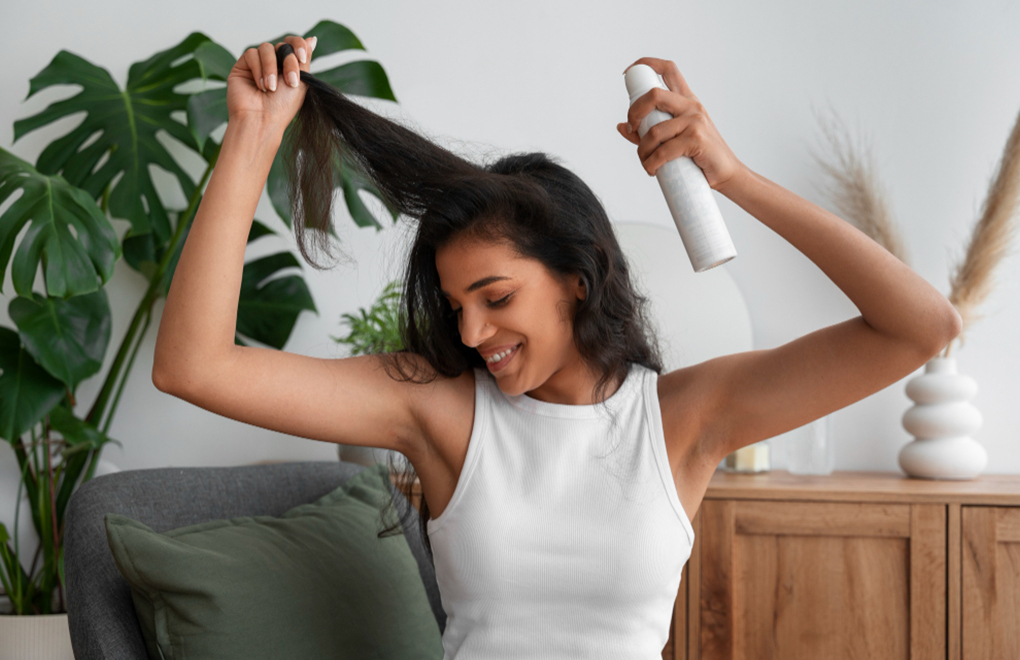
How to Develop a Heat Protection Hair Care Product Line for Styling Brands
Heat styling has become an important part of many hair care routines. Blow dryers, flat irons, curling wands, and other styling tools help consumers create different hairstyles, but repeated exposure to high temperatures can affect hair condition, moisture balance, smoothness, and manageability.
This creates opportunities for styling brands to develop specialized heat protection hair products, including thermal protection sprays, conditioning mists, anti-frizz products, and leave-in styling treatments.
Brands planning to launch their own products can explore HODM's Private Label Hair Care solutions and OEM/ODM Hair Care Manufacturing services to develop customized formulas, packaging, and coordinated styling collections.
This guide explains how to develop a heat protection hair care product line, from understanding thermal styling needs and selecting functional ingredients to formulation, performance testing, packaging, and manufacturing.
1. Understanding the Need for Heat Protection Hair Products
Heat styling tools are widely used by consumers and professional hairstylists. Different tools operate at different temperatures and expose hair to different styling conditions.
Repeated or excessive heat exposure can contribute to dryness, surface damage, reduced smoothness, and increased breakage. This makes thermal protection an important product development opportunity for hair care brands.
Common Heat Styling Applications
- Blow Drying: Hair dryers expose hair to heated airflow during drying and styling.
- Flat Ironing: Straightening tools apply direct heat to the hair surface.
- Curling: Curling irons and wands use heat to create different curl patterns.
- Professional Styling: Salon services may combine several heat-based styling techniques.
Common Hair Concerns Associated with Heat Styling
- Dryness and rough hair texture.
- Frizz and reduced smoothness.
- Loss of softness and manageability.
- Increased grooming-related breakage.
- Changes in the appearance of damaged hair.
Why Styling Brands Should Consider Thermal Protection
Heat protection products can complement styling collections by providing an additional step before blow drying, straightening, or curling.
They also create opportunities for brands to develop coordinated products rather than relying only on traditional styling gels and finishing sprays.
2. Different Types of Heat Protection Products to Develop
Heat protection products can be developed in several formats. The right choice depends on the target customer, styling routine, formula characteristics, and intended application.
Heat Protection Spray
Heat protection sprays are among the most recognizable product formats in this category. They are designed for convenient application before selected heat styling routines.
Brands can develop lightweight spray formulas with suitable conditioning and film-forming ingredients, depending on the intended performance.
Thermal Protection Conditioning Spray
Conditioning sprays combine styling preparation with conditioning properties. They can be positioned for consumers who want a convenient product that supports manageability and smoothness before styling.
Anti-Frizz Thermo Spray
Anti-frizz thermo sprays can be developed around smoothing, humidity-related styling needs, and thermal styling applications. Formula claims should distinguish between heat protection and general anti-frizz performance.
Blow-Dry Protection Products
Blow-dry products may be formulated as sprays, creams, or lightweight leave-in treatments. Their texture and application method should suit the intended styling technique.
Heat Protection Creams and Serums
Creams and serums offer alternatives to spray formats. They may be suitable for brands targeting customers who prefer richer textures, controlled application, or additional conditioning characteristics.
| Product Category | Main Product Direction | Common Format |
|---|---|---|
| Heat Protection Spray | Thermal styling preparation | Spray bottles |
| Conditioning Spray | Conditioning and styling preparation | Spray bottles |
| Anti-Frizz Thermo Spray | Smoothing and styling support | Spray bottles |
| Blow-Dry Cream | Styling preparation and conditioning | Tubes and pumps |
| Thermal Protection Serum | Smoothing and finishing care | Pump and dropper bottles |
3. Heat Protection Product Samples for Styling Brands
HODM offers styling spray product concepts that can serve as starting points for brands developing thermal protection and heat-styling collections. Customers can request samples to evaluate texture, spray distribution, fragrance, application, and other product characteristics before selecting a suitable formula.
Heat Protect Conditioning Spray
A conditioning spray concept for styling collections focused on convenient application and heat-styling preparation.
Explore Product →Anti-Frizz & Anti-Humidity Thermo Spray
A styling spray concept focused on smoothness, frizz management, and thermal styling applications.
Explore Product →These products illustrate different styling spray directions. Their actual heat protection performance, application instructions, and cosmetic claims should be confirmed through the relevant product specifications and supporting tests.
Interested in these products? Contact HODM to request samples and evaluate suitable formulas for your styling brand.
4. Key Ingredients for Heat Protection Hair Care Formulation
Ingredient selection is central to developing a heat protection product. The formula should be designed around the intended styling application, hair feel, thermal performance, and packaging format.
Film-Forming Polymers
Selected film-forming polymers can help create a coating on the hair surface. Depending on the ingredient and formula, they may contribute to styling control, surface protection, and the overall product performance.
Conditioning Polymers
Conditioning polymers can help improve combability, softness, and manageability. They may be incorporated into thermal sprays and leave-in styling products.
Silicones and Smoothing Ingredients
Selected silicones, including dimethicone and other suitable silicone derivatives, may be used to improve slip, smoothness, and conditioning feel.
Panthenol and Humectants
Panthenol and other suitable moisturizing ingredients can be considered for products targeting conditioning and improved hair feel.
Plant Oils and Emollients
Selected oils and emollients may contribute to product positioning and conditioning properties. Their concentration should be appropriate for the product format to avoid an excessively heavy finish.
Fragrance and Formula Components
Fragrance, preservatives, solubilizers, pH adjusters, and other functional ingredients may also be required depending on the formula.
| Ingredient Direction | Potential Function | Product Format |
|---|---|---|
| Film-Forming Polymers | Surface film and styling support | Thermal Sprays |
| Conditioning Polymers | Combability and manageability | Conditioning Sprays |
| Dimethicone | Smoothness and slip | Sprays and Serums |
| Panthenol | Conditioning support | Leave-In Products |
| Glycerin | Humectant function | Water-Based Formulas |
| Plant Oils | Emolliency and conditioning | Creams and Serums |
No single ingredient guarantees thermal protection. The complete formulation must be evaluated under the intended heat-styling conditions before making specific performance claims.
5. How to Develop a Heat Protection Spray Formula
Developing a thermal protection spray requires a clear product brief and an appropriate formulation strategy. The formula should provide the intended application experience while maintaining suitable stability and performance.
Step 1: Define the Intended Styling Application
Determine whether the product is intended for blow drying, flat ironing, curling, or multiple styling methods.
Different applications may require different formula characteristics, application methods, and performance evaluation conditions.
Step 2: Choose the Formula Type
Decide whether your product will be a lightweight water-based spray, conditioning mist, emulsion spray, or another suitable format.
Step 3: Select Functional Ingredients
Consider suitable film-forming ingredients, conditioning agents, smoothing components, humectants, and other functional materials according to the product brief.
Step 4: Adjust Texture and Spray Characteristics
The formula should distribute evenly through the hair and work with the selected spray packaging. Avoid an overly heavy finish or uneven application.
Step 5: Evaluate Formula Performance
Assess application, drying characteristics, residue, smoothness, hair feel, and thermal performance under defined test conditions.
Step 6: Refine and Approve the Formula
Review sample feedback and make adjustments where necessary. Once the formula meets the agreed specifications, proceed with the appropriate stability, safety, and performance assessments.
6. How to Evaluate Heat Protection Performance
A thermal protection product should be evaluated according to its intended use. A pleasant fragrance or smooth finish alone does not demonstrate that a product provides effective heat protection.
Define the Test Conditions
Establish the intended styling tool, temperature range, application quantity, drying or styling procedure, and hair type used for evaluation.
Evaluate Hair Condition Before and After Styling
Depending on the product claims, performance assessments may examine hair surface condition, smoothness, breakage-related measurements, and other relevant physical characteristics.
Compare Treated and Untreated Hair Samples
Controlled comparisons can help determine whether the tested product provides a measurable difference under the defined styling conditions.
Assess Additional Product Characteristics
- Spray distribution and application coverage.
- Drying time and styling convenience.
- Hair smoothness and manageability.
- Residue and product buildup.
- Fragrance and sensory experience.
- Compatibility with different styling routines.
Substantiate Heat Protection Claims
Claims such as protection up to a specific temperature should be supported by appropriate testing using clearly defined conditions. Avoid using a temperature claim simply because it appears in competitor marketing.
7. Build a Complete Heat Styling Product Collection
Styling brands can expand beyond a single thermal spray by developing complementary products for different stages of a styling routine.
Example 1: Basic Thermal Protection Collection
- Heat protection spray.
- Conditioning styling spray.
- Finishing hair serum.
Example 2: Professional Blow-Dry Collection
- Blow-dry preparation spray.
- Heat protection conditioning spray.
- Smoothing styling cream.
- Finishing spray.
Example 3: Premium Styling Collection
- Thermal protection spray.
- Anti-frizz thermo spray.
- Hair smoothing serum.
- Finishing shine spray.
Example 4: Salon Styling Collection
- Professional heat protection spray.
- Blow-dry conditioning product.
- Strong-hold styling gel.
- Finishing hair spray.
These are example product systems. Brands should select products according to their salon services, target customers, formula compatibility, and commercial requirements.
For more styling product ideas, explore Private Label Hair Styling Products.
8. Packaging Options for Heat Protection Products
Packaging plays an important role in product application and customer experience. Heat protection sprays require dispensing systems that distribute the formula evenly and consistently.
Common Packaging Options
| Packaging Format | Potential Application | Key Consideration |
|---|---|---|
| Fine Mist Spray Bottle | Lightweight thermal sprays | Even spray distribution |
| Trigger Spray | Larger product formats | Controlled dispensing |
| Spray Pump Bottle | Conditioning sprays | Formula viscosity |
| Tube | Thermal styling creams | Easy application |
| Pump Bottle | Styling serums and creams | Dispensing consistency |
Check Formula and Packaging Compatibility
Confirm that the spray mechanism works with the actual formula. Viscosity, ingredient composition, material compatibility, leakage resistance, and spray distribution should all be evaluated.
Customize Your Brand Packaging
Brands can customize bottle shape, color, label design, printing, surface finishes, and outer packaging to create a consistent styling product collection.
Explore HODM Custom Packaging Options for additional possibilities.
9. Heat Protection Sample Evaluation and Testing
Sample evaluation is an important step before approving a thermal protection product for commercial production. Brands should assess both the formula's sensory characteristics and its intended styling performance.
Check Formula Appearance and Texture
Review color, clarity or uniformity, viscosity, fragrance, and other relevant product characteristics.
Evaluate Spray Performance
- Spray pattern and coverage.
- Consistency between applications.
- Droplet size and distribution.
- Ease of dispensing.
- Residue and hair feel.
Test the Intended Styling Application
Evaluate the product using the styling tools and procedures specified in the product brief. Document the application quantity, temperature, hair type, and other relevant test conditions.
Review Stability and Packaging Compatibility
Appropriate assessments should evaluate formula stability, microbiological quality where applicable, preservative performance, and compatibility with the selected packaging.
Brands can also review HODM Hair Care Product Samples to discuss sample evaluation before moving forward with production.
10. Private Label vs. Custom Heat Protection Formulation
Brands developing thermal protection products can consider an existing formula, a modified formula, or a completely customized formulation depending on their product requirements.
Private Label Heat Protection Products
Private label manufacturing may be suitable when an available formula already meets the brand's basic requirements. Branding, packaging, and selected product characteristics can be customized according to the manufacturer's available options.
Custom Heat Protection Formulation
Custom formulation may be more suitable when a brand requires specific ingredients, texture, spray characteristics, fragrance, or performance expectations.
| Factor | Private Label | Custom Formulation |
|---|---|---|
| Formula | Existing formula | New or modified formula |
| Development | Generally simpler | More involved |
| Customization | Available options vary | Greater flexibility |
| Development Cost | Often lower | May be higher |
| Suitable For | Efficient product launches | Distinctive formula requirements |
Some manufacturers may also offer semi-custom options that allow selected characteristics of an existing formula to be adjusted.
The right approach depends on the product brief, budget, MOQ, formula requirements, and desired level of customization.
11. How to Choose a Heat Protection Product Manufacturer
Selecting a suitable manufacturer is important for formula development, spray packaging, performance evaluation, and consistent production.
Evaluate Formulation Experience
Look for experience with styling sprays, conditioning mists, leave-in products, smoothing formulas, and other thermal styling categories.
Review R&D and Testing Capabilities
Ask how the manufacturer evaluates formula stability, spray performance, packaging compatibility, and heat protection claims.
Check Manufacturing and Filling Capabilities
Confirm whether the manufacturer can handle your selected spray bottle, pump system, formula viscosity, filling requirements, and expected production quantity.
Understand MOQ and Production Costs
Ask whether MOQ applies per formula, fragrance, bottle type, or packaging component. Request an itemized quotation that includes relevant development, packaging, testing, and production costs.
Review Quality Systems and Communication
Evaluate quality controls, production documentation, relevant certifications, sample revision arrangements, and long-term manufacturing support.
Explore HODM OEM Hair Care Manufacturing to understand available manufacturing options.
12. How to Launch Your Own Heat Protection Product Line
Once the product concept and manufacturing approach have been selected, brands should organize the remaining work into a structured launch process.
Step 1: Define Your Target Market
Decide whether your products are intended for everyday consumers, professional hairstylists, salon brands, or specialized styling businesses.
Step 2: Select Your Product Formats
Choose the most relevant formats, such as thermal sprays, conditioning mists, styling creams, or finishing serums.
Step 3: Prepare Your Product Brief
Define the intended application, formula characteristics, ingredient preferences, fragrance, packaging, and performance requirements.
Step 4: Request and Evaluate Samples
Evaluate formula characteristics and performance under the intended styling conditions. Provide clear feedback and confirm the approved formula specifications.
Step 5: Approve Packaging and Testing
Confirm the spray mechanism, bottle design, label artwork, formula compatibility, and relevant testing requirements.
Step 6: Prepare for Commercial Production
Finalize MOQ, pricing, production scheduling, quality requirements, and shipping arrangements before placing the order.
Step 7: Develop Your Marketing and Distribution
Prepare product photography, usage instructions, product descriptions, salon materials, and ecommerce listings that communicate the product's intended benefits accurately.
13. Common Mistakes When Developing Heat Protection Products
Making Heat Protection Claims Without Testing
A product should not claim a specific temperature protection level without suitable supporting evidence.
Confusing Anti-Frizz with Thermal Protection
A smoothing or anti-frizz formula does not automatically provide demonstrated heat protection. These performance characteristics should be evaluated separately.
Developing a Formula That Is Too Heavy
An excessively rich formula may leave unwanted residue or affect styling results. Product texture should match the intended hair type and application.
Ignoring Spray Distribution
Uneven spray coverage can affect product application. Evaluate the formula and dispensing system together.
Skipping Packaging Compatibility Testing
The selected spray bottle must work with the actual formula throughout its intended use and storage conditions.
Choosing a Manufacturer Based Only on Price
Formulation experience, performance testing, packaging capabilities, quality controls, and communication should all be considered.
Frequently Asked Questions
What are heat protection hair products?
Heat protection hair products are designed for use before selected heat styling routines. They may be formulated as sprays, creams, serums, or conditioning treatments, depending on the intended application and performance requirements.
What ingredients are commonly used in heat protection sprays?
Depending on the formula, manufacturers may consider film-forming polymers, conditioning polymers, selected silicones, panthenol, humectants, and other suitable functional ingredients. The complete formula must be evaluated for its intended performance.
What is the difference between heat protection spray and anti-frizz spray?
Heat protection products are developed for thermal styling applications, while anti-frizz products focus on smoothness and frizz management. Some formulas may combine both purposes, but thermal protection claims require appropriate supporting evidence.
Can I develop a private label heat protection spray?
Yes. Depending on the manufacturer's capabilities, brands can select an existing spray formula or explore custom development involving ingredients, fragrance, texture, packaging, and intended styling applications.
Can a heat protection spray be customized for salon brands?
Yes. Customization may include formula characteristics, fragrance, packaging design, bottle size, labeling, and other available manufacturing options.
How do manufacturers test heat protection performance?
Testing should use defined styling tools, temperatures, application quantities, hair types, and comparison methods. Depending on the claim, assessments may examine hair surface condition, physical properties, and other relevant performance characteristics.
Can I request samples before placing a bulk order?
Sample arrangements can be discussed with the manufacturer so brands can evaluate texture, fragrance, spray distribution, application, and other product characteristics before making production decisions.
Visit Free Hair Product Samples for more information.
What packaging is suitable for heat protection products?
Fine mist spray bottles, pump bottles, tubes, and other formats may be suitable depending on the formula. Packaging should be evaluated for dispensing performance, compatibility, and product protection.
Conclusion: Build a Heat Protection Product Line for Styling Brands
Heat protection products offer opportunities for styling brands to expand their collections with specialized sprays, conditioning mists, thermal creams, and finishing treatments.
Successful development requires more than selecting popular ingredients. Brands need to define their intended styling applications, choose suitable formula systems, evaluate thermal performance, and confirm packaging compatibility.
A focused product collection with clearly defined applications and substantiated performance claims can provide a stronger foundation for professional and consumer styling markets.
By working with an experienced manufacturer, brands can develop customized heat protection products that fit their positioning, packaging requirements, and commercial goals.
Develop Your Own Heat Protection Hair Care Line with HODM
HODM Cosmetics supports styling brands, salon businesses, and beauty distributors with OEM/ODM and private label hair care manufacturing.
From heat protection sprays and conditioning mists to anti-frizz thermo sprays and customized styling collections, our team can discuss formula options, packaging, samples, and production requirements.
Whether you are launching a new styling brand or expanding an existing product collection, we can help you explore suitable manufacturing options.
Discuss Your Heat Protection Project