

Best Hair Growth Product Manufacturers for Brands in 2027
Hair growth and scalp care are becoming increasingly important categories for beauty brands. Consumer interest is moving beyond traditional shampoos toward more specialized routines built around scalp serums, density-focused treatments, botanical oils, scalp tonics, sprays, and complementary cleansing products. Recent beauty-industry coverage also points to growing mainstream interest in hair-loss and scalp-care products, including increasing demand among women and younger consumers.
For brands, however, developing products in this category requires extra care.
There is an important difference between a cosmetic product positioned to support scalp health, reduce breakage, strengthen hair, or help hair look fuller and a product making drug-level claims such as treating alopecia or regrowing hair.
That makes manufacturer selection especially important.
What Are the Best Hair Growth Product Manufacturers for Brands?
Hair growth product manufacturers for brands include companies specializing in scalp serums, hair density treatments, botanical oils, scalp sprays, tonics, shampoos, and related hair-thinning support products. Manufacturers worth researching for 2027 include KINODIN, MOOYAM, LAEYO Labs, NEXO Beauty Labs, FormuNova, Indigo Private Label, TY Cosmetic, QiaoMei Cosmetics, DESIFINE, and Thépenier Pharma & Cosmetics. The right manufacturer depends on formula type, claims, target market, MOQ, testing, packaging, and whether the brand needs private label or custom development.
Quick Comparison: Hair Growth Product Manufacturers for 2027
| Manufacturer | Location | Best For | Key Formats | Private Label | Custom/OEM |
|---|---|---|---|---|---|
| KINODIN | China | Complete scalp & growth-support lines | Serum, oil, spray, foam | Yes | Yes |
| MOOYAM | China | Premium scalp serum development | Serum, oil-based serum | Yes | Yes |
| LAEYO Labs | China | Scalp serum & spray concepts | Serum, tonic, spray | Yes | Yes |
| NEXO Beauty Labs | China | Technical scalp serum projects | Serum, tonic | Yes | Yes |
| FormuNova | USA | Low-MOQ U.S. serum launches | Scalp serum | Yes | Limited/custom options |
| Indigo Private Label | USA | Very small brand validation | Serum | Yes | Packaging customization |
| TY Cosmetic | China | Botanical hair growth oils | Oil, scalp treatment | Yes | Yes |
| QiaoMei Cosmetics | China | Hair & scalp serum concepts | Serum, oil | Yes | Yes |
| DESIFINE | China | OEM/ODM multi-SKU hair lines | Serum, shampoo, oil | Yes | Yes |
| Thépenier Pharma & Cosmetics | France/Japan | Technical premium scalp products | Scalp serum | Contract manufacturing | Yes |
Important: “Hair growth” is a particularly claims-sensitive category. A manufacturer’s marketing language does not automatically establish that a product can legally make a hair-regrowth or hair-loss-treatment claim in every market. Formula classification, evidence, label wording, and target-market rules should be reviewed separately.
How We Selected These Manufacturers
This list is intentionally different from a general hair care manufacturer ranking.
For a hair-growth-focused brand, the important capabilities are more specific.
Relevant product formats
The manufacturer should have experience with products such as:
- Scalp serums
- Hair density serums
- Botanical scalp oils
- Hair growth support oils
- Scalp tonics
- Scalp sprays
- Leave-on scalp treatments
- Complementary shampoos
Formula development
The manufacturer should be able to work around ingredient concepts, sensory requirements, scalp compatibility, viscosity, absorption, and packaging.
Scalp care expertise
Hair-growth-positioned products are increasingly connected to scalp care rather than simply shampoo.
Testing and claims
A supplier should understand that cosmetic positioning and drug claims are not interchangeable.
Packaging
Dropper bottles, precision nozzles, sprays, pumps, and applicators can materially affect the user experience.
Scalability
A formula that works in a laboratory must also be reproducible commercially.
1. KINODIN – Best for Complete Hair Growth and Scalp Care Product Lines
Location: Foshan, Guangdong, China
Best for: Brands developing a broader scalp-care system rather than a single serum.
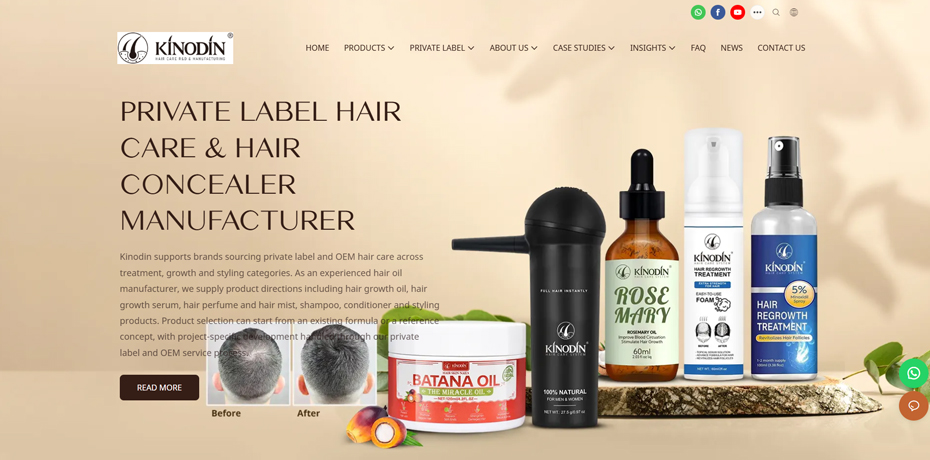
KINODIN is a specialized hair care manufacturing and product-development business of Foshan Younik Cosmetics Co., Limited.
Its current hair-growth manufacturing program specifically covers botanical hair oils, scalp serums, sprays, oil treatments, foams, and complementary scalp products. Ingredient concepts include rosemary, batana, argan, castor oil, biotin, caffeine, and botanical extracts.
Why Brands May Consider KINODIN
The main advantage is format breadth.
Instead of launching only one serum, a brand could potentially build:
Scalp Shampoo
→ Scalp Serum
→ Hair Growth Support Oil
→ Scalp Spray
Its customization options include texture, absorption, fragrance, ingredient direction, application method, packaging, and target price. The company also states that it supports sampling, packaging sourcing, compatibility evaluation, production, and export documentation.
KINODIN’s current catalog also includes rosemary/biotin serum, copper-peptide serum, rosemary-rice-water spray, and scalp serum formats.
Best suited for: DTC brands, Amazon sellers, distributors, salon brands, and businesses building a complete scalp-care line.
What to verify: MOQ, exact testing included, formula exclusivity, claim substantiation, and target-market documentation.
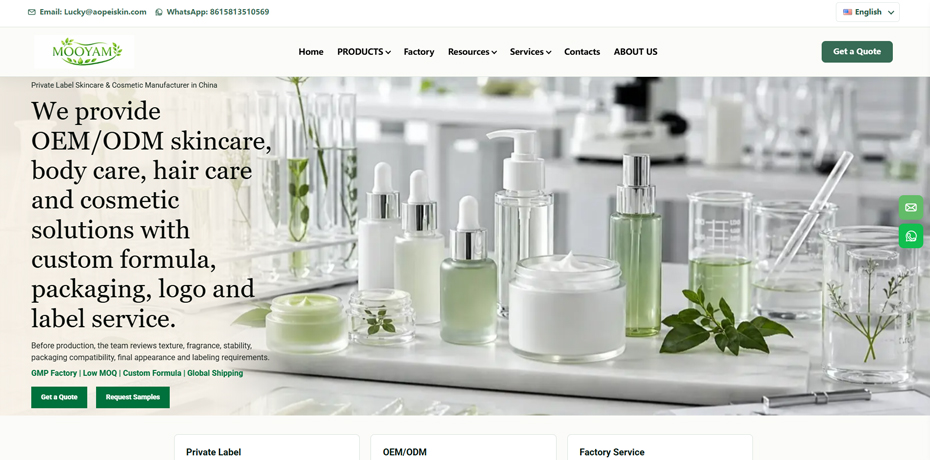
2. MOOYAM – Best for Premium Hair and Scalp Serum Development
Location: China
Best for: Brands whose hero product will be a scalp or hair-density serum.
MOOYAM offers OEM/ODM hair growth serum manufacturing with custom formula, texture, fragrance, active-ingredient direction, packaging, and bulk production support.
The company currently supports several serum architectures, including:
- Lightweight liquids
- Gel serums
- Emulsion serums
- Oil-based serums
Why Brands May Consider MOOYAM
Hair-growth-positioned products increasingly use skincare-like formats.
Consumers often expect a scalp serum to feel:
- Lightweight
- Non-greasy
- Easy to distribute
- Fast absorbing
- Compatible with regular styling routines
That makes texture development important.
MOOYAM’s serum-focused positioning can therefore be useful for brands that want the scalp serum to become the hero SKU rather than simply another product in a general hair line.
Best suited for: Serum-led brands, scalp-care startups, premium DTC businesses, and ecommerce sellers.
What to verify: Current MOQ, sample revisions, ingredient documentation, formula ownership, and claims support.
3. LAEYO Labs – Best for Hair Growth Serum Sprays and Scalp Tonics
Location: Guangzhou, China
Best for: Brands developing lightweight scalp sprays, tonics, and serum formats.
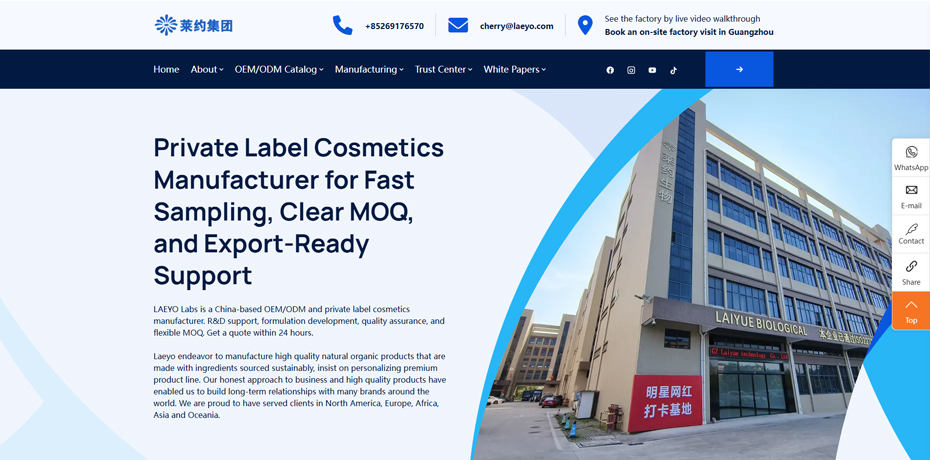
LAEYO Labs manufactures shampoo, conditioner, masks, scalp serums, scalp tonics, leave-ins, and oils through OEM/ODM programs. Its current manufacturing information states that initial samples can typically be prepared in 3–7 days, with project-specific compliance documentation.
It also currently markets a dedicated hair-growth-positioned serum spray with customizable formula, packaging, fragrance, viscosity, and ingredient focus. The published MOQ for that particular program is 1,000 units per formula/design.
Why Brands May Consider LAEYO Labs
Spray delivery can create a very different product proposition from a traditional dropper serum.
For example:
Dropper Serum
Precise application / premium skincare feel
versus
Scalp Spray
Fast application / broader coverage / easier daily routine
That opens up different positioning and packaging opportunities.
Best suited for: DTC brands, Amazon/FBA sellers, salon lines, and businesses developing daily scalp routines.
What to verify: Do not rely on supplier wording such as “revitalizing dormant follicles” without determining whether the claim is appropriate for your target market and evidence package.
4. NEXO Beauty Labs – Best for Technical Scalp Serum Projects
Location: China
Best for: Brands that want structured formulation, documentation, applicator selection, and commercial scale-up.
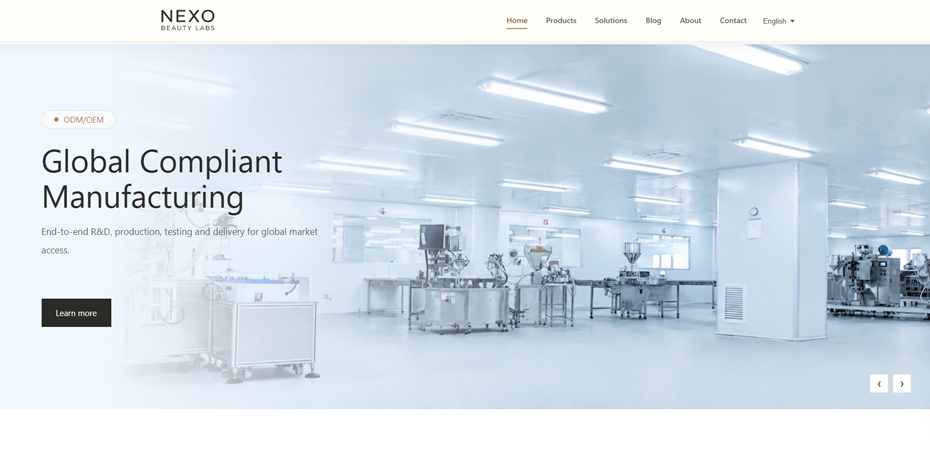
NEXO Beauty Labs offers scalp serum manufacturing for private-label and OEM brands.
Its current scalp-serum program states an MOQ starting from 1,000 units per SKU on an existing base, with production generally quoted at 25–90 days after approval. It also states that Certificate of Analysis and Safety Data Sheet documentation accompanies shipments.
Why Brands May Consider NEXO
Its scalp-serum offering pays particular attention to dispensing systems.
Options include:
- Droppers
- Fine-mist sprays
- Comb tips
- Nozzle tips
- Roller balls
- Pumps
- Single-dose ampoules
That matters because scalp products need to reach the scalp through hair without creating excessive residue.
NEXO also explicitly distinguishes cosmetic support claims from drug-active hair-growth claims, which is a useful consideration in this category.
Best suited for: Scalp-serum brands, technical DTC companies, professional brands, and businesses that care about documentation and applicator design.
5. FormuNova – Best for Low-MOQ U.S.-Made Hair Growth Serums
Location: Georgia, USA
Best for: U.S.-focused startups wanting to validate a serum before committing to large production.
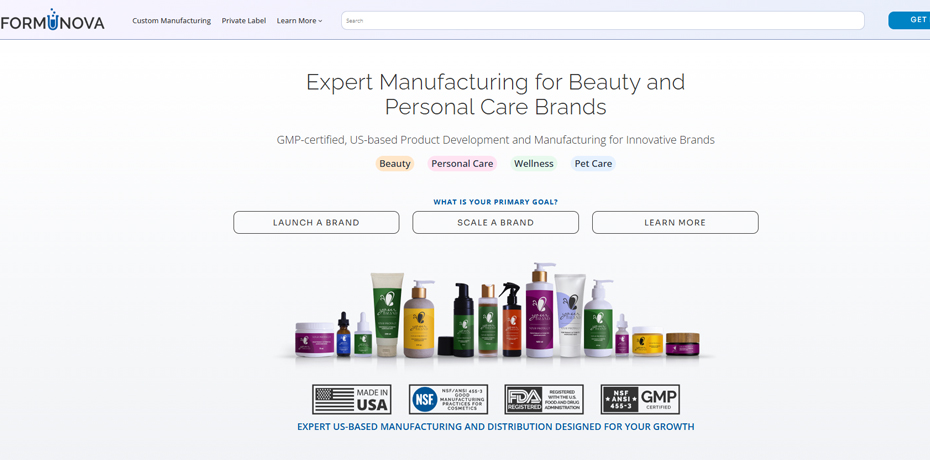
FormuNova manufactures beauty and personal-care products in Stone Mountain, Georgia.
Its current catalog includes multiple hair-growth-positioned serum concepts, including peptide and botanical/active-based formulations. One current serum program lists an MOQ of only 140 units.
Why Brands May Consider FormuNova
This creates a different use case from a traditional 1,000–5,000-unit contract manufacturer.
A new brand could potentially:
Order Samples
→ Launch 140–500 Units
→ Test Customer Response
→ Scale Production
before investing heavily in inventory.
FormuNova states that its products are manufactured in its U.S. facility and that it provides in-house product development and manufacturing.
Best suited for: New U.S. brands, salons testing retail products, ecommerce startups, and companies validating a hero serum.
What to consider: A low-MOQ stock/private-label program is not the same thing as developing a completely proprietary formula.
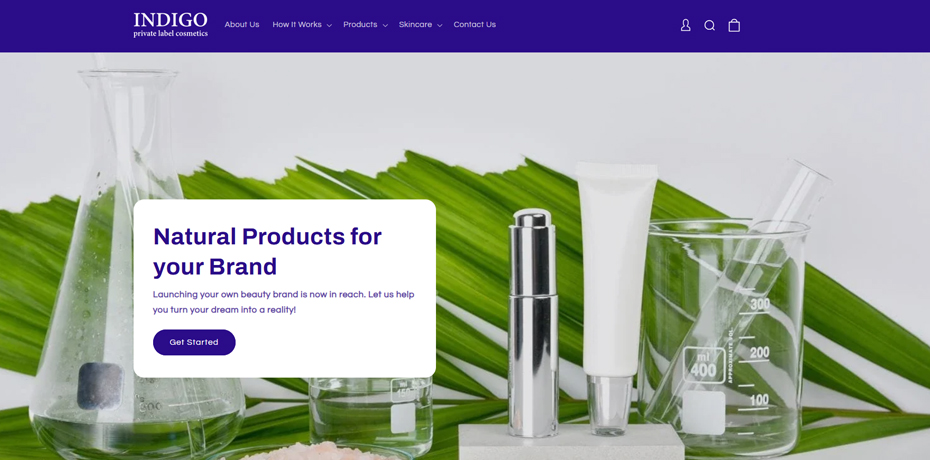
6. Indigo Private Label – Best for Very Small Hair Growth Serum Launches
Location: USA
Best for: Salons, micro-brands, creators, and founders testing market demand.
Indigo Private Label currently offers a U.S.-made private-label hair growth serum in 15 mL and 30 mL spray formats and states that alternative packaging can also be used.
Its online product structure allows unusually small initial quantities, making it much closer to a market-validation model than traditional contract manufacturing.
Why Brands May Consider Indigo
For a first-time founder, the biggest risk may not be formula development.
It may be inventory.
Instead of immediately purchasing thousands of units, a brand can test:
- Product positioning
- Packaging
- Price
- Customer feedback
- Repeat purchase
- Advertising economics
before moving into larger custom production.
Best suited for: Salons, influencers, micro-DTC brands, first-time founders, and market testing.
What to consider: This is more appropriate for private-label validation than for a brand whose core competitive advantage must be a proprietary formula.
7. TY Cosmetic – Best for Botanical Hair Growth Oils
Location: China
Best for: Brands focused on rosemary, botanical oils, scalp oils, and oil-based growth-support concepts.
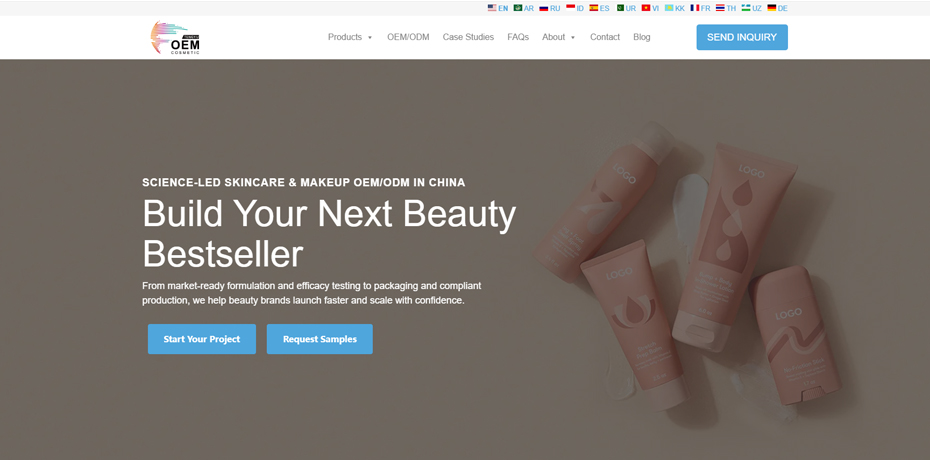
TY Cosmetic has a dedicated private-label hair growth oil manufacturing program with OEM/ODM formula, packaging, ingredient, and product-development options.
The company positions its program around formula development plus packaging design, sourcing, production, and testing support.
Why Brands May Consider TY Cosmetic
Hair growth oil is commercially different from scalp serum.
An oil-based product can be positioned around:
- Pre-wash scalp care
- Scalp massage
- Dry scalp nourishment
- Breakage reduction
- Hair strengthening
- Fuller-looking hair
Possible ingredient concepts include:
- Rosemary
- Castor oil
- Argan oil
- Botanical blends
This makes TY more relevant for an oil-led brand than a manufacturer specializing mainly in water-based serums.
Best suited for: Botanical brands, textured-hair brands, natural-positioned products, Amazon sellers, and oil-focused product lines.
What to verify: Ingredient percentages, sensory profile, oxidation stability, packaging compatibility, and permitted claims.
8. QiaoMei Cosmetics – Best for Custom Hair and Scalp Serum Concepts
Location: China
Best for: Brands looking for ingredient-led custom scalp serums.
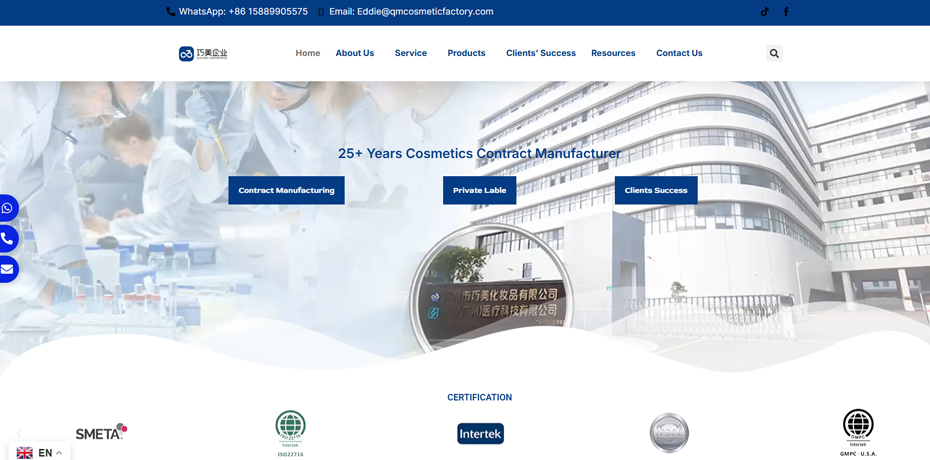
QiaoMei Cosmetics currently offers customizable private-label hair and scalp serum development across several positioning directions, including scalp care, strengthening, repair, hydration, and fuller-looking-hair concepts.
Its manufacturing program includes:
- Custom formulation
- Packaging
- Brand design
- Compliance support
- Production
Why Brands May Consider QiaoMei
One advantage is the ability to develop an ingredient story around the serum.
But ingredient marketing needs to be handled carefully.
Adding a fashionable ingredient does not automatically prove that the finished cosmetic product will cause new hair growth.
A stronger product brief would focus on:
Scalp Condition + Hair Strength + Breakage + Density Appearance + User Experience
rather than promising treatment of hair loss.
Best suited for: Ingredient-led brands, serum startups, ecommerce businesses, and companies developing scalp-focused product lines.
9. DESIFINE – Best for Building a Multi-SKU Hair Growth Support Line
Location: Guangzhou, China
Best for: Brands that want to expand from one hero serum into a complete hair care system.
DESIFINE offers OEM/ODM hair care manufacturing across:
- Shampoo
- Conditioner
- Hair mask
- Hair oil
- Hair serum
- Hair wax
- Hair gel
- Hair spray
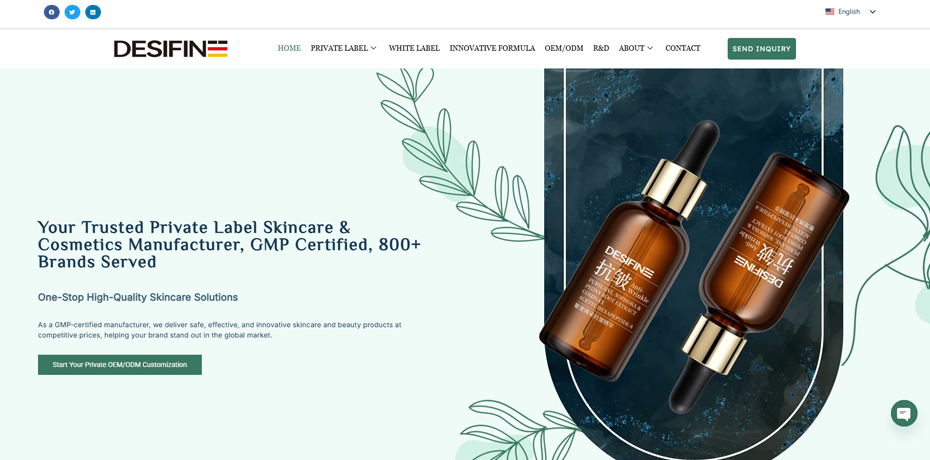
Its current hair-growth serum manufacturing materials describe OEM/ODM customization and a broader hair care series that allows a serum to sit within a complete branded range.
Why Brands May Consider DESIFINE
This becomes useful when the commercial strategy is:
Hero Hair Serum
↓
Supporting Shampoo
↓
Conditioner / Mask
↓
Hair Oil
rather than launching a single product indefinitely.
The manufacturer currently publishes a 3,000-unit-per-SKU MOQ for one of its OEM/ODM hair care programs, although brands should obtain current project-specific terms before budgeting.
Best suited for: Growing ecommerce brands, distributors, and companies planning a complete treatment-oriented range.
10. Thépenier Pharma & Cosmetics – Best for Premium Technical Scalp Care
Location: France / Japan manufacturing network
Best for: Premium brands looking for technically positioned scalp care and CDMO-style development.
Thépenier Pharma & Cosmetics is a full-service CMO/CDMO working across pharmaceutical, OTC, and cosmetic manufacturing.
Its current portfolio includes a dedicated scalp serum concept manufactured within its broader technical beauty and healthcare manufacturing environment. The company states more than 40 years of experience and production in GMP environments, with products manufactured in France or Japan.
Why Brands May Consider Thépenier
This represents the premium technical end of the list.
Instead of competing primarily around low MOQ or fast private labeling, this type of manufacturer may be more relevant when the brand strategy is:
Science Positioning → Premium Scalp Treatment → Strong Testing Strategy → Premium Retail
Best suited for: Premium beauty brands, established companies, pharmacy-adjacent cosmetic concepts, and technically positioned scalp products.
What to consider: More technical development usually means a different cost, timeline, documentation, and MOQ structure from a simple private-label serum.
Which Manufacturer Type Fits Your Hair Growth Brand?
There is no universal answer because “hair growth products” can mean very different commercial products.
| Brand Strategy | Manufacturing Direction |
|---|---|
| Low-risk first launch | Low-MOQ private label |
| Hero scalp serum | Serum specialist |
| Rosemary / botanical brand | Hair oil manufacturer |
| Daily scalp routine | Serum + tonic + spray manufacturer |
| Premium science positioning | Technical R&D/CDMO |
| Amazon product | OEM/private label + packaging |
| Complete product system | Multi-SKU hair care OEM/ODM |
| Proprietary formula | Custom R&D manufacturer |
For a new brand, I would usually think about the product architecture before deciding on the manufacturer.
What Hair Growth Products Can Brands Develop?
A strong hair-growth/scalp-care brand does not need ten products at launch.
A focused architecture is usually easier for customers to understand.
3-SKU Starter Line
| Product | Consumer Role | Commercial Role |
|---|---|---|
| Scalp Serum | Daily targeted scalp care | Hero SKU |
| Scalp Shampoo | Cleansing & scalp preparation | Routine builder |
| Hair Oil | Nourishment & breakage support | Complementary SKU |
This creates a simple routine:
Cleanse → Treat → Nourish
Expanded Premium Line
Once demand is validated:
Scalp Shampoo
→ Scalp Conditioner
→ Scalp Serum
→ Hair Growth Support Oil
→ Scalp Spray/Tonic
→ Weekly Scalp Treatment
The serum should normally remain the hero product while supporting products increase average order value and repeat purchasing.
Internal Link:
Anchor “hair growth product line” → Hair Care Products for Hair Growth: How Brands Develop a Complete Product Line
Hair Growth Serum vs Hair Growth Oil vs Scalp Tonic
Brands should not treat these as interchangeable.
| Format | Texture | Best Positioning | Typical Packaging |
|---|---|---|---|
| Scalp Serum | Lightweight | Premium daily treatment | Dropper / precision tip |
| Hair Oil | Oil-based | Botanical nourishment | Dropper |
| Scalp Tonic | Very light | Refreshing daily scalp care | Nozzle |
| Scalp Spray | Lightweight mist | Convenience | Spray |
| Scalp Foam | Foam | Targeted scalp application | Foaming pump |
For a premium DTC brand, a lightweight serum may provide a more skincare-like positioning.
For a botanical brand, hair oil may provide a clearer ingredient story.
Ingredients Brands Commonly Explore
Hair-growth-positioned cosmetics frequently use ingredient concepts such as:
- Rosemary
- Caffeine
- Biotin
- Peptides
- Castor oil
- Argan oil
- Botanical extracts
- Panthenol
- Conditioning ingredients
However, ingredient popularity and finished-product efficacy are not the same thing.
For example, a supplier offering rosemary oil does not mean a brand should automatically claim:
“Regrows hair.”
A more conservative cosmetic positioning may focus on:
- Supports scalp care
- Helps strengthen hair
- Helps reduce breakage
- Nourishes the scalp
- Helps hair look fuller
- Supports healthier-looking hair
This distinction is especially important in the U.S. and other regulated markets.
Anchor “ingredients for hair growth products” → Best Ingredients for Hair Growth Products: What Works and What Sells (2026 Guide)
Cosmetic Hair Growth Products vs Drug Claims
This section is essential for this article.
A product’s regulatory classification can change based on ingredients and claims, not simply what the brand calls it.
Cosmetic positioning can focus on appearance, conditioning, breakage, scalp feel, and fuller-looking hair.
Claims about treating a medical condition, preventing hair loss, or causing physiological hair regrowth can move a product into a different regulatory framework.
Therefore, before manufacturing, brands should align:
Formula → Claims → Testing → Label → Target Market
Do not develop the formula first and decide what claims to make afterward.
How to Evaluate a Hair Growth Product Manufacturer
Ask each shortlisted manufacturer the same questions.
Formula Capability
Can it develop serum, oil, spray, shampoo, and scalp-treatment formats?
R&D
Is formulation performed in-house?
Claims Support
What evidence supports the claims being proposed?
Testing
Ask about:
- Stability
- Microbial quality
- Packaging compatibility
- Safety substantiation
- Performance/claim testing where relevant
MOQ
Separate:
Formula MOQ + Packaging MOQ + Finished Product MOQ
Packaging
Can the manufacturer support:
- Dropper
- Spray
- Precision nozzle
- Pump
- Applicator tip
Target Market
Tell the manufacturer whether the product will sell in:
- USA
- EU
- UK
- Canada
- Australia
- Middle East
before approving the formula.
Anchor “evaluate a hair care manufacturer” → How to Evaluate a Hair Care Manufacturer Before Signing a Contract
Private Label vs Custom Formula for Hair Growth Products
| Factor | Private Label | Custom Formula |
|---|---|---|
| Development Speed | Faster | Slower |
| Initial Investment | Lower | Higher |
| Formula Differentiation | Lower | Higher |
| MOQ | Often lower | Often higher |
| Testing | Existing + project-specific | More project-specific |
| Ingredient Control | Limited | Greater |
| Formula Ownership | Usually manufacturer | Contract-dependent |
| Best For | Market validation | Long-term differentiation |
A startup could begin with:
Private Label Serum → Validate Sales → Custom Formula V2
instead of spending heavily on a proprietary formula before knowing whether customers will buy the product.
Internal Link:
Anchor “custom formula vs private label hair care” → Custom Formula vs Private Label Hair Care: Which Should You Choose?
What Should You Prepare Before Requesting a Quote?
Do not send manufacturers only:
“How much is hair growth serum?”
Prepare:
- Product format
- Target consumer
- Target market
- Desired positioning
- Ingredient direction
- Texture
- Fragrance
- Packaging
- Claims direction
- Expected MOQ
- Target cost
- Retail price
- Launch timeline
- Benchmark products
For example:
“We are developing a lightweight daily scalp serum for U.S. DTC consumers concerned about thinning-looking hair. We want a fast-absorbing, non-greasy texture in a 50 mL precision-tip bottle, with cosmetic claims focused on scalp care, hair strength, and fuller-looking hair.”
That is much more useful to an R&D team.
Anchor “requesting a hair care manufacturing quote” → What Information Should You Prepare Before Requesting a Hair Care Manufacturing Quote?
How Much Does Hair Growth Product Manufacturing Cost?
There is no universal manufacturing price.
The final cost can include:
| Cost Component | Main Variables |
|---|---|
| Formula | Existing vs custom |
| Ingredients | Actives, oils, extracts |
| Testing | Formula and claim requirements |
| Packaging | Standard vs custom |
| Applicator | Dropper, spray, nozzle, pump |
| MOQ | Production volume |
| Decoration | Labels, screen printing, coating |
| Secondary Packaging | Cartons, inserts |
| Freight | Destination and shipping method |
A $3 serum with expensive packaging can easily become a much more expensive landed product.
Brands should calculate:
Formula + Packaging + Testing + Filling + Decoration + Freight + Duties + Marketing
rather than comparing only factory unit prices.
Common Mistakes When Launching Hair Growth Products
Making aggressive claims too early
Do not build the marketing strategy around claims that the final formula cannot legally or scientifically support.
Choosing ingredients only because they are trending
TikTok popularity is not the same as formula performance.
Launching too many SKUs
One strong hero serum plus two supporting products is often easier to position than eight weak products.
Ignoring scalp feel
A serum that leaves the scalp greasy may struggle with daily compliance regardless of its ingredient story.
Choosing packaging before the formula
Viscosity and applicator compatibility need to work together.
Buying too much inventory
Validate the product before scaling aggressively.
FAQ
What is a hair growth product manufacturer?
A hair growth product manufacturer develops or produces products positioned around scalp care, stronger hair, reduced breakage, fuller-looking hair, or related hair-density concerns. Products can include scalp serums, oils, sprays, tonics, shampoos, and treatments.
What manufacturers should brands research for hair growth products in 2027?
Examples include KINODIN, MOOYAM, LAEYO Labs, NEXO Beauty Labs, FormuNova, Indigo Private Label, TY Cosmetic, QiaoMei Cosmetics, DESIFINE, and Thépenier Pharma & Cosmetics. Their capabilities differ significantly, so brands should compare product format, MOQ, customization, testing, target-market support, and claims requirements.
What is the best product to launch first?
For many scalp-care concepts, a lightweight scalp serum can work as a strong hero product because it creates a clear treatment step. However, botanical brands may prefer an oil, while mass-market brands may favor sprays or shampoos.
What is the MOQ for private label hair growth serum?
It varies considerably. Current published examples include FormuNova at 140 units for certain stock serum programs, LAEYO at 1,000 units for a listed serum-spray program, and NEXO from 1,000 units per SKU on an existing base.
Can I create a custom hair growth formula?
Yes. Many OEM/ODM manufacturers can customize ingredients, texture, fragrance, viscosity, packaging, and product positioning. Completely proprietary development generally requires more time, testing, and investment than selecting an existing base.
Can cosmetic products claim to regrow hair?
Brands should be cautious. Claims that imply treatment of hair loss or physiological hair regrowth may trigger drug or therapeutic-product requirements depending on the market. Cosmetic products should use claims appropriate to their formula, evidence, and jurisdiction.
Is hair growth serum or hair growth oil better?
They serve different positioning. Serums are often lightweight and treatment-oriented, while oils are particularly suitable for botanical, scalp-massage, nourishment, and textured-hair positioning.
Can one manufacturer produce a complete hair growth line?
Yes, provided the manufacturer has the necessary category breadth. A complete line could include scalp shampoo, conditioner, serum, oil, tonic, and treatment products.
Final Thoughts
Hair growth and scalp care offer brands more opportunities than simply launching another shampoo.
The strongest product strategies increasingly combine:
Scalp Care + Hair Strength + Density Appearance + Sensory Experience + Routine Building
But this is also a category where claims, ingredients, testing, and regulatory classification require more attention.
Before selecting a manufacturer, compare:
Product Expertise → R&D → Claims → Testing → MOQ → Packaging → Documentation → Scalability
Then build the product line around one clear consumer problem rather than trying to promise everything in a single formula.