
Private Label Dry Shampoo: Formulation, Packaging, and Manufacturing Guide
Dry shampoo is a convenient hair care product designed to refresh hair between regular washes by absorbing excess oil from the scalp and hair roots. Unlike conventional shampoo, it does not rely on a traditional water-based cleansing and rinsing process.
For beauty brands, dry shampoo offers opportunities to develop convenient hair care products for busy consumers, travelers, salon customers, and people who want to maintain a fresher-looking hairstyle between wash days.
Developing a successful dry shampoo requires careful consideration of the product format, oil-absorbing ingredients, powder distribution, residue control, fragrance, packaging, and dispensing performance. HODM supports brands through custom hair care formulation and OEM/ODM hair care manufacturing services.
This guide explains how to develop private label dry shampoo, including powder and spray formats, ingredient selection, formulation considerations, packaging options, testing requirements, and manufacturing opportunities for brands.
1. What Is Dry Shampoo and How Does It Work?
Dry shampoo is a waterless hair care product designed to absorb excess sebum and refresh the appearance of hair without conventional washing.
The main functional components are oil-absorbing materials that help reduce the greasy appearance of hair roots. After application, the product is distributed through the hair and excess powder is removed or dispersed according to the product format.
How Dry Shampoo Absorbs Excess Oil
The scalp naturally produces sebum, which can accumulate at the hair roots and make hair appear oily or flat.
Dry shampoo uses absorbent ingredients to capture some of this surface oil. This can help improve the appearance of oily roots and provide a fresher-looking finish between regular washes.
Dry Shampoo Is Different from Regular Shampoo
| Feature | Regular Shampoo | Dry Shampoo |
|---|---|---|
| Primary Function | Cleansing hair and scalp | Absorbing excess surface oil |
| Application | Applied with water | Applied to dry hair |
| Rinsing | Normally required | Generally not required |
| Common Formats | Liquid and cream | Powder and spray |
| Typical Use | Regular hair washing | Refreshing hair between washes |
Why Dry Shampoo Is a Product Development Opportunity
Dry shampoo can serve different consumer needs, including convenient styling maintenance, travel, busy lifestyles, and quick hair refreshing.
Brands can also differentiate their products through powder texture, fragrance, packaging, application methods, and product positioning.
2. Types of Dry Shampoo Products Brands Can Develop
Dry shampoo is available in different formats. The choice of product type influences the formula, manufacturing process, packaging, dispensing method, and customer experience.
Powder Dry Shampoo
Powder dry shampoo is a waterless product made primarily with absorbent powders. It is usually applied directly to the roots or scalp area and distributed through the hair using fingers or a brush.
This format can be developed in loose powder or compact powder packaging, depending on the intended application.
Aerosol Dry Shampoo
Aerosol dry shampoo uses a pressurized dispensing system to distribute an absorbent formula through a spray application.
This format can provide convenient and relatively even application, but requires specialized formulation, compatible aerosol packaging, filling equipment, and additional safety and regulatory considerations.
Non-Aerosol Dry Shampoo Spray
Non-aerosol dry shampoo sprays use a mechanical pump or powder-dispensing mechanism rather than a pressurized propellant system.
Depending on the design, these products may dispense a fine powder or a suitable liquid-based refreshing formula. Powder-dispensing systems require particular attention to particle flow and nozzle performance.
Dry Shampoo Foam
Some brands explore water-based or low-moisture foam products designed to refresh hair without a conventional shampoo-and-rinse routine.
These products are technically different from traditional powder dry shampoo and should be evaluated according to their actual formula, drying behavior, and intended application.
Compare Dry Shampoo Formats
| Product Format | Application | Main Development Focus |
|---|---|---|
| Loose Powder | Direct powder application | Absorption and powder distribution |
| Powder Spray | Mechanical powder dispensing | Flow and nozzle performance |
| Aerosol Spray | Pressurized spray application | Propellant and aerosol compatibility |
| Dry Shampoo Foam | Foam application | Drying behavior and formula stability |
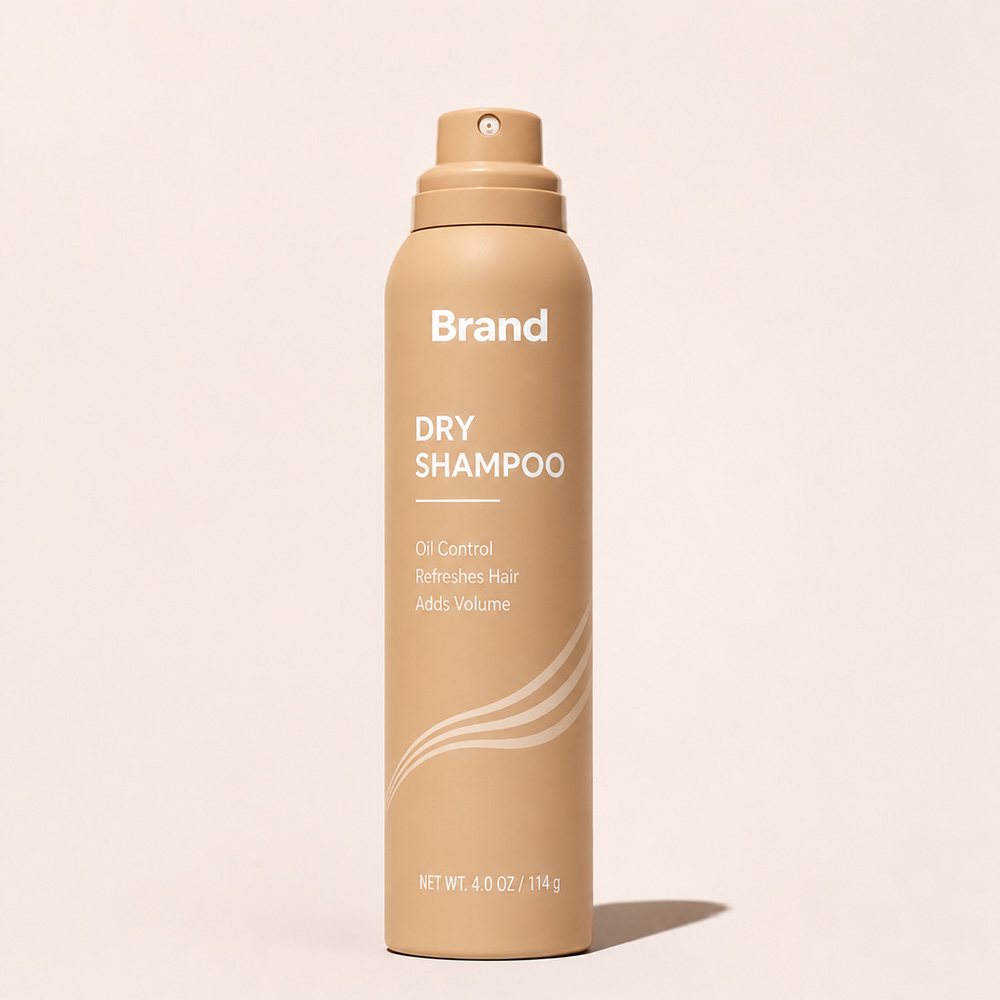
Different dry shampoo formats offer brands flexibility in formulation, packaging, and product positioning.
3. Private Label Dry Shampoo Product Opportunities for Brands
Different dry shampoo formats allow brands to target different customer groups and product positioning strategies.
Everyday Oil-Control Dry Shampoo
An everyday dry shampoo can focus on absorbing excess oil and refreshing the appearance of roots between regular washes.
Lightweight Dry Shampoo for Fine Hair
Fine hair customers may prefer lightweight products that reduce the greasy appearance of roots without leaving excessive powder residue or making hair feel heavy.
Dry Shampoo for Dark Hair
Products targeting dark hair may require careful consideration of powder color, particle distribution, and visible residue. Tinted or appropriately colored formulations can be explored where suitable.
Dry Shampoo for Blonde Hair
Blonde and light-colored hair may tolerate certain powder appearances differently from dark hair. Brands should evaluate powder visibility and residue under realistic application conditions.
Travel-Size Dry Shampoo
Compact dry shampoo formats can be developed for travel kits, handbags, and convenient personal care collections.
Premium Fragranced Dry Shampoo
Fragrance can be an important product differentiation factor. Brands may develop fresh, floral, clean, or premium fragrance directions according to their customer profile.
Professional Salon Dry Shampoo
Salon-focused products may emphasize styling convenience, root refreshing, texture, and volume appearance for selected professional applications.
4. Key Ingredients Used in Dry Shampoo Formulation
Dry shampoo formulation focuses on oil absorption, powder distribution, sensory properties, and residue control. Ingredient selection depends on the product format and the intended customer experience.
Rice Starch
Rice starch is commonly considered in powder-based dry shampoo formulations because of its oil-absorbing properties and suitability for dry powder applications.
Corn Starch
Corn starch can function as an absorbent powder and may be used in selected dry shampoo concepts. Particle characteristics and formulation compatibility should be evaluated.
Tapioca Starch
Tapioca starch is another plant-derived powder that may contribute to oil absorption and the sensory profile of powder-based products.
Aluminum Starch Octenylsuccinate
Aluminum Starch Octenylsuccinate is a modified starch used in cosmetic formulations for absorbent and sensory functions. It may be considered when developing products that require a particular powder feel and oil-control performance.
Silica
Selected silica grades may be used to support powder flow, texture, and absorbent performance. The grade and particle characteristics should be appropriate for the intended application and inhalation exposure considerations.
Kaolin and Other Mineral Powders
Kaolin and other suitable mineral powders can be considered in certain formulations. Their color, particle properties, sensory characteristics, and compatibility should be assessed.
Fragrance
Fragrance can help create a pleasant application experience. Its selection should consider the product format, intended use, applicable fragrance restrictions, and compatibility with the absorbent powder system.
Ingredient Functions in Dry Shampoo
| Ingredient | Potential Function | Formulation Consideration |
|---|---|---|
| Rice Starch | Oil Absorption | Particle size and residue |
| Corn Starch | Oil Absorption | Powder flow and distribution |
| Tapioca Starch | Absorbency and sensory feel | Texture and application |
| Aluminum Starch Octenylsuccinate | Absorbent and sensory properties | Formula compatibility |
| Silica | Powder flow and texture | Grade and particle properties |
| Kaolin | Absorbent mineral powder | Color and visible residue |
| Fragrance | Scent profile | Stability and compatibility |
Ingredient selection should be based on the complete formulation, supplier documentation, applicable cosmetic requirements, and finished-product testing. Not every absorbent ingredient is suitable for every dry shampoo format.
5. How to Develop a Powder Dry Shampoo Formula
Powder dry shampoo is a waterless formulation that typically uses a blend of absorbent materials and selected supporting ingredients.
Step 1: Define the Absorption Requirements
Determine the expected oil absorption performance according to the target customer and intended product positioning.
Step 2: Select the Powder Blend
Choose suitable starches, modified starches, or other absorbent materials according to their oil absorption characteristics, particle properties, and sensory performance.
Step 3: Control Powder Texture
Powder particle size, flowability, and blend uniformity influence application and the finished hair appearance.
A suitable formulation should distribute consistently without creating an excessively dusty or uneven application.
Step 4: Manage Visible Residue
White cast and visible powder residue are important development concerns, particularly for customers with dark hair.
Brands should evaluate the product on different hair colors and adjust the powder system or product format according to the intended application.
Step 5: Evaluate Fragrance and Sensory Properties
Fragrance selection and powder feel should complement the intended product positioning. The finished product should be evaluated for scent consistency, application, and residue.
Step 6: Confirm Powder Uniformity
Suitable blending equipment and manufacturing procedures are important for obtaining a uniform powder mixture. Ingredient distribution and batch consistency should be controlled.
Step 7: Evaluate the Finished Product
Assess oil absorption, visible residue, ease of application, powder distribution, fragrance, and packaging performance before approving the formula.
6. Aerosol Dry Shampoo Formulation and Development
Aerosol dry shampoo uses a pressurized dispensing system to distribute absorbent materials through a spray application. It requires a different development and manufacturing approach from non-pressurized powder products.
Develop a Suitable Aerosol Formula
Aerosol formulations may combine absorbent powders with appropriate carriers, solvents, and propellant systems. Ingredient compatibility and dispersion behavior should be evaluated as part of the complete formulation.
Evaluate Powder Dispersion
Absorbent particles should be distributed consistently during application. Particle characteristics, suspension behavior, and nozzle design can influence spray performance.
Consider Propellant Selection
The propellant system influences spray characteristics, pressure, flammability, regulatory requirements, and packaging compatibility.
Propellant selection should be handled by qualified aerosol formulation and manufacturing specialists.
Evaluate Valve and Actuator Compatibility
Aerosol valves, actuators, cans, and internal components should be compatible with the formula and selected propellant system.
Check Spray Pattern and Output
- Spray distribution and coverage.
- Dispensing consistency.
- Powder separation or clogging.
- Actuator functionality.
- Container and valve compatibility.
- Product residue on hair.
Understand Aerosol Manufacturing Requirements
Aerosol products require suitable filling equipment, pressure-related quality controls, specialized production facilities, and appropriate storage and transportation arrangements.
Brands should confirm whether their manufacturing partner has the necessary aerosol capabilities before selecting this format.
7. Non-Aerosol Dry Shampoo: Powder and Spray Options
Non-aerosol dry shampoo offers an alternative to pressurized spray packaging. Depending on the product design, it may use loose powder dispensers, mechanical powder pumps, or suitable liquid-based spray systems.
Loose Powder Packaging
Loose powder products can be packaged in bottles or containers with suitable dispensing openings. The design should allow controlled application without excessive powder release.
Mechanical Powder Dispensers
Some packaging systems use mechanical mechanisms to distribute powder without an aerosol propellant. Their performance depends on the powder's flow characteristics and the dispensing design.
Non-Aerosol Liquid Spray Products
Some brands may develop water-based or other non-pressurized refreshing sprays. These products should be clearly distinguished from traditional oil-absorbing powder dry shampoos because their mechanisms and formula requirements may differ.
Compare Non-Aerosol and Aerosol Formats
| Factor | Non-Aerosol | Aerosol |
|---|---|---|
| Dispensing | Mechanical or direct application | Pressurized dispensing |
| Formula | Powder or suitable liquid system | Aerosol-compatible formula |
| Packaging | Powder container or pump bottle | Pressurized aerosol can |
| Manufacturing | Suitable powder or liquid filling | Specialized aerosol filling |
| Key Evaluation | Powder flow and dispensing | Pressure, spray, and compatibility |
| Regulatory Focus | Cosmetic requirements | Cosmetic and applicable aerosol requirements |
8. How to Reduce White Cast and Residue in Dry Shampoo
White cast is one of the most important sensory and appearance challenges when developing powder-based dry shampoo.
Some absorbent powders may remain visible on darker hair if the particle characteristics, powder quantity, or application method are not suitable.
Select Suitable Powder Materials
Different absorbent materials have different colors, particle properties, and sensory characteristics. Their suitability should be evaluated on representative hair samples.
Control Particle Size and Distribution
Particle characteristics influence how the powder spreads and remains on the hair. Consistent blending and appropriate particle selection can help improve application uniformity.
Develop Tinted Dry Shampoo Options
Brands targeting dark hair may explore suitable tinted formulations to reduce visible contrast between powder and hair color.
Colorants must be selected according to applicable cosmetic regulations and evaluated for staining, transfer, and color consistency.
Optimize Application Instructions
Product instructions should explain how to apply the dry shampoo, distribute it through the roots, allow the absorbent material to work where appropriate, and remove or blend excess powder.
Test on Different Hair Colors
Evaluate the finished product on blonde, brown, black, and other representative hair colors. A formula that performs well on light hair may not provide the same appearance on darker hair.
9. Packaging Options for Private Label Dry Shampoo
Packaging plays an important role in dry shampoo performance. The container and dispensing system must match the formula type and provide convenient, controlled application.
Powder Bottles
Powder bottles can be developed with suitable openings or dispensing systems for loose dry shampoo formulas. The design should help control powder release and prevent unnecessary spillage.
Mechanical Powder Spray Packaging
Mechanical powder dispensers can offer a convenient application format without using a pressurized propellant. The dispensing mechanism should be tested with the actual powder blend.
Aerosol Cans
Aerosol dry shampoo requires compatible pressurized containers, valves, actuators, and other components. Packaging selection must be coordinated with the aerosol formulation and filling process.
Mini and Travel-Size Containers
Compact dry shampoo formats can be developed for travel collections and portable personal care products, subject to the applicable packaging and transportation requirements.
Packaging Evaluation Checklist
- Container material and dimensions.
- Dispensing opening and mechanism.
- Powder flow and output consistency.
- Closure and sealing performance.
- Leakage and contamination protection.
- Labeling and product information.
- Compatibility with the actual formula.
Explore HODM Custom Packaging Solutions to discuss packaging options for your product development project.
10. Dry Shampoo Safety, Stability, and Quality Testing
Dry shampoo requires appropriate safety and quality evaluation according to its formula, application method, packaging, and intended market.
Powder Quality and Particle Assessment
Powder products should be evaluated for particle characteristics, uniformity, flowability, application, and visible residue.
Inhalation exposure is an important consideration for airborne powders. Particle selection, dispensing design, directions for use, and appropriate safety assessments should be considered during development.
Formula Stability
Assess whether the product maintains its intended appearance, fragrance, texture, powder flow, and performance during storage.
Microbiological Considerations
Anhydrous powder formulations generally have different microbiological risks from water-based products, but they are not automatically free from contamination concerns. Raw material quality, manufacturing hygiene, and the possibility of moisture exposure should be considered.
Water-based dry shampoo or refreshing spray formulations require appropriate preservation and microbiological assessments.
Packaging Compatibility
Test powder dispensing, closure performance, leakage, and material compatibility using the final packaging configuration.
Aerosol Safety Evaluation
Aerosol products require additional assessments related to pressure, valve functionality, container integrity, propellant compatibility, flammability where relevant, and transportation requirements.
Finished Product Quality Control
- Appearance and fragrance.
- Powder uniformity and flow.
- Oil absorption performance.
- Residue and application characteristics.
- Dispensing consistency.
- Packaging condition and closure integrity.
- Relevant safety and stability requirements.
11. Regulatory and Labeling Considerations for Dry Shampoo
Dry shampoo brands should review the applicable cosmetic and packaging requirements in each intended sales market before commercial launch.
Ingredient and Product Labeling
Confirm the ingredient declaration, product identity, net contents, directions for use, warnings, and responsible business information according to the relevant market requirements.
Aerosol-Specific Labeling
In the United States, certain self-pressurized cosmetic containers must carry specific warnings under 21 CFR 740.11. Additional warning language may apply to products using hydrocarbon or halocarbon propellants.
Brands should have qualified regulatory personnel review the actual aerosol system, labeling, and applicable requirements before production.
Review Product Safety and Claims
Product claims such as oil absorption, scalp refreshing, and improved hair appearance should accurately reflect the product's actual function and supporting evidence.
Dry shampoo should not be positioned as a complete replacement for regular hair and scalp cleansing.
Understand Aerosol Ingredient and Supply Risks
Brands should review the quality and specifications of raw materials, propellants, and packaging components. Supplier qualification and appropriate contaminant controls are important parts of product development.
Previous U.S. dry shampoo aerosol recalls involving potentially elevated benzene levels illustrate why supplier controls, product safety assessments, and manufacturing quality systems matter. These incidents should not be interpreted as evidence that all dry shampoos contain benzene.
For more information, consult the FDA Cosmetics Labeling Guide and the relevant cosmetic requirements of your target market.
12. Custom Formulation for Private Label Dry Shampoo
Custom formulation allows brands to develop dry shampoo products according to their target customers, product format, ingredient preferences, and commercial positioning.
Define the Product Format
- Loose powder dry shampoo.
- Mechanical powder spray.
- Aerosol dry shampoo.
- Non-aerosol refreshing spray.
Identify the Target Customer
Decide whether the product is intended for fine hair, dark hair, blonde hair, professional salon use, travel, or everyday consumer applications.
Prepare the Formula Brief
- Preferred absorbent materials.
- Desired oil absorption performance.
- Powder texture and particle characteristics.
- White cast and residue requirements.
- Fragrance direction.
- Desired finished hair appearance.
- Packaging and dispensing preferences.
- Target market and product claims.
- Target cost and MOQ.
Develop and Evaluate Samples
Test the formula on representative hair types and colors. Evaluate oil absorption, application, residue, fragrance, and overall user experience.
Finalize Formula and Packaging
Once the formula and packaging meet the agreed requirements, confirm the final specifications and proceed with the applicable production and quality planning.
Explore HODM Custom Formula Development to discuss your dry shampoo project.
13. Dry Shampoo Manufacturing Process
Dry shampoo manufacturing depends on the selected product format. Powder, non-aerosol liquid, and aerosol products require different equipment and production controls.
Powder Dry Shampoo Manufacturing
Powder manufacturing typically involves raw material inspection, weighing, blending, uniformity checks, and suitable filling into the selected containers.
Non-Aerosol Spray Manufacturing
Depending on the formula, non-aerosol spray production may involve liquid preparation, mixing, filling, pump assembly, and dispensing performance checks. Powder-dispensing formats require suitable powder handling and filling equipment.
Aerosol Dry Shampoo Manufacturing
Aerosol manufacturing requires specialized equipment and procedures for filling, valve installation, propellant charging, pressure-related controls, and finished-container inspection.
Quality Control During Production
Relevant checks may include raw material verification, batch uniformity, filling accuracy, packaging integrity, dispensing performance, and finished-product specifications.
Confirm Manufacturing Capabilities Before Ordering
Brands should confirm that the selected manufacturer has the equipment, technical expertise, and applicable production controls required for the chosen dry shampoo format.
Explore HODM Hair Care Manufacturing to discuss available OEM/ODM product development and manufacturing support.
14. Market Opportunities and Product Positioning for Dry Shampoo Brands
Dry shampoo can be positioned for different customer groups by adjusting the product format, formula characteristics, packaging, and brand identity.
Everyday Convenience Products
Everyday dry shampoo can target consumers who want to refresh oily roots between regular washing days.
Premium Beauty and Salon Products
Premium products may focus on fragrance, packaging, application experience, and a more refined finished hair appearance.
Travel and Portable Collections
Compact non-aerosol powder products can be considered for travel kits and portable personal care collections, subject to relevant transportation and packaging requirements.
Specialized Products for Different Hair Colors
Brands can explore different powder appearances or tinted options for blonde, brown, and dark hair customers.
Professional Styling Products
Some dry shampoo concepts may be positioned as styling support products that help refresh roots and create a fuller-looking appearance.
Develop a Clear Brand Position
A successful product concept should communicate a clear benefit, target customer, application method, and reason for choosing the product over competing alternatives.
15. Common Mistakes When Developing Private Label Dry Shampoo
Using the Same Formula for Every Product Format
Powder, mechanical spray, and aerosol products have different formula and dispensing requirements. A formula should be developed specifically for its intended packaging system.
Ignoring White Cast and Residue
A product may absorb oil but still create visible residue. Evaluate the finished formula on different hair colors and adjust the powder system where appropriate.
Choosing Ingredients Only for Marketing Claims
Ingredients should have a clear formulation purpose. The inclusion of botanical powders or specialty ingredients does not automatically improve oil absorption or finished product performance.
Overlooking Particle and Inhalation Considerations
Airborne powder exposure should be considered during formulation, packaging, and product safety assessment. Particle characteristics and dispensing design are important.
Selecting Packaging Without Testing
The container and dispensing system should be tested with the actual formula. Powder flow, spray performance, closure integrity, and leakage all influence product quality.
Ignoring Aerosol Manufacturing Requirements
Aerosol products require specialized manufacturing capabilities and additional safety controls. Brands should not assume that a conventional cosmetic filling line can produce aerosol dry shampoo.
Making Unsupported Product Claims
Claims about oil absorption, volume, freshness, or scalp benefits should be supported by suitable evidence and appropriate cosmetic labeling.
Frequently Asked Questions
What is private label dry shampoo?
Private label dry shampoo is a dry shampoo product developed and manufactured for a brand that sells it under its own branding. Brands can customize the formula, product format, fragrance, packaging, and other requirements according to the manufacturing arrangement.
What is the difference between powder dry shampoo and aerosol dry shampoo?
Powder dry shampoo is generally applied as a loose or mechanically dispensed powder. Aerosol dry shampoo uses a pressurized container and propellant system to distribute the formula through a spray application. Their formulation and manufacturing requirements are different.
What ingredients are commonly used in dry shampoo?
Commonly considered absorbent materials include rice starch, corn starch, tapioca starch, aluminum starch octenylsuccinate, and selected mineral powders such as silica and kaolin. The final selection depends on the product format and performance requirements.
How does dry shampoo absorb excess oil?
Dry shampoo uses absorbent materials to capture some of the excess surface sebum around the hair roots. The product is then distributed or removed according to its application instructions.
How can brands reduce white residue in dry shampoo?
Brands can evaluate different absorbent powders, particle characteristics, powder distribution, and suitable tinted options. Finished products should be tested on representative light and dark hair samples.
Can dry shampoo be developed without aerosol propellants?
Yes. Non-aerosol options include loose powder containers, mechanical powder dispensers, and selected non-pressurized spray products. Each format has different formulation and packaging requirements.
Does dry shampoo replace regular shampoo?
No. Dry shampoo helps absorb excess surface oil and refresh the appearance of hair between washes. It does not provide the same cleansing and rinsing process as conventional shampoo.
What packaging is suitable for private label dry shampoo?
Suitable options may include powder bottles, mechanical powder dispensers, and aerosol cans. The final packaging should match the formula, dispensing requirements, product safety considerations, and target market.
Does aerosol dry shampoo require special manufacturing equipment?
Yes. Aerosol products require specialized filling equipment and appropriate controls for propellant charging, pressure, valve installation, container integrity, and applicable safety requirements.
Can HODM develop private label dry shampoo?
HODM can discuss custom hair care formulation and manufacturing requirements for new product concepts. Dry shampoo format availability, powder handling capabilities, aerosol production arrangements, MOQ, and packaging options should be confirmed with the HODM team before project approval.
Explore HODM Custom Formula Development.
Conclusion: Develop Private Label Dry Shampoo with the Right Formula and Packaging
Private label dry shampoo offers opportunities for brands seeking to develop convenient, waterless hair care products for different consumer groups and distribution channels.
Powder, aerosol, and non-aerosol formats provide different approaches to oil absorption and application. Each requires suitable ingredient selection, packaging design, dispensing performance, and manufacturing controls.
Successful development depends on more than selecting absorbent ingredients. Brands should also consider white cast, powder distribution, fragrance, product safety, packaging compatibility, and the requirements of their intended market.
By defining a clear product concept and working with a suitable formulation and manufacturing partner, brands can develop dry shampoo products that align with their market positioning and commercial requirements.
Develop Your Own Dry Shampoo with HODM
HODM Cosmetics supports private label brands with custom hair care formulation, product development, packaging customization, and OEM/ODM manufacturing solutions.
Whether you are exploring powder dry shampoo, non-aerosol formats, or other waterless hair care concepts, our team can discuss your product requirements, formulation direction, and packaging preferences.
Share your product concept, target market, preferred format, and estimated order quantity to explore suitable development and manufacturing options.
Discuss Your Dry Shampoo Project