

How to Expand from Online Sales to Retail Stores: A Growth Guide for Hair Care Brands
How Do Hair Care Brands Expand from Online Sales to Retail Stores?
Hair care brands can expand from online sales to retail stores by proving product demand, building strong brand recognition, preparing retail-ready packaging, improving manufacturing capacity, creating wholesale pricing strategies, and developing relationships with buyers and distributors. Successful brands typically use DTC, Amazon, or social commerce to validate demand first, then leverage sales data, customer reviews, and brand credibility to secure retail partnerships.
For growing hair care brands, retail expansion can increase brand awareness, improve credibility, and create new revenue channels beyond ecommerce.
Many successful hair care brands begin online.
They launch through:
- Shopify
- Amazon
- TikTok Shop
- Social media
Online channels help brands validate products, collect customer feedback, and build initial demand.
However, retail expansion can unlock:
- Larger customer reach
- Higher brand credibility
- Professional recognition
- Long-term growth opportunities
Moving from ecommerce to retail requires a different strategy.
Brands need to prepare for:
- Retail buyers
- Wholesale pricing
- Inventory requirements
- Manufacturing scalability
- Brand positioning
Why Hair Care Brands Expand from Online to Retail
DTC and marketplaces are excellent for starting a brand, but retail offers additional advantages.
Benefits of Retail Expansion
| Benefit | Business Impact |
|---|---|
| More visibility | Stronger brand awareness |
| Consumer trust | Higher credibility |
| Larger distribution | More sales opportunities |
| Professional presence | Premium positioning |
| New customer groups | Market expansion |
Retail does not replace online sales—it expands the brand ecosystem.
When Is a Hair Care Brand Ready for Retail?
Not every online brand should enter retail immediately.
Signs Your Brand Is Retail-Ready
✅ Consistent online sales
✅ Strong customer reviews
✅ Repeat purchase rate
✅ Clear brand positioning
✅ Reliable inventory supply
✅ Healthy profit margins
Retail Buyers Usually Look For:
- Proven demand
- Product differentiation
- Strong packaging
- Marketing support
- Production reliability
Step 1: Build Strong Online Validation Before Retail Expansion
Retail buyers want evidence that customers already want your product.
Important Metrics
| Metric | Why It Matters |
|---|---|
| Sales history | Demand validation |
| Customer reviews | Social proof |
| Repeat purchases | Product quality |
| Website traffic | Brand awareness |
| Social engagement | Consumer interest |
Why Online Success Helps
Online sales reduce retailer risk.
A product with existing demand is easier to introduce into stores.
👉 Learn more in How to Build a DTC Hair Care Brand: From Product Development to Online Sales
Step 2: Improve Your Brand Positioning Before Entering Retail
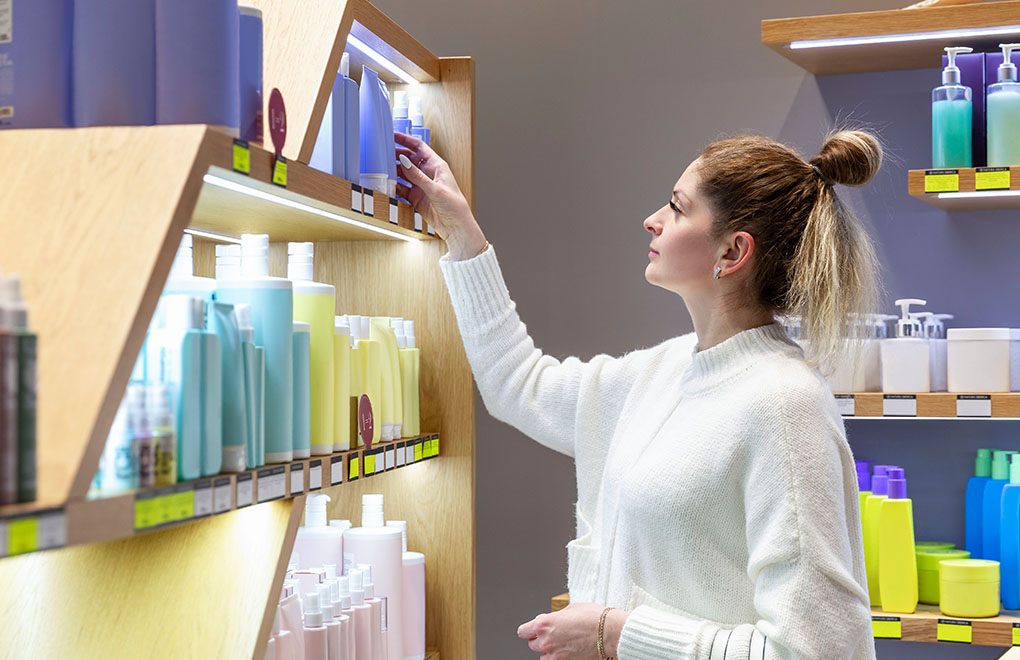
Retail shelves are competitive.
Products must communicate value quickly.
Strong Retail Positioning Includes:
- Clear target customer
- Unique product benefits
- Strong visual identity
- Professional messaging
Examples:
Instead of:
“Hydrating Shampoo”
Position as:
“Professional Moisture Repair System for Dry Damaged Hair”
👉 Learn more in Hair Care Brand Positioning Strategy: How to Stand Out in a Competitive Market
Step 3: Create Retail-Ready Packaging
Packaging becomes even more important in retail.
Online customers can read product descriptions.
Retail customers often make decisions within seconds.
Retail Packaging Should Communicate:
- Product benefit
- Brand identity
- Key ingredients
- Usage purpose
Important Packaging Elements
- Clear labels
- Professional design
- Shelf visibility
- Compliance information
👉 Learn more in Custom Hair Care Packaging: How to Choose Bottles, Tubes, and Jars for Your Brand
Step 4: Develop a Wholesale Pricing Strategy
Retail requires different pricing compared with DTC.
Typical Structure
Manufacturing Cost
↓
Wholesale Price
↓
Retail Price
Brands Must Consider:
- Retailer margins
- Distributor margins
- Promotions
- Marketing support
Common Mistake
Using DTC pricing without adjusting for wholesale economics.
👉 Learn more in Wholesale Hair Care vs Direct-to-Consumer: Which Model Fits Your Brand?
Step 5: Prepare Manufacturing Capacity for Retail Growth
Retail success can create sudden demand increases.
Brands need:
- Stable production
- Reliable inventory
- Consistent quality
- Faster replenishment
Manufacturing Requirements Increase
Compared with ecommerce:
Retail requires:
- Larger production runs
- Better forecasting
- Stronger quality systems
👉 Learn more in What Makes a Reliable Hair Care Manufacturing Partner: Quality, Compliance, and Long-Term Support Explained
Step 6: Build Relationships with Retail Buyers
Retail expansion is relationship-driven.
Brands can connect with:
- Retail buyers
- Distributors
- Salon networks
- Beauty wholesalers
What Buyers Want To Know
- Why will customers buy this?
- How is it different?
- Does the brand have growth potential?
- Can production support demand?
Step 7: Choose the Right Retail Channels
Not every retailer fits every brand.
Common Retail Channels
| Channel | Best For |
|---|---|
| Specialty beauty stores | Premium brands |
| Salons | Professional products |
| Drugstores | Mass market |
| Boutique retailers | Niche brands |
| Large chains | Scaled brands |
Recommended Expansion Path
DTC
↓
Specialty Retail
↓
Regional Retail
↓
National Retail
Step 8: Support Retail with Marketing
Retail placement alone does not guarantee sales.
Brands need to create demand.
Retail Marketing Strategies
- Influencer campaigns
- Social media promotion
- Product education
- Sampling programs
- Customer reviews
Why It Matters
Retailers prefer brands that help drive customers into stores.
👉 Learn more in Influencer Marketing for Hair Care Products: How Brands Drive Awareness and Sales
Step 9: Maintain Online Sales After Entering Retail
Retail should complement ecommerce.
Successful brands continue using:
- Shopify
- Email marketing
- Social media
- Subscriptions
Hybrid Growth Model
Online
↓
Customer Relationship
↓
Retail Expansion
↓
Brand Scale
👉 Learn more in Selling Hair Care Products Online vs Retail: Which Is Better for Your Brand?
Common Mistakes When Expanding Into Retail
Mistake #1: Entering Retail Too Early
Without demand validation, retail can become expensive.
Mistake #2: Poor Inventory Planning
Retail requires reliable supply.
Mistake #3: Weak Packaging
Products must stand out on shelves.
Mistake #4: Ignoring Profit Margins
Wholesale economics are different from DTC.
Mistake #5: Choosing the Wrong Manufacturer
Growth requires manufacturing support.
👉 Learn more in How to Choose FDA-Compliant Hair Care Manufacturers: What Brands Should Look for Before Production
Retail Expansion Timeline for Hair Care Brands
A realistic growth path:
Stage 1: Online Validation
- Launch products
- Collect reviews
- Build customers
↓
Stage 2: Retail Preparation
- Improve packaging
- Build wholesale strategy
- Increase production capacity
↓
Stage 3: Retail Expansion
- Partner with retailers
- Increase distribution
- Scale marketing
Why Work with HODM?
HODM helps hair care brands prepare for retail expansion.
HODM Services
- OEM manufacturing
- Private label products
- Custom formulations
- Retail-ready packaging
- Testing support
- Compliance assistance
- Scalable production
We support brands from first ecommerce launch to large-scale retail growth.
FAQ
When should a hair care brand move from online sales to retail?
Brands should consider retail expansion after they have proven demand, strong customer reviews, reliable manufacturing, and enough inventory capacity.
Do retailers require existing online sales?
Many retailers prefer brands with proven customer demand because it reduces product launch risk.
Is retail more profitable than ecommerce?
Retail can generate larger sales volume, while DTC often provides higher margins and stronger customer relationships.
How much inventory is needed for retail expansion?
Retail usually requires more inventory than ecommerce because stores need consistent product availability and replenishment.
What makes a hair care brand attractive to retailers?
Retailers look for strong products, unique positioning, customer demand, professional packaging, and reliable supply.
Can a brand keep selling online after entering retail?
Yes. Many successful brands combine DTC, marketplaces, salons, and retail channels.
Conclusion
Expanding a hair care brand from online sales to retail stores is a major growth opportunity, but it requires careful preparation. Brands must prove demand, strengthen positioning, improve packaging, develop wholesale strategies, and ensure manufacturing capacity.
The strongest brands do not abandon ecommerce when entering retail—they build a multi-channel strategy that combines online customer relationships with retail distribution.
Build a Retail-Ready Hair Care Brand with HODM
HODM helps brands develop products ready for:
- Ecommerce
- Salons
- Wholesale
- Retail stores
Through:
- OEM manufacturing
- Private label solutions
- Custom formulations
- Packaging development
- Compliance support
Contact HODM to build your next retail-ready hair care product line.