
Hair Mousse Manufacturer: How to Develop a Professional Styling Product Line
A professional hair mousse manufacturer helps brands develop styling products designed to add volume, define curls, improve hair manageability, and support different styling effects. Hair mousse is a versatile foam-based product used by professional salons, beauty brands, and everyday consumers.
Developing professional hair mousse requires more than selecting a styling polymer. Brands need to consider foam structure, hold level, spreadability, drying behavior, residue, hair feel, and the compatibility between the formula and dispensing system.
For businesses planning to launch a private label styling collection, working with an experienced hair styling products manufacturer can help coordinate formulation, product performance, packaging, and commercial production. HODM also provides custom formula development for brands with specific styling requirements.
This guide explains how to develop private label hair mousse, including product categories, styling ingredients, foam formulation, hold levels, packaging options, testing requirements, and OEM/ODM manufacturing considerations.
1. What Is Hair Mousse and How Does It Work?
Hair mousse is a foam-based styling product designed to distribute styling and conditioning ingredients through the hair. It can help create volume, support curl definition, improve styling control, and maintain a desired hairstyle.
Unlike traditional styling gels and creams, mousse is applied as a foam. This format allows the product to spread across the hair with a lightweight application experience.
How Hair Mousse Creates Styling Effects
Hair mousse typically combines a suitable base system with film-forming or styling ingredients. After application, these ingredients are distributed over the hair and contribute to the desired hold, shape retention, or styling effect as the product dries.
Common Benefits of Professional Hair Mousse
- Volume: Helps create fuller-looking hair and support root lift.
- Curl Definition: Helps define curl patterns and improve styling control.
- Flexible Hold: Supports hairstyle retention while maintaining movement.
- Strong Hold: Helps maintain more structured hairstyles.
- Frizz Management: Helps improve the appearance and manageability of styled hair.
- Lightweight Application: Foam distribution can provide a different application experience from heavier creams and gels.
Hair Mousse vs. Hair Gel and Styling Cream
| Product | Texture | Common Styling Purpose |
|---|---|---|
| Hair Mousse | Foam | Volume, curls, and flexible styling |
| Hair Gel | Gel | Definition and structured hold |
| Styling Cream | Cream | Soft styling and manageability |
| Hair Wax | Wax or paste | Texture and targeted shaping |
| Hair Spray | Liquid mist or aerosol | Finishing and hairstyle retention |
Each format has different formulation and application requirements. Brands should choose mousse when a foam-based application provides a clear advantage for the intended styling experience.
2. Hair Mousse Manufacturer: Professional Styling Product Types
Hair mousse can be developed for different hair types, styling needs, and customer groups. Defining the product's main function helps determine the formula, hold level, and packaging requirements.
Volumizing Hair Mousse
Volumizing mousse is designed to create fuller-looking hair and support lift, especially for customers with fine or flat hair.
Development considerations include lightweight application, styling support, root distribution, and a finish that does not leave hair excessively heavy or sticky.
Curl Defining Hair Mousse
Curl mousse is designed for wavy, curly, and textured hair. It can help define curl patterns, manage frizz, and support hairstyle retention.
Brands may prioritize flexibility, curl definition, spreadability, and a finished feel that avoids excessive stiffness.
Strong Hold Styling Mousse
Strong hold mousse is suitable for customers who need more structured styling and longer-lasting shape retention.
Its formula should balance hold performance with application, flexibility, and residue control.
Flexible Hold Mousse
Flexible hold mousse is designed for customers who prefer natural movement and a softer styling finish rather than a rigid hairstyle.
Moisturizing Hair Mousse
Moisturizing mousse combines styling functions with selected conditioning ingredients to improve the overall application and finished hair feel.
Professional Salon Hair Mousse
Salon-focused mousse can be developed around specific styling techniques, professional application, volume creation, and curl management.
| Mousse Type | Target Hair Need | Development Focus |
|---|---|---|
| Volumizing Mousse | Fine and flat hair | Lift and lightweight hold |
| Curl Defining Mousse | Wavy and curly hair | Curl definition and flexibility |
| Strong Hold Mousse | Structured hairstyles | Hold and shape retention |
| Flexible Hold Mousse | Natural styling | Movement and soft finish |
| Moisturizing Mousse | Dry and difficult-to-manage hair | Conditioning and styling balance |
| Professional Mousse | Salon styling | Performance and application control |
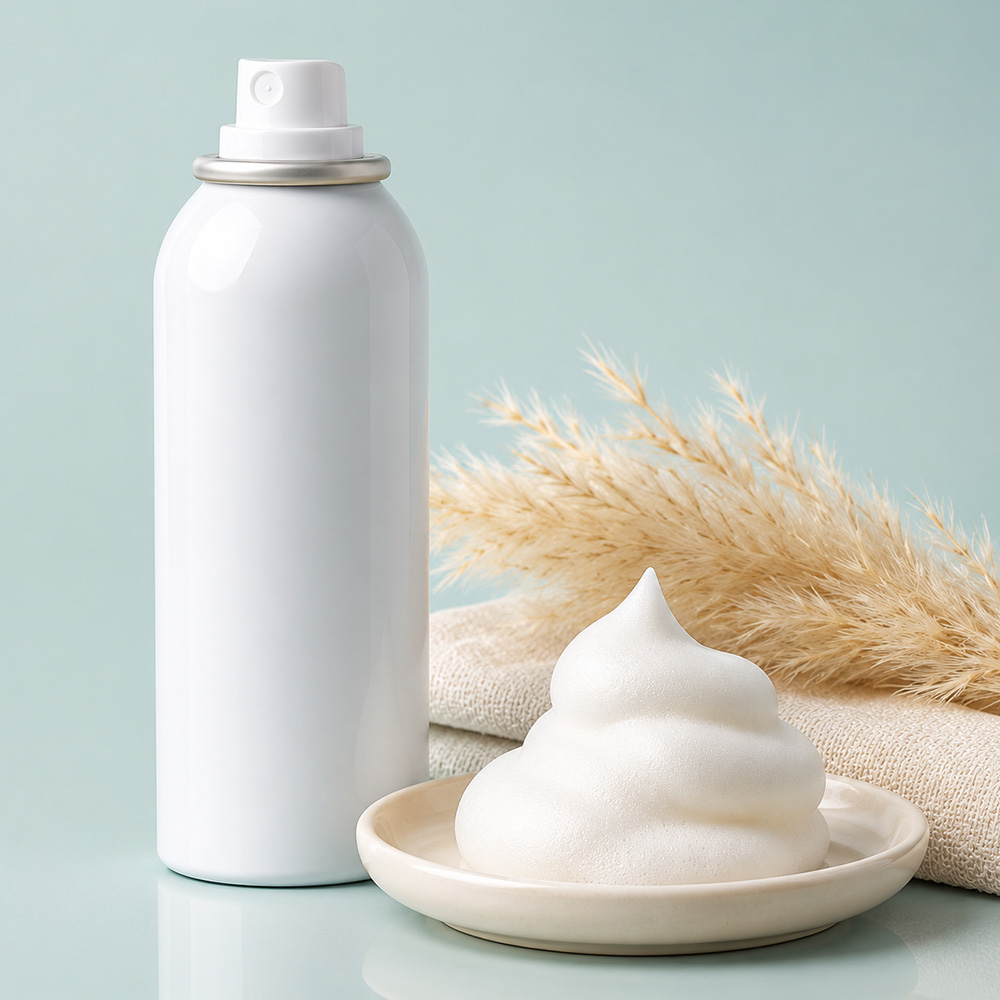
Professional hair mousse concepts for volumizing, curl definition, and flexible styling.
3. Hair Mousse Product Opportunities for Private Label Brands
Brands can develop different mousse concepts instead of launching a generic styling foam. A clear product position makes it easier to communicate benefits and differentiate a styling collection.
Volume and Root-Lift Collection
This collection can target consumers with fine or flat hair who want additional body and a fuller-looking hairstyle.
Curl Definition Collection
A curl-focused collection can combine curl defining mousse with curl creams, conditioners, and other styling products for wavy and textured hair.
Professional Styling Collection
Professional mousse can be developed with different hold levels and finishes to support blow-drying, styling, and salon finishing routines.
Lightweight Everyday Styling Collection
Everyday mousse can focus on convenient application, flexible hold, and a natural finished appearance.
Premium Conditioning Styling Collection
Premium styling mousse can incorporate selected conditioning ingredients and fragrance directions to create a more differentiated sensory experience.
Brands can build a complete styling range around these concepts. Explore HODM Hair Styling Products Manufacturing for additional styling product development options.
4. Hair Mousse Formulation: Key Ingredients and Their Functions
Hair mousse formulation requires a suitable balance of foam generation, styling performance, product stability, and finished hair feel.
A hair mousse manufacturer needs to balance styling polymers, foam systems, conditioning ingredients, and formula stability to achieve the intended product performance.
Film-Forming and Styling Polymers
Film-forming polymers are important ingredients in many styling mousse formulations. They help create a film on the hair that contributes to hold and hairstyle retention.
Depending on the product concept, formulators may evaluate ingredients such as PVP, VP/VA Copolymer, or other suitable styling polymers.
Foaming and Surfactant Systems
Foam quality depends on the complete formula and dispensing system. Suitable surfactants and other formulation components may be selected to support foam formation, consistency, and application.
Conditioning Ingredients
Selected conditioning ingredients can help improve spreadability and the finished hair feel.
Depending on the formulation, options may include Polyquaternium ingredients, Panthenol, and other compatible conditioning agents.
Humectants
Ingredients such as Glycerin and Propanediol may be considered to influence moisture-related sensory characteristics and formula performance.
Emollients and Botanical Ingredients
Selected emollients and plant-derived ingredients may be incorporated to support product positioning and conditioning characteristics. Their use should be balanced against the desired foam structure and styling performance.
Fragrance and Supporting Ingredients
Fragrance, preservatives where required, pH adjusters, and other supporting ingredients should be selected according to the complete formula, packaging, and intended market.
Ingredient Functions in Hair Mousse
| Ingredient Type | Potential Function | Development Focus |
|---|---|---|
| PVP | Film formation and hold | Styling strength and residue |
| VP/VA Copolymer | Styling film and shape retention | Hold and flexibility |
| Polyquaternium Ingredients | Conditioning and hair feel | Manageability |
| Panthenol | Conditioning support | Finished hair feel |
| Glycerin | Humectant function | Moisture-related sensory properties |
| Selected Emollients | Conditioning and softness | Formula weight and spreadability |
| Fragrance | Scent profile | Stability and compatibility |
Ingredient selection should be based on the complete formula and its intended performance. No single styling polymer or conditioning ingredient guarantees a particular hold level or foam quality.
5. Hair Mousse Manufacturer Guide to Foam Quality and Stability
Foam quality is one of the defining characteristics of hair mousse. Consumers expect a product that dispenses consistently, spreads easily, and maintains a suitable texture during application.
Foam Density
Foam density influences the product's dispensing and application experience. Some styling concepts may require a rich, dense foam, while others may benefit from a lighter structure.
Foam Stability
Foam should maintain suitable consistency during application. Excessive collapse or inconsistent dispensing may affect the user experience.
Foam Spreadability
The product should distribute evenly through the hair without creating excessive clumping or uneven product concentration.
Drying Behavior
Drying time influences styling convenience and the final hair feel. Formula composition, application quantity, and environmental conditions can all affect the drying experience.
Residue and Tackiness
A well-developed mousse should match its intended positioning without leaving unacceptable stickiness, flaking, or visible residue.
Foam Quality Evaluation
- Dispensed foam consistency.
- Foam density and texture.
- Spreadability through hair.
- Foam collapse behavior.
- Drying time.
- Finished hair feel.
- Residue and flaking.
6. How to Develop Different Hair Mousse Hold Levels
Hold level is one of the most important factors when positioning a professional styling mousse. Different customers expect different levels of hairstyle control and flexibility.
Light Hold
Light hold mousse supports natural styling and gentle shape control. It may suit customers who want volume and movement without a strongly structured finish.
Medium Hold
Medium hold provides a balance between hairstyle retention and flexibility. It can be developed for everyday styling and general curl definition.
Strong Hold
Strong hold mousse is intended for more structured styling and longer-lasting shape retention. The formula should be evaluated for stiffness, flaking, and washability.
Flexible Hold
Flexible hold focuses on maintaining styling support while allowing hair to retain movement and a more natural feel.
Compare Hold and Finish
| Hold Type | Styling Direction | Desired Finish |
|---|---|---|
| Light Hold | Soft styling and volume | Natural movement |
| Medium Hold | Everyday styling and curls | Balanced flexibility |
| Strong Hold | Structured hairstyles | Greater shape retention |
| Flexible Hold | Restylable appearance | Soft and workable finish |
Hold levels are product positioning descriptions rather than universal standardized measurements. Brands should define their own performance criteria and compare samples under consistent testing conditions.
7. Developing Volumizing Hair Mousse for Fine and Flat Hair
Volumizing mousse is an important product opportunity for brands targeting consumers with fine, flat, or low-volume hair.
Focus on Lightweight Styling
Fine hair customers may prefer products that support fullness without leaving a heavy or coated finish.
Support Root Lift
The application method and styling polymer system should support the desired root-lift effect when used with appropriate blow-drying or styling techniques.
Balance Hold and Hair Movement
A volumizing mousse should provide sufficient styling support while maintaining the desired hair movement and texture.
Evaluate Residue and Build-Up
Excessive product deposition may make fine hair appear heavy or less natural. Evaluate application quantity, spreadability, drying, and removal.
Develop a Complete Volume Styling Collection
Brands can combine volumizing mousse with lightweight shampoo, conditioner, root-lift spray, and finishing products to create a coordinated volume-focused product range.
8. Developing Curl Defining Hair Mousse for Curly Hair Brands
Curl defining mousse is designed for customers who want to enhance curl patterns, manage frizz, and support styling without relying on heavier cream formats.
Support Curl Definition
Suitable styling polymers can help provide structure and maintain curl shape during drying and styling.
Balance Hold and Flexibility
Excessively rigid formulas may not match the needs of customers who prefer soft, touchable curls. Hold and flexibility should be evaluated together.
Consider Conditioning Support
Selected conditioning ingredients may help improve spreadability and the finished hair feel, particularly for customers with dry or textured hair.
Evaluate Frizz and Humidity Performance
Curl mousse can be evaluated for its ability to maintain the desired appearance under different humidity conditions, where relevant to the product's intended claims.
Build a Curl Styling Collection
Brands can develop a coordinated curl range with curl shampoo, conditioner, leave-in products, curl mousse, and styling creams.
For more information, read Hair Styling Products: Complete Guide to Private Label Styling Products for Brands.
9. Packaging Options for Private Label Hair Mousse
Packaging is closely connected to mousse formulation because the dispensing system creates the foam that consumers apply to their hair.
A professional hair mousse manufacturer should evaluate the complete dispensing system, including the container, valve, actuator, or foam pump, together with the finished formula.
Aerosol Foam Packaging
Aerosol mousse typically uses a pressurized container, valve, actuator, and compatible propellant system to dispense foam.
The complete packaging system must be compatible with the formula and meet applicable pressure, safety, and transportation requirements.
Non-Aerosol Foam Pump Packaging
Mechanical foam pumps can create foam without using a pressurized aerosol propellant. These systems may be suitable for certain water-based mousse formulations.
Formula viscosity, surfactant system, pump structure, and output consistency should be evaluated together.
Packaging Design Considerations
- Container material and capacity.
- Valve or foam pump compatibility.
- Dispensing output and foam consistency.
- Closure and sealing performance.
- Label and decoration requirements.
- Brand identity and product positioning.
Compare Mousse Packaging Formats
| Packaging Format | Dispensing System | Key Consideration |
|---|---|---|
| Aerosol Can | Pressurized valve and actuator | Pressure and aerosol compatibility |
| Foam Pump Bottle | Mechanical foam pump | Formula and pump compatibility |
| Standard Pump Bottle | Liquid dispensing | Not a foam format unless designed accordingly |
Explore HODM Custom Packaging Solutions to discuss suitable bottles, pumps, and packaging options.
10. Hair Mousse Testing: Foam Stability, Hold, and Performance
Hair mousse should undergo appropriate evaluation before commercial production. Testing should reflect the product's intended styling function and packaging format.
Foam Stability Testing
Evaluate foam appearance, density, consistency, and collapse behavior during application.
Hold Performance Testing
Test the ability of the product to maintain the intended hairstyle under defined conditions. Different hold levels should be compared using consistent application quantities and styling methods.
Drying and Sensory Evaluation
- Drying time.
- Hair stiffness and flexibility.
- Spreadability.
- Stickiness and residue.
- Flaking after drying.
- Ease of restyling where relevant.
- Washability.
Humidity and Environmental Evaluation
For products with humidity-related styling claims, evaluate performance under suitable controlled conditions.
Formula Stability
Stability assessments should consider appearance, fragrance, viscosity, pH where applicable, and other relevant formula characteristics.
Packaging Compatibility
Test the actual formula with the selected aerosol or foam pump packaging. Evaluate dispensing consistency, leakage, closure performance, and package integrity.
Microbiological and Safety Requirements
Water-based mousse formulations require appropriate microbiological quality controls and preservation assessments. Aerosol products require additional packaging and safety evaluations according to their formulation and market requirements.
11. Hair Mousse Manufacturing Process
Hair mousse manufacturing depends on the formula and dispensing system. Aerosol mousse and non-aerosol foam pump products require different manufacturing arrangements.
Choosing a hair mousse manufacturer with suitable formulation and production capabilities is important for maintaining consistent foam quality, dispensing performance, and finished product specifications.
Step 1: Product Concept and Technical Brief
Define the mousse category, target customer, hold level, foam texture, fragrance, finish, and intended packaging format.
Step 2: Formula Development
Develop a suitable styling and foam system according to the intended product function and performance requirements.
Step 3: Sample Preparation and Evaluation
Prepare development samples and evaluate foam quality, hold, spreadability, drying behavior, residue, and finished hair feel.
Step 4: Packaging Selection
Confirm whether the product requires an aerosol can or a non-aerosol foam pump system. Evaluate the complete packaging configuration with the actual formula.
Step 5: Formula and Packaging Approval
Record the approved formula version, packaging specifications, product requirements, and applicable testing criteria.
Step 6: Commercial Production
Production procedures depend on the selected system. Non-aerosol foam products require suitable liquid preparation and foam-pump filling arrangements. Aerosol products require specialized filling and pressure-related production controls.
Step 7: Finished Product Quality Inspection
Inspect the finished products according to the approved specifications, including formula appearance, dispensing, packaging, and other applicable quality requirements.
Step 8: Packing and Shipment
Confirm finished quantities, packaging condition, labeling, shipping documentation, and applicable transportation requirements before dispatch.
Explore HODM Hair Styling Products Manufacturer to discuss styling product development and manufacturing support.
12. Custom Formulation for Private Label Hair Mousse
Private label brands can develop hair mousse according to their target customers, styling needs, preferred formula characteristics, and packaging requirements.
Prepare a Product Development Brief
- Product type: volumizing, curl defining, or styling mousse.
- Target customer and hair type.
- Desired hold level.
- Foam density and texture.
- Preferred styling ingredients.
- Conditioning and sensory requirements.
- Fragrance direction.
- Desired finish and residue level.
- Aerosol or non-aerosol packaging preference.
- Target market and product claims.
- Target cost and estimated order quantity.
Define the Desired Styling Performance
Avoid using only general descriptions such as strong, premium, or professional. Define the actual performance requirements, including hold, flexibility, foam structure, drying time, and finished hair feel.
Evaluate Samples on Representative Hair Types
Test the mousse on suitable hair types and styling methods to assess whether the formula matches the intended customer experience.
Refine the Formula Before Approval
Record sample feedback, requested changes, and final approval requirements. The approved formula should be documented before commercial production.
Explore HODM Custom Formula Development to discuss your styling product concept.
13. How to Choose a Hair Mousse Manufacturer
Selecting a suitable hair mousse manufacturer requires evaluating formulation expertise, foam dispensing knowledge, packaging capabilities, testing, and production arrangements.
Evaluate Styling Formula Experience
Review the manufacturer's experience with styling polymers, film-forming systems, hold levels, conditioning ingredients, and different styling product formats.
Check Foam Development Capabilities
Ask how the manufacturer evaluates foam consistency, spreadability, dispensing performance, drying behavior, and finished hair feel.
Confirm Aerosol or Non-Aerosol Capabilities
Confirm whether the manufacturer can support the specific packaging format required by your project. Aerosol production requires specialized equipment and controls that are different from conventional cosmetic filling.
Review Packaging Options
Evaluate available cans, valves, actuators, foam pumps, bottles, and decoration options according to the product concept.
Understand MOQ and Lead Time
Confirm minimum quantities for each formula and packaging configuration, as well as development, procurement, production, and delivery timelines.
Review Quality Management
Ask about incoming material controls, formula stability, packaging compatibility, batch consistency, finished product inspection, and relevant quality documentation.
Learn more about HODM Hair Styling Products Manufacturing Solutions.
14. Common Mistakes When Developing Private Label Hair Mousse
Focusing Only on Hold Strength
Hold is important, but customers also evaluate foam quality, spreadability, drying time, residue, flexibility, and washability.
Ignoring Foam Consistency
An inconsistent foam structure can affect dispensing and application. Foam performance should be evaluated using the intended packaging system.
Creating Excessively Sticky Formulas
Too much tackiness can reduce application comfort and affect the finished hairstyle. Styling performance should be balanced with sensory characteristics.
Using One Formula for Every Styling Need
Volumizing mousse, curl defining mousse, and strong hold mousse serve different functions. Their formula requirements should reflect their intended positioning.
Choosing Packaging Without Compatibility Testing
Foam pumps and aerosol systems have different operating requirements. Packaging should be tested with the actual formula before commercial approval.
Ignoring Aerosol Manufacturing Requirements
Aerosol mousse requires suitable specialized production capabilities, packaging controls, and transportation arrangements. These requirements should be confirmed early in the project.
Making Unsupported Styling Claims
Claims about long-lasting hold, humidity resistance, curl retention, or volume should be supported by suitable product evaluation and evidence.
Frequently Asked Questions
What does a hair mousse manufacturer do?
A hair mousse manufacturer supports product development and production, including formula development, styling performance evaluation, packaging selection, filling, quality control, and finished product preparation. Specific capabilities depend on the manufacturer's equipment and production arrangements.
What ingredients are commonly used in hair mousse?
Hair mousse formulations may include film-forming polymers such as PVP or VP/VA Copolymer, suitable foaming systems, conditioning ingredients, humectants, fragrance, and other supporting ingredients. The selection depends on the desired hold and product format.
What is the difference between volumizing mousse and curl defining mousse?
Volumizing mousse focuses on fuller-looking hair and lift, while curl defining mousse focuses on curl shape, definition, and styling control. Their formula and performance requirements may differ.
Can hair mousse provide strong hold without making hair stiff?
Hold and stiffness are separate formulation considerations. Depending on the styling polymer system, product format, and formula balance, brands can evaluate formulas that provide stronger hold while maintaining an acceptable level of flexibility.
What is the difference between aerosol and non-aerosol hair mousse?
Aerosol mousse uses a pressurized container and propellant system. Non-aerosol foam mousse generally uses a mechanical foam pump. Both formats require compatible formulations and dispensing systems.
What packaging is suitable for private label hair mousse?
Aerosol cans with compatible valves and actuators are used for aerosol mousse. Mechanical foam pump bottles may suit selected non-aerosol formulas. The final packaging should be evaluated with the actual formula.
How is hair mousse tested before production?
Evaluation may include foam consistency, dispensing, spreadability, hold, drying time, residue, flaking, finished hair feel, stability, packaging compatibility, and applicable microbiological or safety requirements.
Can a brand develop different hold levels of private label hair mousse?
Yes. Brands can discuss light, medium, strong, and flexible hold concepts according to their target customers, styling applications, and desired finished hair feel.
Can hair mousse be developed for curly hair and fine hair?
Yes. Curl defining mousse can focus on curl definition and flexibility, while volumizing mousse for fine hair can prioritize lightweight application and fuller-looking styling results.
Can HODM develop private label hair mousse?
HODM supports custom hair styling product development and manufacturing. Specific hair mousse formulation, aerosol or non-aerosol production capabilities, packaging availability, MOQ, and project requirements should be confirmed with the HODM team before proceeding.
Conclusion: Develop Professional Hair Mousse with the Right Formula and Manufacturing Partner
Hair mousse offers opportunities for brands developing professional styling products for volume, curl definition, flexible styling, and stronger hairstyle retention.
Successful product development requires a suitable styling polymer system, consistent foam structure, appropriate hold level, good spreadability, and a finished hair feel that matches the intended customer.
Packaging is equally important. Aerosol cans and non-aerosol foam pumps require different formulations, dispensing systems, manufacturing arrangements, and quality controls.
By defining the product concept and performance requirements early, brands can develop hair mousse products that fit their target market and form part of a complete professional styling collection.
Develop Your Professional Hair Styling Product Line with HODM
HODM Cosmetics supports private label brands, salons, and distributors with custom hair styling product development, formula customization, packaging solutions, and OEM/ODM manufacturing.
Whether you are planning volumizing products, curl styling solutions, professional gels, styling creams, or other specialized hair care products, our team can discuss your development requirements.
Share your product concept, target customers, desired styling performance, packaging preferences, and expected order quantities to explore suitable manufacturing options.
Discuss Your Hair Styling Product Project