
Hair Care Packaging Compatibility: Matching Formulas with Bottles, Pumps, and Jars
Choosing a bottle or jar for a hair care product is only the first step in packaging development. Before commercial production, brands and manufacturers must confirm that the formula works properly with the container, closure, dispensing mechanism, and other packaging components.
Different hair care formulas create different packaging requirements. A lightweight shampoo, thick conditioner, silicone-based hair serum, botanical oil, and water-based leave-in spray may require different container materials and dispensing systems.
HODM supports brands through custom hair care packaging solutions and OEM/ODM manufacturing, helping coordinate formula requirements, packaging selection, sample evaluation, and production preparation.
This guide explains how to evaluate hair care packaging compatibility, including bottle materials, pumps, closures, jars, formula interactions, leakage risks, dispensing performance, and testing procedures before approving packaging for mass production.
1. What Is Hair Care Packaging Compatibility?
Hair care packaging compatibility refers to how well a finished product formula works with its selected container and packaging components throughout storage, transportation, and normal use.
Compatibility involves more than whether a product fits inside a bottle. The formula should remain suitable, the packaging should maintain its physical integrity, and the dispensing system should function as intended.
Three Important Areas of Compatibility
- Material Compatibility: The formula should not cause unacceptable changes to the bottle, closure, liner, gasket, or other packaging materials.
- Functional Compatibility: The pump, spray, cap, or dispensing mechanism should work correctly with the product's viscosity and application requirements.
- Product Protection: The packaging should provide appropriate protection against leakage, contamination, and other relevant external factors.
Why Compatibility Should Be Checked Before Production
A packaging component may appear suitable when empty but behave differently after being filled with the actual formula.
Potential problems include leaking closures, difficult dispensing, changes in packaging appearance, pump failure, material interactions, and unexpected changes in product quality.
Evaluating compatibility early helps brands identify potential issues before purchasing large quantities of packaging components.
2. Understand the Formula Before Selecting Packaging
Packaging compatibility evaluation should begin with the actual formula. Different formulations have different physical and chemical characteristics that influence container and dispensing requirements.
Formula Viscosity
Viscosity affects how easily a product flows through a pump, opening, nozzle, or dispensing tube.
Thin liquid shampoos may work with a wider range of dispensing systems, while thicker conditioners and hair masks may require larger openings or pumps designed for higher-viscosity products.
Formula pH
The pH of a water-based hair care product can influence packaging material selection and the compatibility of certain components.
Brands should consider the actual pH range together with the packaging supplier's material specifications rather than assuming that every plastic container is suitable.
Oil and Solvent Content
Hair oils, silicone-based serums, fragrance-containing formulas, and products with certain solvents may interact differently with plastics, elastomers, coatings, and seals.
The complete ingredient composition should be reviewed when selecting packaging materials.
Fragrance and Functional Ingredients
Fragrance components, essential oils, preservatives, and other functional ingredients may influence compatibility depending on their composition and concentration.
Formula Characteristics to Record
| Formula Characteristic | Why It Matters | Packaging Consideration |
|---|---|---|
| Viscosity | Controls product flow | Pump and opening selection |
| pH | Influences material compatibility | Container and component suitability |
| Oil Content | May affect certain materials | Plastic and seal compatibility |
| Solvent Content | May influence material resistance | Container and gasket selection |
| Fragrance | May interact with packaging | Material and seal evaluation |
| Formula Density | Affects filling and dispensing | Pump output and filling setup |
3. Bottle Material Compatibility: PET, HDPE, and PP
Plastic packaging is widely used in hair care manufacturing because it offers different design, weight, processing, and cost options. However, material selection should always be based on the specific formula and intended packaging application.
PET Bottles
PET is commonly used for shampoo, conditioner, and selected spray packaging. Its transparency and appearance make it suitable for brands that want to display the product or create a clean, modern bottle design.
When evaluating PET, consider formula compatibility, stress cracking risks where relevant, environmental exposure, closure compatibility, and storage conditions.
HDPE Bottles
HDPE is commonly used for opaque hair care bottles. It offers practical packaging options for shampoos, conditioners, and selected treatment products.
Its suitability should still be assessed against the actual formula, particularly when the product contains oils, fragrance components, or other ingredients that may interact with packaging materials.
PP Containers and Components
PP is used in different cosmetic packaging applications, including jars, caps, closures, and selected containers.
Compatibility should be reviewed for the complete packaging system, including the container, closure, liner, and other components.
Glass Packaging
Glass is used in selected hair oils and serum products, particularly where a premium appearance is desired.
Brands should consider weight, breakage risk, closure compatibility, transportation, and the suitability of the dispensing components.
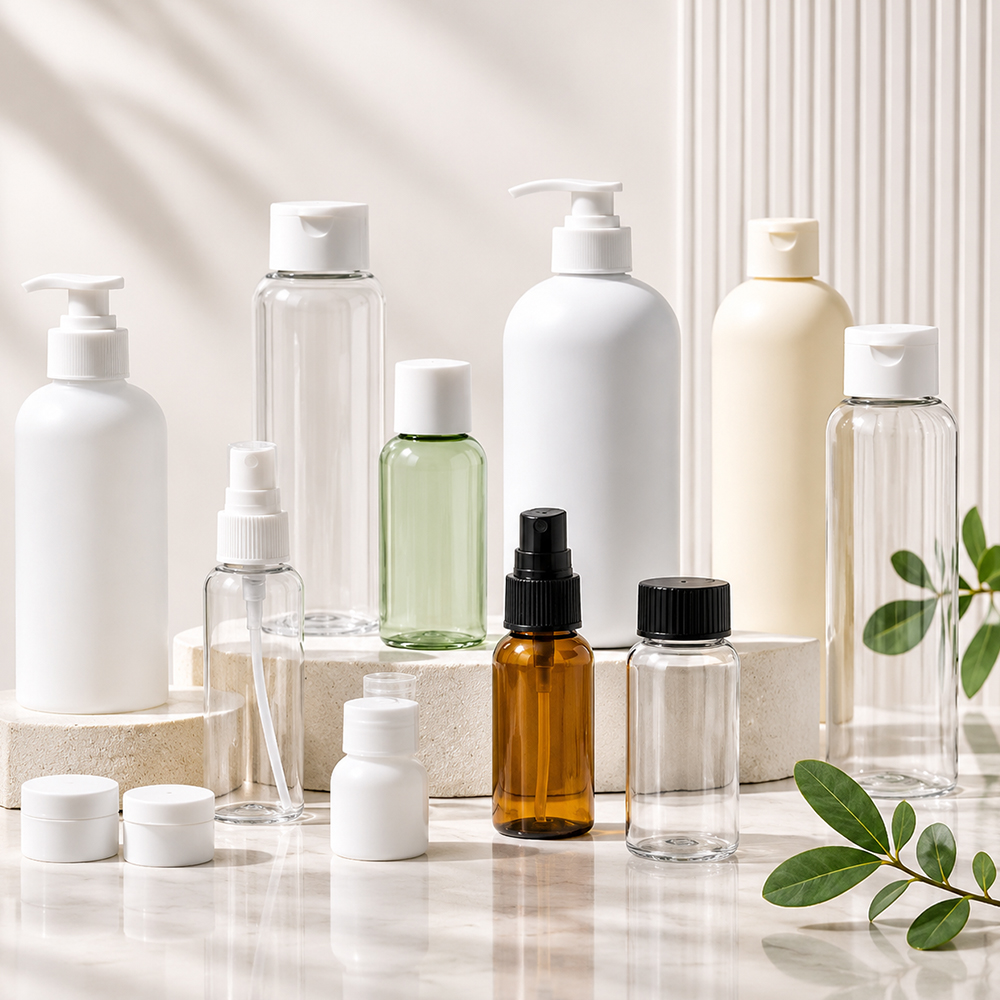
Different packaging materials offer different properties and should be evaluated with the actual hair care formula.
Material Comparison
| Material | Common Applications | Evaluation Priorities |
|---|---|---|
| PET | Shampoo and Conditioner Bottles | Formula compatibility and stress resistance |
| HDPE | Opaque Hair Care Bottles | Chemical resistance and product protection |
| PP | Jars, Caps, and Closures | Component compatibility and sealing |
| Glass | Hair Oils and Serums | Breakage, closure, and dispensing |
No material should be considered universally compatible. The final selection should be supported by supplier documentation and appropriate testing with the actual formula.
Before selecting a container, it is important to understand the different packaging options available. Read our guide on How to Choose the Right Packaging for Private Label Hair Care Products to compare bottle types, materials, dispensing systems, and customization options.
4. Pump Dispenser Compatibility with Hair Care Formulas
A pump dispenser is a functional packaging component. Its performance depends on the formula viscosity, pump design, output volume, internal materials, and intended application.
Match Pump Design to Formula Viscosity
A thin shampoo may work with a standard lotion pump, while a thicker conditioner may require a pump with a suitable internal design and dispensing capacity.
Using an unsuitable pump may result in inconsistent dispensing, excessive effort, poor product flow, or difficulty retrieving the remaining formula.
Check Pump Output
Pump output refers to the amount of product dispensed during each complete pump action. Brands should determine whether the output volume is appropriate for the product category and intended use.
Evaluate the Dip Tube
The dip tube should have an appropriate length and fit for the container. Its position should allow the pump to draw product effectively without being excessively bent, obstructed, or positioned incorrectly.
Check Internal Seals and Components
Springs, gaskets, seals, and other internal components should be suitable for contact with the formula. Their material compatibility is particularly important for products containing oils, fragrances, and other potentially interacting ingredients.
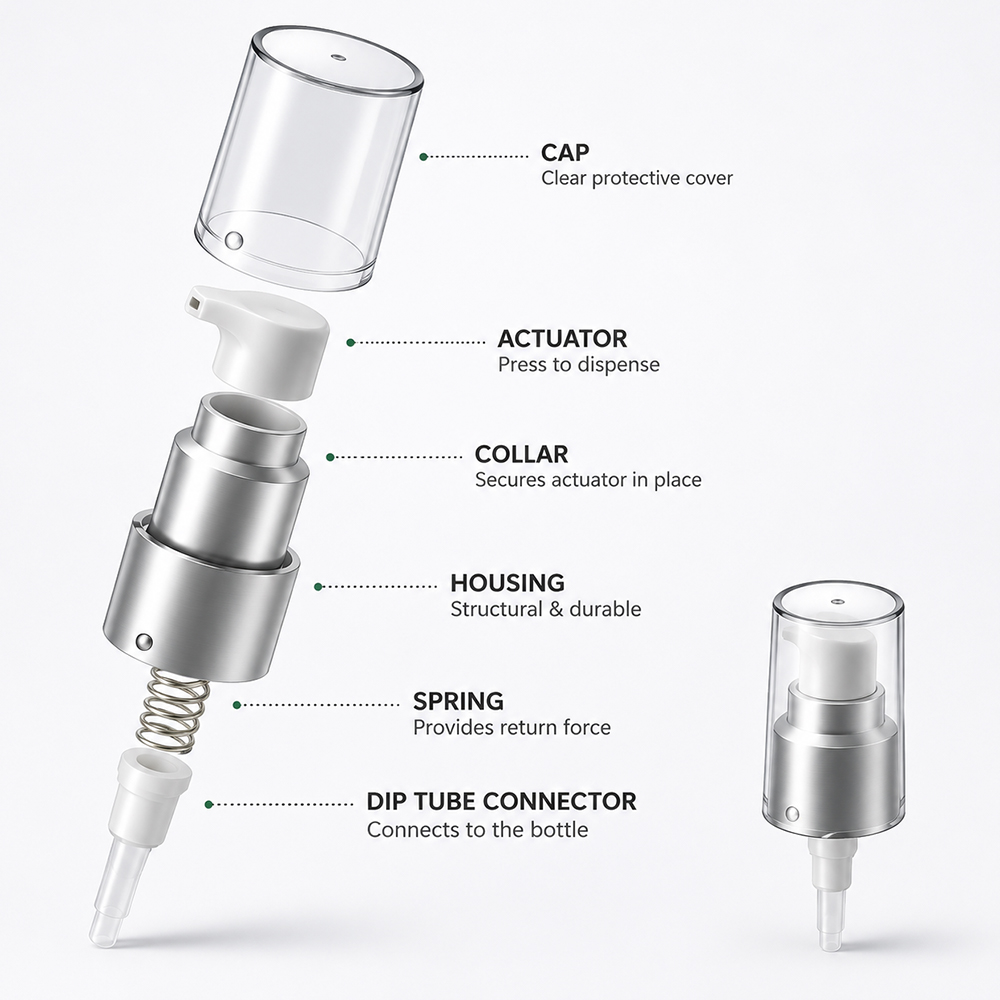
Pump compatibility involves the complete dispensing system, not only the external bottle.
Pump Evaluation Checklist
- Is the pump suitable for the formula viscosity?
- Does it dispense a consistent quantity?
- Does the pump return to its original position after use?
- Is the dip tube correctly sized?
- Are internal seals compatible with the formula?
- Does the pump remain functional during repeated use?
- Can the product be dispensed conveniently near the end of the bottle?
5. Spray Bottle and Nozzle Compatibility
Spray packaging is widely used for leave-in conditioners, heat protection products, detangling sprays, and other lightweight hair care formulations.
However, a spray bottle that works with water may not necessarily work with a different cosmetic formula.
Formula Viscosity and Spray Distribution
The formula should be suitable for the selected spray mechanism. Excessive viscosity or unsuitable formula characteristics may affect spray distribution and dispensing consistency.
Fine Mist vs. Standard Spray
Fine mist sprayers are commonly used when a more distributed application is desired. Other spray mechanisms may provide a different output pattern and dispensing quantity.
Check Nozzle Performance
- Spray pattern and distribution.
- Consistency between applications.
- Droplet size and output.
- Nozzle blockage or clogging.
- Leakage around the closure.
- Ease of operation.
Consider Product Ingredients
Oils, suspended materials, fragrance components, and other ingredients may influence spray mechanism performance. The complete formula should be evaluated with the selected nozzle and internal components.
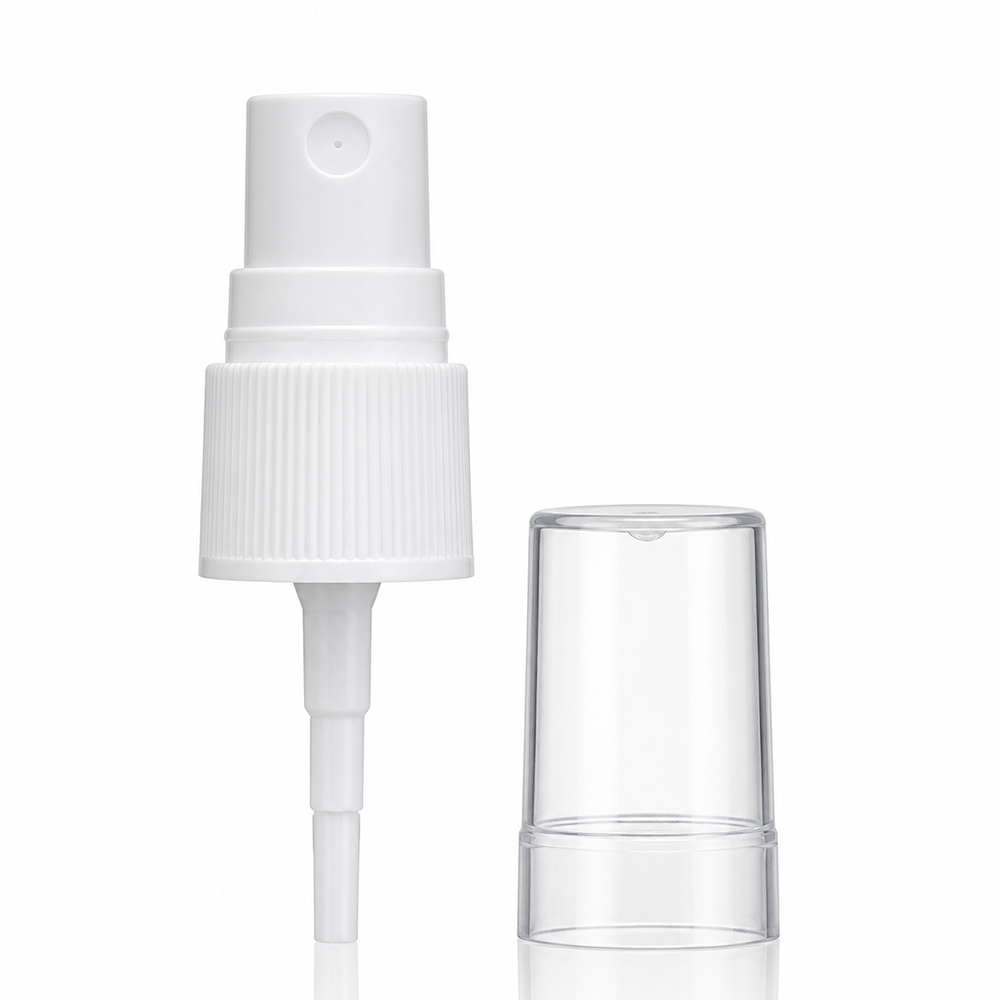
Spray mechanism selection should match formula characteristics and application requirements.
6. Hair Mask Jar and Closure Compatibility
Hair mask jars are commonly used for thicker conditioning treatments, intensive repair products, and selected styling creams.
Their wide openings make product access convenient, but the complete jar and closure system still requires compatibility evaluation.
Jar Material
PP and other suitable materials may be considered for hair mask packaging. Selection should account for formula composition, storage conditions, and packaging supplier specifications.
Jar Closure and Sealing
The lid should close securely and maintain suitable sealing performance. Depending on the design, liners, inner seals, and other components may be required.
Formula Exposure
Wide-mouth jars allow convenient access but may expose the product to repeated contact with air, hands, and the surrounding environment during use.
Brands should consider appropriate preservation, product instructions, and packaging protection according to the formula.
Evaluate the Complete Jar System
- Jar dimensions and capacity.
- Closure fit and thread compatibility.
- Inner seal or liner requirements.
- Leakage resistance.
- Material compatibility.
- Convenience of product access.
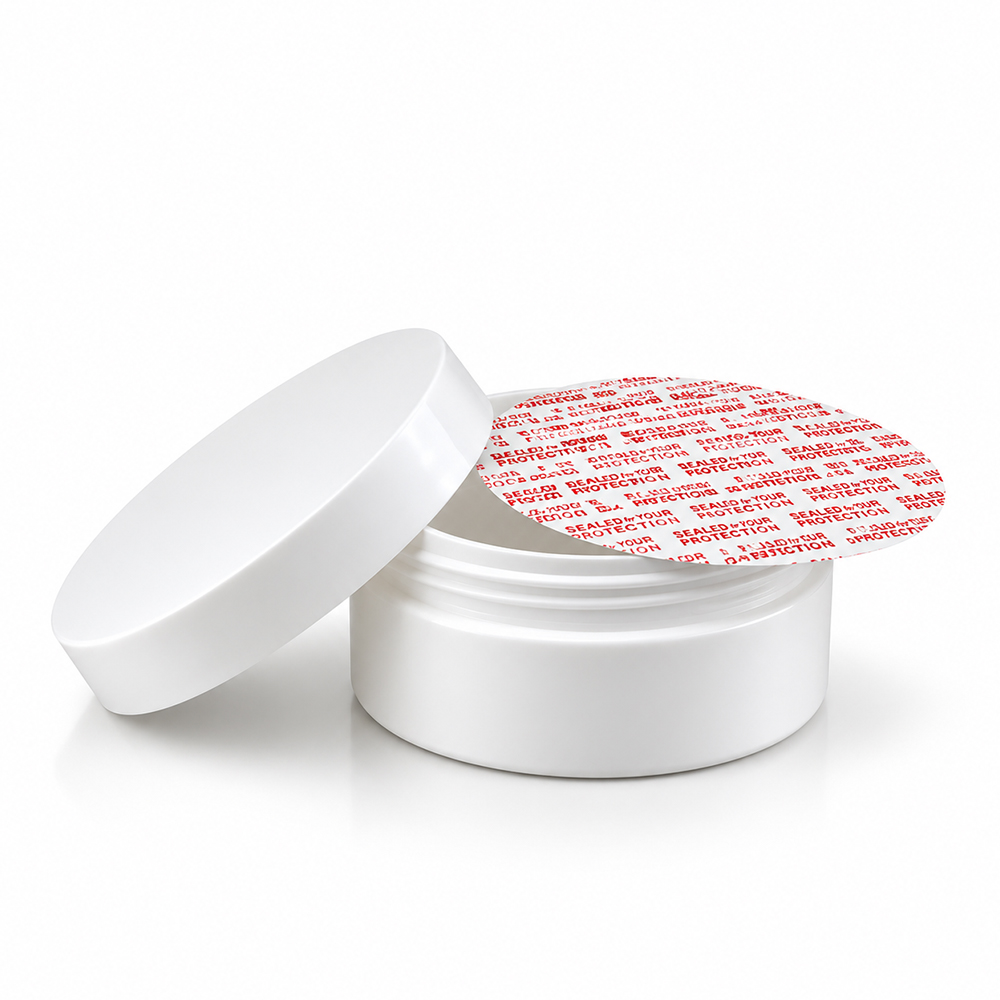
Hair mask packaging should be assessed as a complete container and closure system.
7. Bottle Caps, Liners, and Seal Compatibility
Packaging compatibility is not limited to the main container. Caps, liners, gaskets, seals, and other small components can influence product protection and leakage performance.
Closure Thread Compatibility
The bottle neck and closure should have matching specifications. Incorrect dimensions or thread designs can cause poor closure fit and leakage.
Gasket and Liner Materials
Gaskets and liners help create a seal between packaging components. Their material should be suitable for the formula and expected storage conditions.
Induction Seals and Inner Seals
Selected products may use induction seals, inner liners, or other protective components. These should be compatible with the container, closure, filling process, and formula.
Transportation and Handling
Packaging should remain secure during normal handling and transportation. Evaluate the complete filled package under suitable conditions rather than testing the empty container alone.
8. Common Formula and Packaging Compatibility Problems
Packaging issues can occur when formula characteristics and component materials are not adequately evaluated together.
| Potential Problem | Possible Cause | What to Investigate |
|---|---|---|
| Bottle Deformation | Material stress or environmental conditions | Container material and storage conditions |
| Discoloration | Formula or environmental interaction | Material and formula stability |
| Leakage | Closure, liner, or assembly issues | Seal and thread compatibility |
| Pump Failure | Viscosity or component incompatibility | Pump mechanism and internal materials |
| Spray Clogging | Formula or nozzle mismatch | Viscosity and nozzle design |
| Formula Changes | Possible packaging interaction or instability | Formula stability and material compatibility |
| Closure Damage | Mechanical stress or material interaction | Closure design and component materials |
Identify the Cause Before Changing Packaging
Not every packaging issue is caused by the container material. Formula instability, filling conditions, incorrect assembly, unsuitable storage, and component defects may also contribute.
Investigate the complete packaging system before deciding whether the formula, bottle, pump, closure, or manufacturing process needs adjustment.
9. How to Test Hair Care Formula and Packaging Compatibility
Compatibility testing helps determine whether the selected packaging remains suitable when filled with the actual formula. The testing plan should reflect the product composition, container materials, storage conditions, and intended market.
Step 1: Prepare the Actual Formula and Packaging
Use the intended commercial formula and representative packaging components. Testing only an empty bottle or an unrelated sample formula does not provide sufficient information about the final packaging system.
Step 2: Record Initial Conditions
Document the initial formula appearance, color, odor, pH where applicable, viscosity, container condition, closure fit, and dispensing performance.
Step 3: Conduct Appropriate Storage Assessments
Evaluate the filled packaging under defined storage conditions. Depending on the product, assessments may include ambient, elevated-temperature, low-temperature, and temperature-cycling conditions.
Step 4: Check Packaging Changes
- Container deformation or cracking.
- Changes in color or appearance.
- Closure and seal performance.
- Leakage or loss of product.
- Changes to pumps and dispensing components.
- Unexpected material interactions.
Step 5: Reassess Formula Characteristics
Compare the formula with its initial condition. Review appearance, odor, viscosity, pH where applicable, and other relevant quality specifications.
Step 6: Document the Results
Record test conditions, observations, deviations, photographs, and corrective actions. The final approval should be based on defined acceptance criteria rather than visual judgment alone.
10. Leakage, Dispensing, and Transportation Testing
A packaging system may appear compatible during storage but still experience problems during filling, handling, or transportation. Functional evaluation should therefore include the complete filled package.
Leakage Testing
Assess the closure, pump, nozzle, and seal under appropriate orientations and handling conditions. Check whether product escapes around the neck, closure, or dispensing mechanism.
Dispensing Testing
Operate pumps and sprays repeatedly to evaluate output consistency, ease of use, and functionality throughout normal product use.
Transportation Simulation
Depending on the distribution channel, packaging may need appropriate vibration, compression, drop, or other transportation-related assessments.
Repeated-Use Evaluation
Pumps, sprays, caps, and closures should be assessed over repeated operations to identify wear, blockage, loss of function, or other problems.
Set Clear Acceptance Criteria
Define what constitutes acceptable dispensing, leakage resistance, container appearance, and component performance before testing begins.
11. Hair Care Packaging Compatibility Approval Checklist
Before approving packaging for commercial production, brands should confirm that the formula, container, dispensing system, and closure meet the agreed specifications.
| Evaluation Item | What to Confirm |
|---|---|
| Formula Information | Formula composition and relevant specifications are documented. |
| Container Material | Material suitability has been reviewed. |
| Container Dimensions | Capacity, neck finish, and dimensions are confirmed. |
| Pump or Spray | Dispensing performance is acceptable. |
| Closures and Seals | Components fit and seal correctly. |
| Formula Compatibility | No unacceptable interaction has been identified. |
| Stability | Relevant storage assessments are completed. |
| Leakage | Filled packaging meets defined leakage criteria. |
| Transportation | Packaging is suitable for intended distribution conditions. |
| Documentation | Approved specifications and test results are recorded. |
Packaging should be approved only after relevant compatibility and functional requirements have been addressed.
12. Coordinating Formula, Packaging, and Hair Care Manufacturing
Formula and packaging development should be coordinated rather than treated as completely separate activities. Changes to one part of the system may influence the other.
Coordinate Formula Development
Confirm formula viscosity, pH, ingredient characteristics, and dispensing requirements before finalizing packaging components.
Coordinate Packaging Procurement
Confirm material specifications, container dimensions, neck finishes, closures, pump output, and component availability with the packaging supplier.
Coordinate Filling Requirements
The selected packaging should also be suitable for the intended filling and assembly process. Bottle openings, container shapes, filling equipment, and closure systems should be considered.
Coordinate Quality Control
Establish incoming packaging inspections, filling checks, closure inspections, finished-product specifications, and batch documentation.
Confirm Final Production Specifications
Before commercial production, document the approved formula version, packaging materials, component specifications, artwork, filling requirements, and quality acceptance criteria.
Explore HODM OEM/ODM Hair Care Manufacturing for more information about manufacturing coordination.
13. Common Mistakes When Matching Formulas with Packaging
Choosing Packaging Based Only on Appearance
A bottle may look attractive but may not be suitable for the formula. Material compatibility and dispensing performance should be evaluated before approval.
Testing an Empty Container Only
Empty packaging does not reveal how the actual formula interacts with the container, closure, and dispensing components. Test the filled package.
Ignoring Pump and Spray Performance
A suitable bottle can still have an unsuitable pump or spray mechanism. Evaluate the entire dispensing system.
Overlooking Gaskets and Liners
Small components can influence sealing and compatibility. Include them in the packaging assessment.
Assuming One Material Works for Every Formula
PET, HDPE, PP, glass, and other materials have different properties. Selection should be based on actual formula and supplier information.
Skipping Testing Before Mass Production
Packaging approval should be supported by relevant compatibility, stability, leakage, and dispensing assessments.
Frequently Asked Questions
What is hair care packaging compatibility?
Hair care packaging compatibility refers to how well a formula works with its container, closure, pump, seal, and other packaging components during storage, transportation, and normal use.
How do I choose the right bottle material for shampoo?
PET, HDPE, and other suitable materials may be considered for shampoo packaging. The final choice depends on formula composition, material specifications, appearance, dispensing requirements, and compatibility testing.
Can a standard pump work with thick conditioner?
Not necessarily. Pump suitability depends on formula viscosity, internal pump design, output volume, dip tube, and other components. Test the actual conditioner with the selected pump.
Why does a hair care spray bottle become clogged?
Possible causes include unsuitable formula viscosity, nozzle design, formula deposits, or ingredient characteristics. Evaluate the complete formula and spray mechanism together.
How do I test whether a bottle is compatible with a hair oil formula?
Review the bottle, closure, gasket, and other material specifications, then conduct appropriate filled-package compatibility and storage assessments. Pay particular attention to leakage, deformation, discoloration, and changes in the formula.
What is the difference between packaging compatibility and stability testing?
Packaging compatibility focuses on the interaction between the formula and packaging components. Stability testing evaluates changes in product quality over time under defined conditions. The two assessments are related and may be conducted together using the final packaging system.
Should packaging be tested before mass production?
Yes. Appropriate testing should be completed before commercial production to evaluate material compatibility, dispensing, leakage, and relevant storage conditions.
Can HODM help match hair care formulas with packaging?
HODM can discuss formula requirements, packaging selection, customization, sample evaluation, and OEM/ODM manufacturing arrangements according to the project specifications.
Explore HODM Custom Packaging Services.
Conclusion: Match Every Formula with the Right Packaging System
Hair care packaging compatibility is an important part of product development and commercial manufacturing. A suitable packaging system must work with the formula, dispense the product correctly, maintain appropriate sealing, and remain suitable throughout its intended use.
Bottles, pumps, sprays, jars, closures, and seals should be evaluated as a complete system rather than as separate components. Material compatibility, formula viscosity, storage conditions, leakage resistance, and dispensing performance all influence the final decision.
By conducting appropriate compatibility assessments and documenting approved specifications before production, brands can reduce packaging risks and establish a more reliable manufacturing process.
Working with an experienced hair care manufacturer can also help coordinate formula development, packaging selection, testing, and commercial production.
Find the Right Packaging for Your Hair Care Formula with HODM
HODM Cosmetics supports private label brands with formula development, packaging selection, customization coordination, sample evaluation, and OEM/ODM manufacturing.
Whether you are developing shampoo bottles, conditioner pumps, hair mask jars, spray packaging, or serum containers, our team can discuss suitable packaging options according to your formula requirements.
Share your product specifications and packaging preferences to explore suitable solutions for your next hair care project.
Discuss Your Packaging Compatibility Project